After-Sales Service
A roll forming line is installed once and runs for years. The support question is decided before you order — by what is written into the contract, and by what is on the shelf.
A roll forming line is not a consumable. It is installed once, runs for years, and is judged on uptime long after the delivery is forgotten. That makes after-sales a specification problem rather than a goodwill problem: the things that decide whether you can keep the line running are whether the right terms are in the contract, whether the drawings and schematics are on site, and whether the consumable parts are on a shelf.
So this page is written as a checklist rather than a promise. Below is what commissioning involves, the six contract terms worth fixing before you order, and the short spare-parts list that decides how long a stoppage lasts. Specific terms — warranty period and scope, engineer days, response route — are set out in your contract, and we will put the current terms in writing on request.
What happens between the order and the running line
- 01
Factory testing
The line is assembled and run at our works before shipment, and the forming and leveling settings are commissioned on your coil section. This is where a customer sees the machine produce the profile, rather than being told it will.
- 02
Shipment and site preparation
The line ships and is installed on a foundation prepared to the drawing. Getting the site work right before the machine lands is the single biggest factor in how quickly it reaches production — a machine cannot be commissioned into a floor that is not ready.
- 03
Installation and commissioning
Mechanical erection, alignment of the line, electrical connection and control configuration. Alignment is the step that decides whether the profile holds tolerance at speed, so it is a commissioning activity rather than a build activity.
- 04
Operator training
Operators are trained on the machine that is in front of them: roll change, cut-length setting, punching pitch, and what the common faults look like and how to clear them. Training on your own line is what transfers, not a manual.
- 05
Handover and documentation
Drawings, electrical schematics, the control manual, the CE Declaration of Conformity and the spare-parts list are handed over at the end. Ask for the spare-parts list specifically — see below.
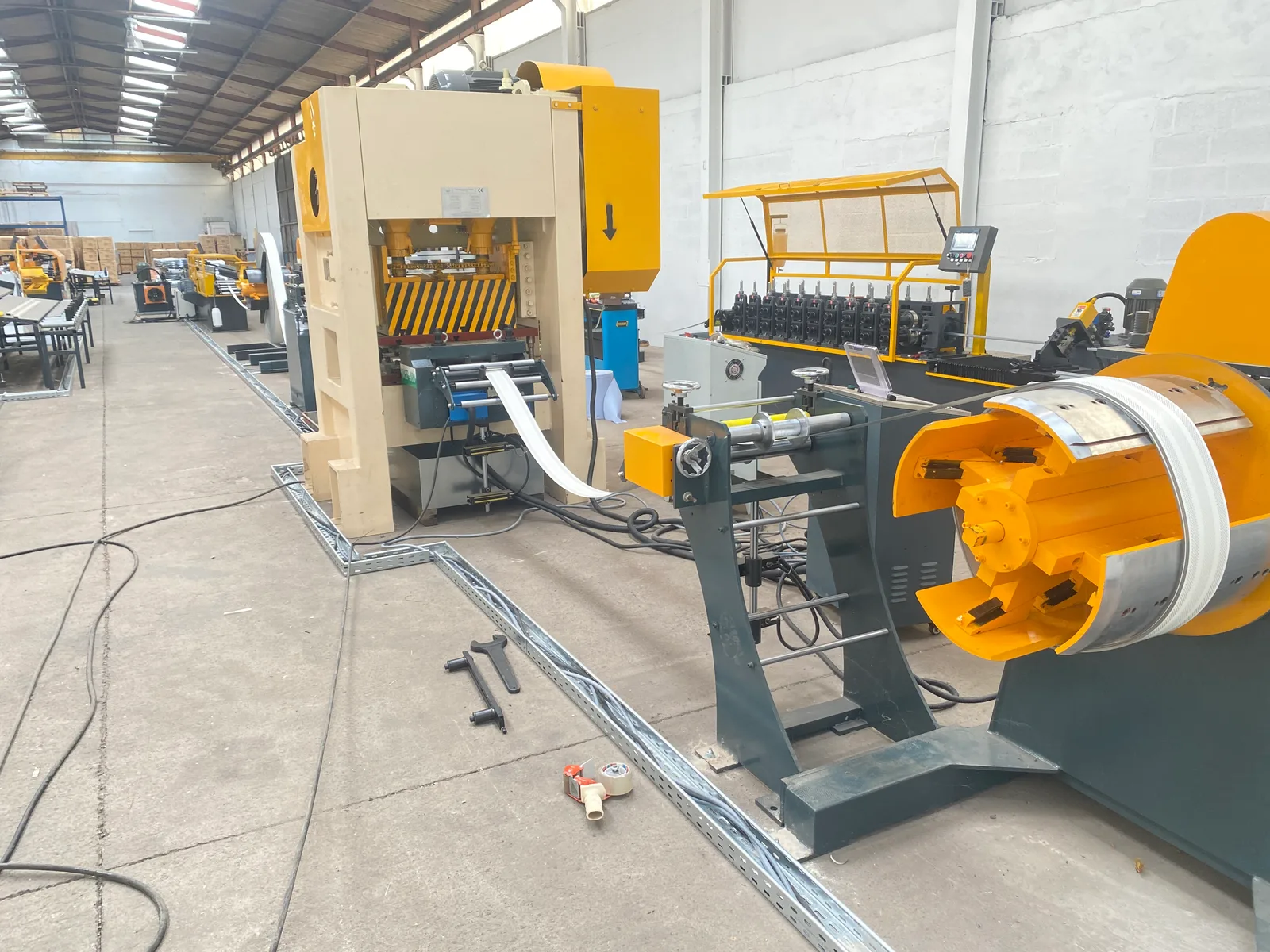
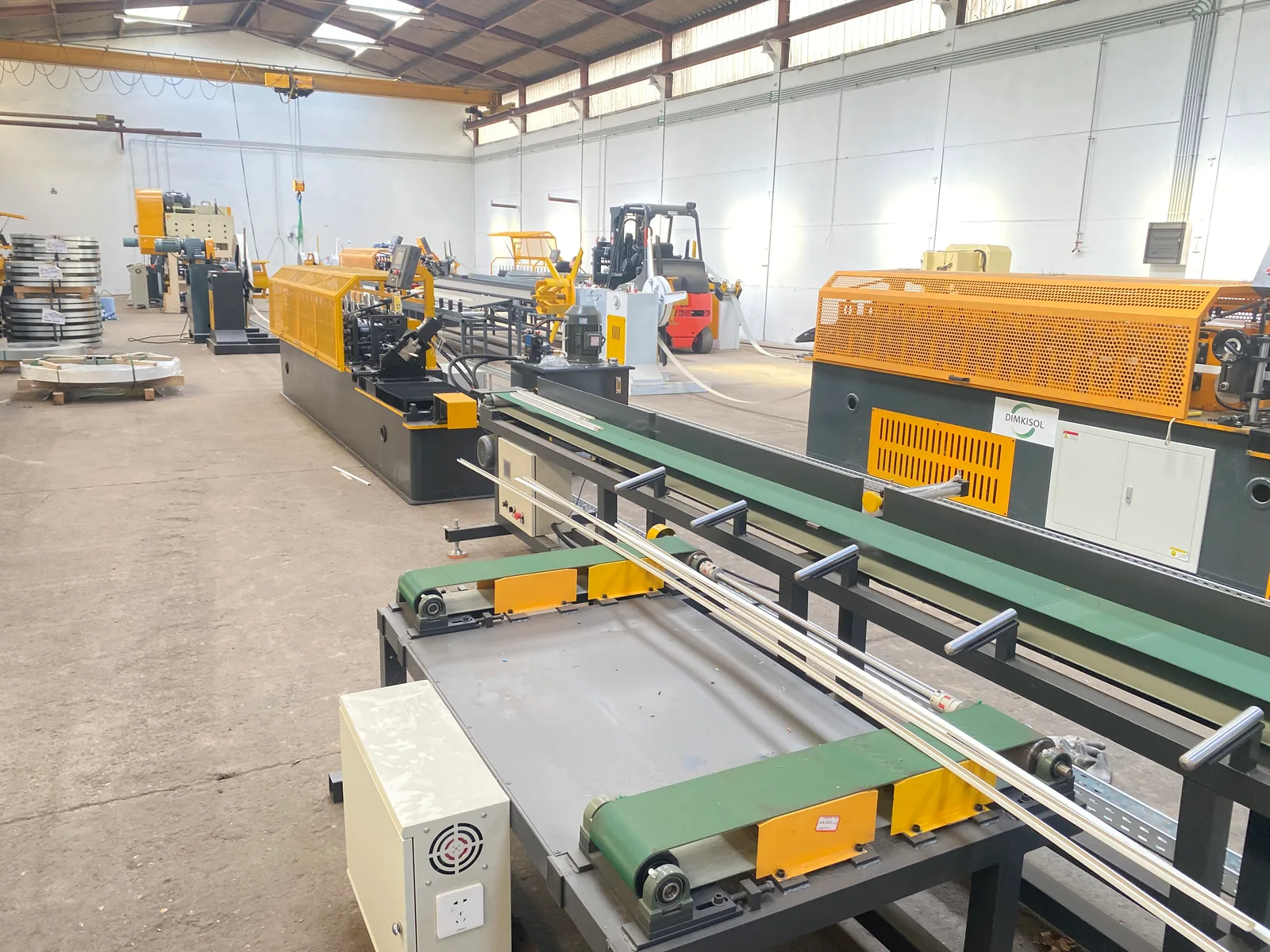
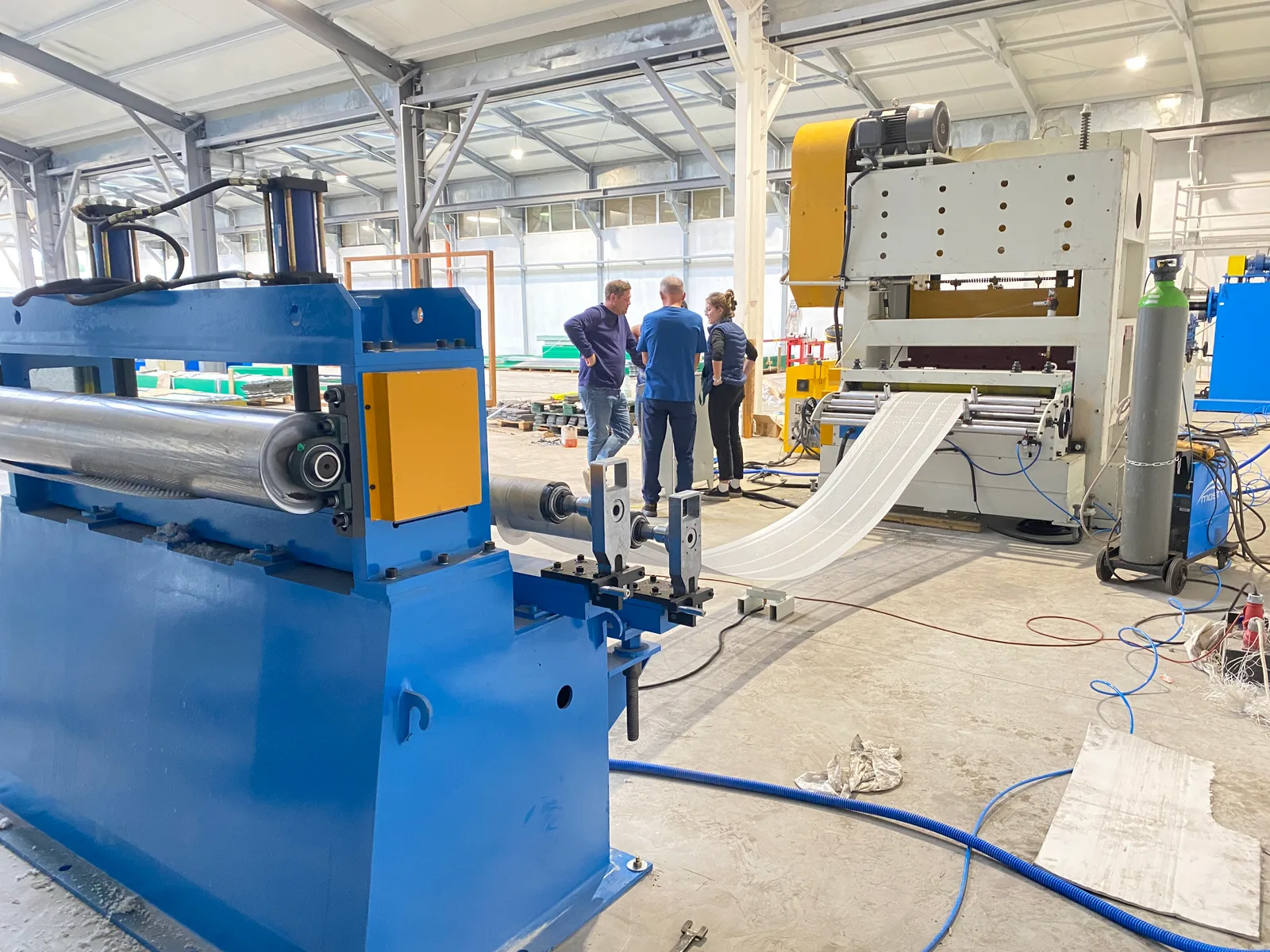
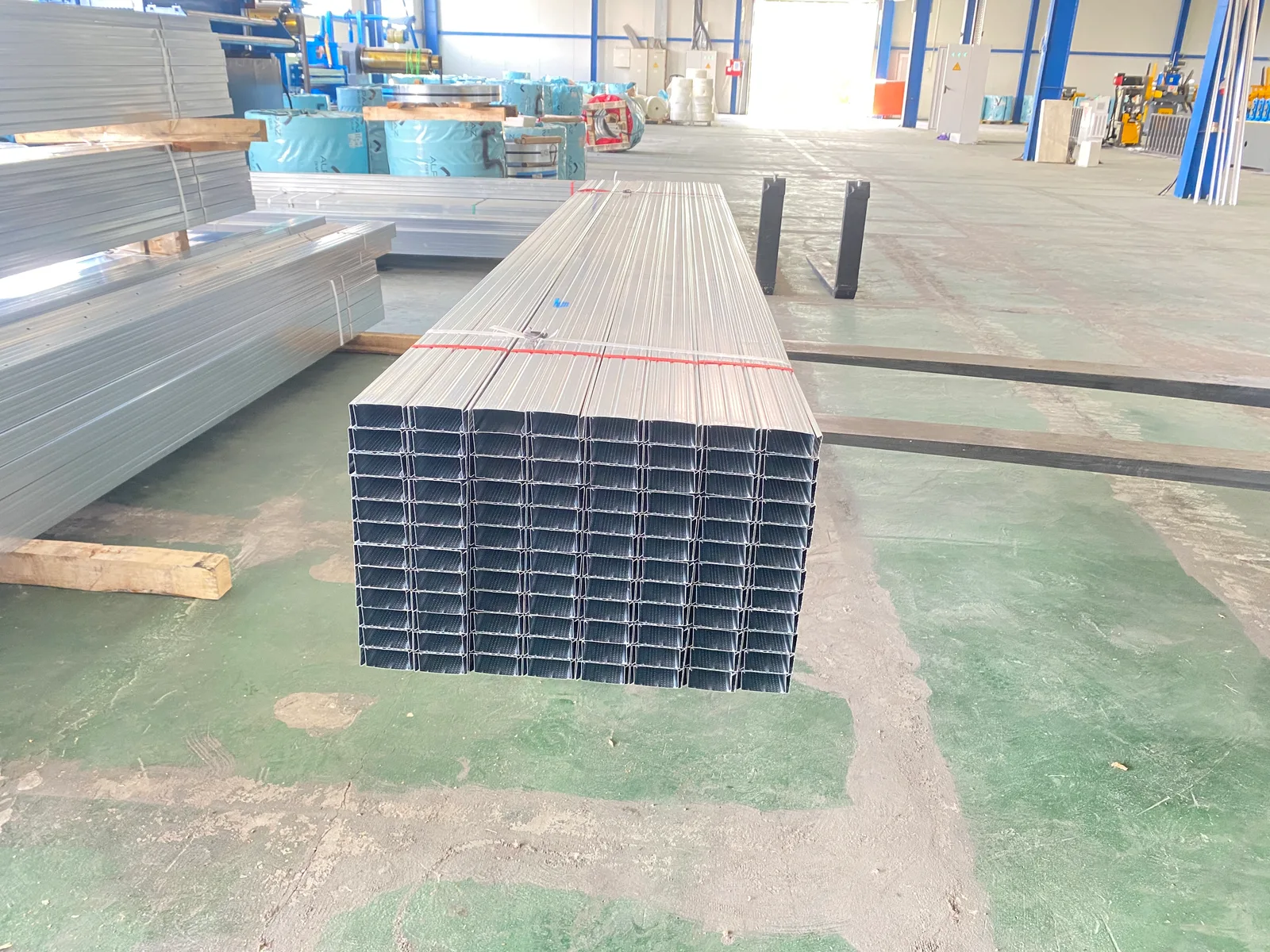
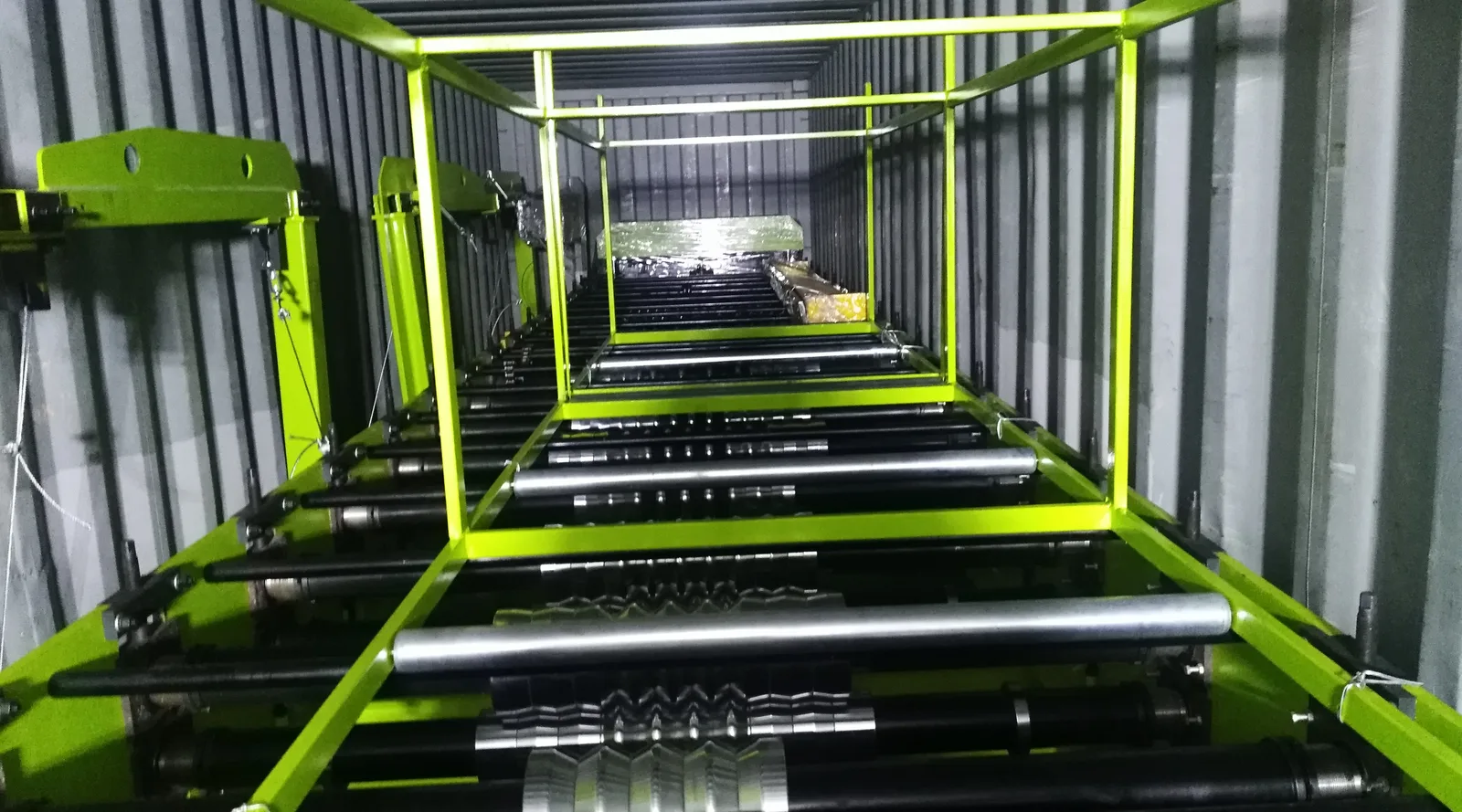
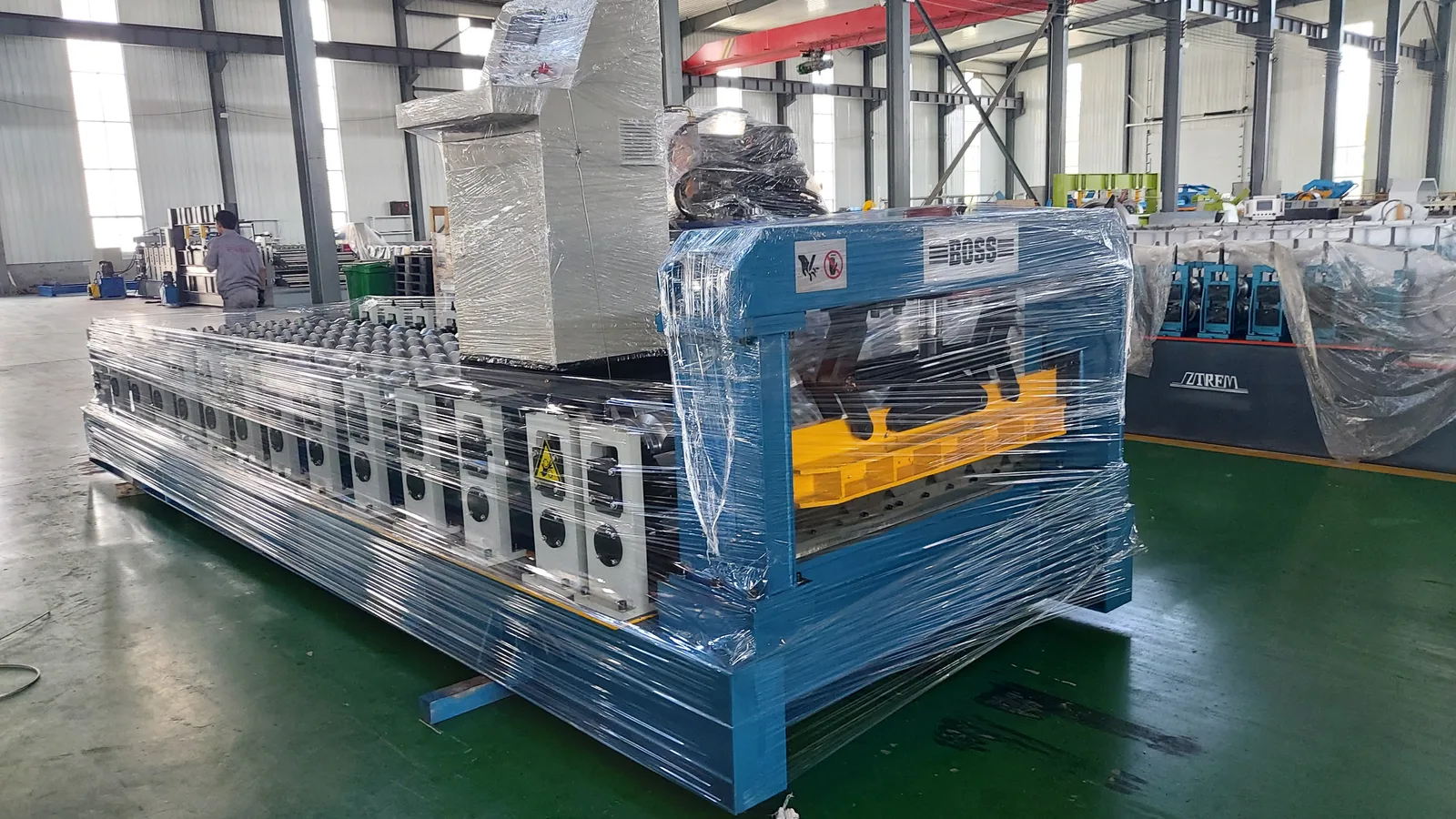
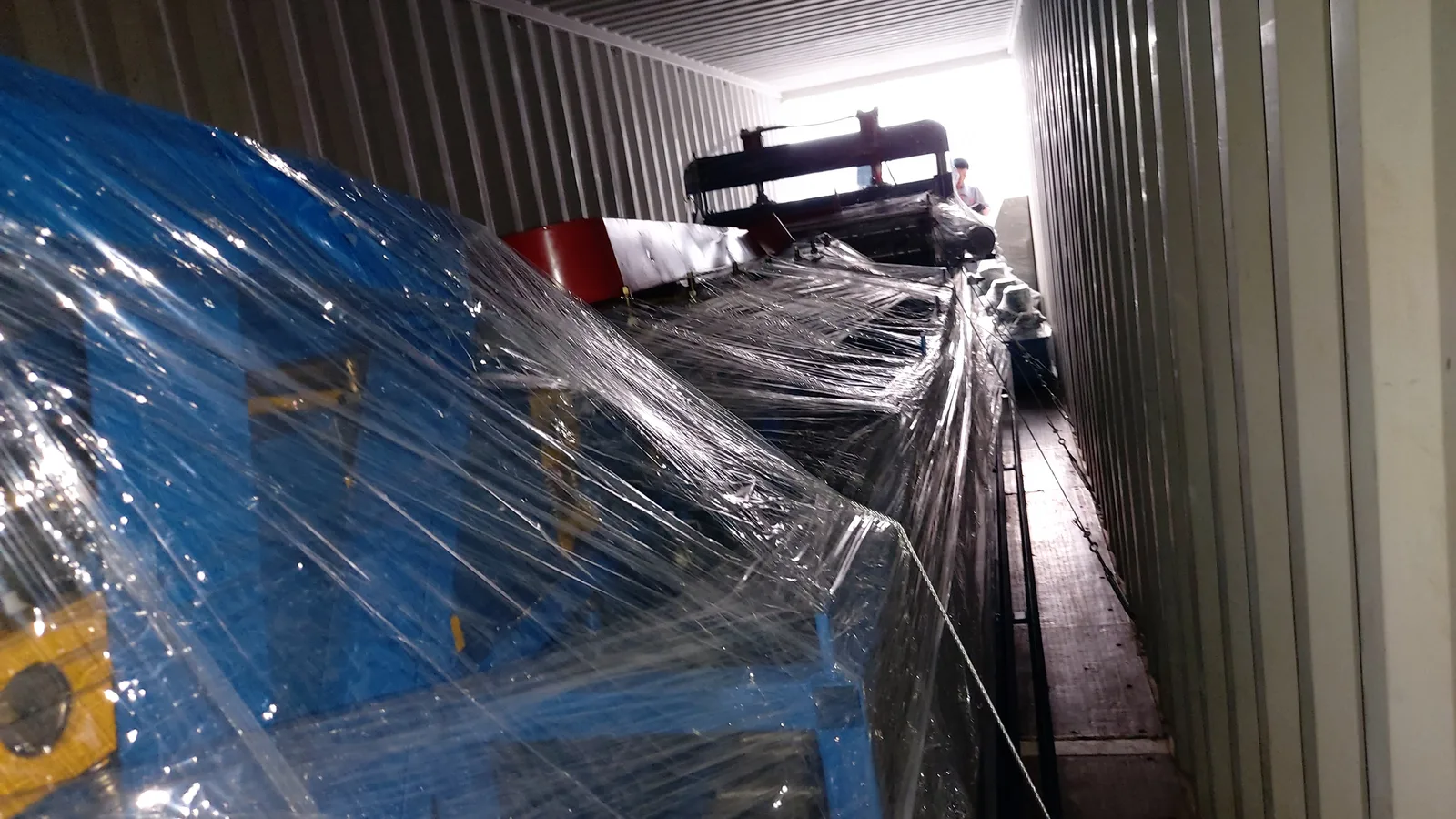
Packed for shipment at the Botou workshop, and commissioned on site at customer factories in Belgium and Poland. Photos published with the customers' permission.
Six things to fix in writing before you order
- Warranty scope — mechanical, electrical and wear parts are three different things
- Most disputes about warranty come from a scope disagreement, not a failure. Wear parts — shear blades, leveling rolls, measuring rolls — wear by design and are normally excluded. Mechanical and electrical components are normally covered. Get the three categories written down separately rather than accepting a single "warranty" line.
- What starts and stops the warranty clock
- Warranty normally runs from commissioning or from shipment, and the two dates are months apart on an export job. Agree which one applies, and whether time lost waiting for spare parts extends it. This is the clause that decides what happens when a fault appears just after the warranty window.
- Travel, accommodation and engineer days
- Installation and training support is usually quoted as engineer days plus travel and accommodation. Ask for the day rate, the number of days included with the order, and who pays for flights, visas and local transport — that is often a larger number than the machine-side items people negotiate over.
- Response route, and what counts as a response
- A promised response time is only meaningful if the route is defined: who is contacted, in what language, and what the first response contains. Ask for the contact route in the contract and test it once during commissioning, so you know it works before you need it.
- Spare parts — prices, lead times and a list, at order stage
- Parts availability is what actually determines uptime a year after installation. Ask for the recommended first-order spare list with prices and lead times attached to the quotation, so the spares budget exists before the machine is installed rather than after the first stoppage.
- Local support expectations, stated honestly
- Decide up front what you will handle yourself — routine roll changes, blade replacement, basic electrical fault-finding — and what you expect from the supplier. A line where the customer can do first-line maintenance and diagnose faults from drawings recovers far faster than one that waits for an engineer.
The parts that decide how long a stoppage lasts
Shear blades
Consumable by definition. Lead time is the number that matters, not the price — a blocked line waiting for a blade costs more per day than the blade costs in total.
Leveling rolls
Wear with tonnage, and worn rolls show up as a flatness problem that operators misdiagnose as a setting problem. Keep a spare set for the roller diameter your line uses.
Measuring and feed rolls
Directly affect cut-length accuracy as they wear or lose grip. On a line with a tight length tolerance this is a routine replacement, not a repair.
Punch and die inserts
The first thing to wear on any line that punches inline. Sized to the hole diameters your sections use — C and Z purlin lines commonly run 11, 13 or 14 mm web holes.
Bearings and drive components
Standard catalogue items in most cases, which means they can usually be sourced locally. Confirm this rather than assuming it, because a non-standard bearing turns a two-hour job into a wait.
Control spares
A PLC module, a VFD or an HMI on the shelf is the difference between diagnosing a fault and waiting for a part. Ask which control items the supplier recommends holding.