Sandwich Panel & Embossing Lines
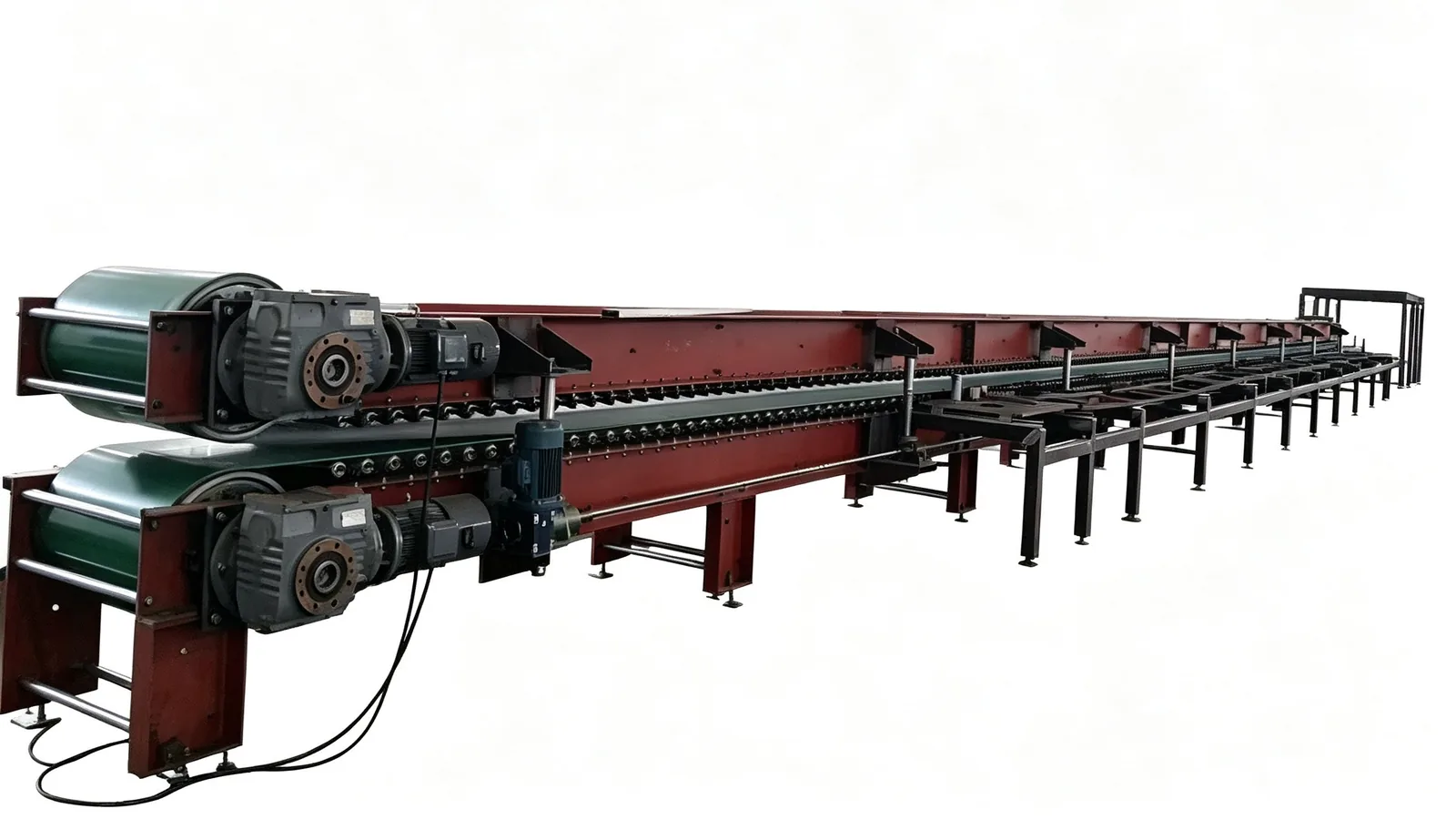
Continuous PU and rock wool insulated sandwich panel production lines.
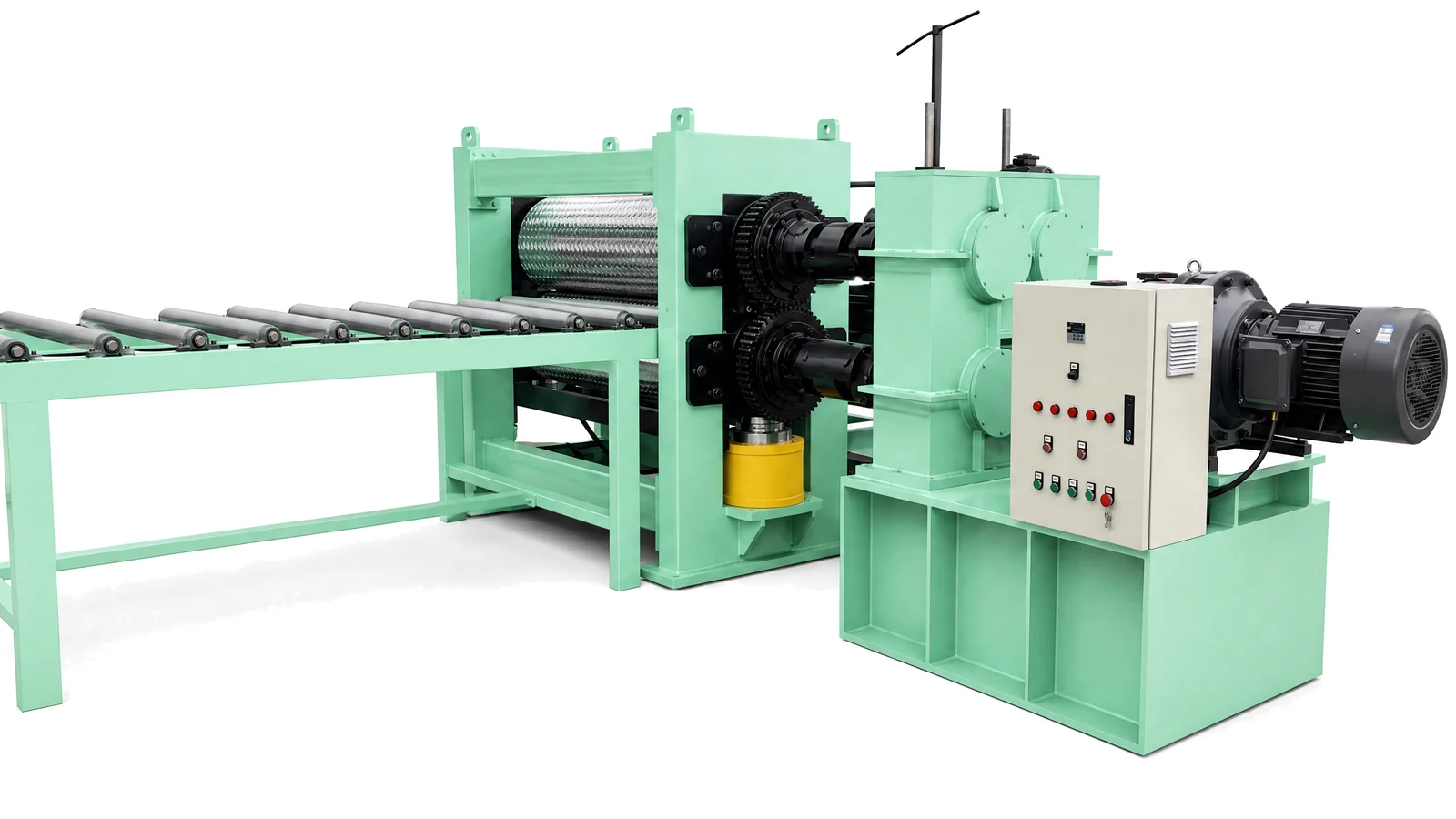
This group covers the two operations that add value to flat coil before it becomes a building product: turning two steel skins and a core into an insulated sandwich panel, and embossing a surface pattern onto coil.
They are very different machines and are grouped together for one reason — both are bought on the properties of the finished panel rather than on forming speed. A sandwich panel is bought on its fire class and its thermal value; an embossed surface is bought on grip, appearance, or its ability to key an adhesive. Neither is a speed purchase.
Sandwich Panel and Embossing Lines
All models available with matched decoiler, leveling unit and runout table as a complete line.
How to choose a panel line
- Continuous or discontinuous — how long is my building?
- A continuous PU or PIR line runs 40–60 m from decoiler to stacker. If your building cannot take that length, the discontinuous route is the practical answer, and it is also the route that handles rock wool. Check the building before choosing the process, not after.
- Which core, and what fire class do I need to reach?
- The core decides the fire class, and the fire class is usually set by the project rather than by preference. PU and EPS are combustible; PIR is a step better; rock wool and mineral wool reach A1 or A2, which is what fire-rated facades, escape routes, plant rooms and food factories require. That single requirement often decides the whole line.
- What panel thickness and width will I sell?
- Thickness runs 30–200 mm, set by the belt gap in the press, and width is normally 950, 1000 or 1150 mm. Above about 150 mm the line speed has to come down so the core cures fully through the thickness, so the thick end of the range is a capacity decision as much as a specification one.
- Do I need roof panels as well as wall panels?
- Roof panels need an additional profile set for the overlap detail and usually a higher-density core to resist point loading. Most producers run wall panels on the main line and switch the profile set for roof work, rather than buying two lines.
- Is the embossing for appearance, grip, or bonding?
- All three are real uses and they need different depths. Appearance wants a distinctive pattern; grip is a safety requirement on walkway and tread material; bonding wants a textured face so the adhesive has a mechanical key. Pattern depth is where these three separate, and depth also has a structural limit.
- Standalone embossing, or inline ahead of a forming line?
- Running embossing inline ahead of a profile forming machine saves a handling pass, but the two machines run at different instantaneous speeds, so an accumulator or dancer is needed between them. Standalone embossing is simpler and lets you sell embossed coil as a product in its own right.
Panel types and patterns compared
| Type | How it is made | Range | What to know |
|---|---|---|---|
| PU / PIR sandwich panel | Foam injected and expanded in place under a heated double-belt press | 30 – 200 mm thick · 950 / 1000 / 1150 mm wide | Core density 38–45 kg/m³ is set by the metering unit, not by the press. Above about 150 mm the line must slow so the core cures through |
| Rock wool panel | Pre-formed slabs laid in and bonded with two-component PU adhesive | 2 – 5 m/min line speed | The only core reaching A1 or A2 — non-combustible. Slower than PU because the adhesive needs time to set under the press |
| EPS panel | Slab laid in and bonded | 30 – 200 mm thick | Cheapest core, for non-rated lightly loaded partitions and ceilings |
| Embossed coil — wood grain | Engraved hardened steel rolls, 0.05–0.30 mm pattern depth | Coil 300 – 1300 mm wide | Used for appliance panels, doors and interior cladding where the pattern imitates timber |
| Embossed coil — stucco / diamond | Same, with a functional pattern | Pattern depth 0.05–0.30 mm | Grip, not decoration — walkway and stair tread surfaces, where the texture is a safety requirement |
What to fix before you order
Measure the building before choosing the process
A continuous line needs 40–60 m of length. This is a hard constraint that decides the answer before any technical comparison does, and it is the most common reason a customer ends up on a discontinuous line rather than the continuous one they originally wanted.
Fire class comes from the core, not from the machine
No machine specification makes a PU panel non-combustible. If the project requires an A1 or A2 rating, the core has to be rock wool or mineral wool, and that in turn fixes the bonding process — adhesive rather than foaming — and the line speed.
The metering unit sets the panel, the press only sets the thickness
Core density of 38–45 kg/m³ is achieved by the foam metering and injection unit, and it is what determines the panel’s thermal and mechanical performance. The double-belt press sets thickness and cures the core. Buyers often focus on the press and under-specify the metering.
Zone temperature control is not a luxury on a long line
On a 40–60 m press the cure temperature has to be held along the whole length, or the core varies from the head of the panel to the tail. PLC zone control is what keeps the panel consistent, and inconsistency is what gets a panel rejected on site.
Embossing pattern depth is a structural variable
A pattern is 0.05–0.30 mm deep and it stretches the surface locally. On thin sheet a deep pattern reduces the effective strength, so keep below about 0.2 mm where the material is structural, and check the coating system before committing to a depth — a rigid paint will crack at the pattern shoulders.
Test the coating if you are embossing pre-painted coil
Pattern and paint system are not independent. We can supply before-and-after tensile data for the depth you intend to run, but the definitive test is the specific coil you will buy. A short trial saves rejecting a full production run.