Guardrail & Barrier Machines
Highway W-beam guardrail and noise barrier panel roll forming lines.
Barrier and safety is the heaviest group we build. Highway guardrail at 2.5–4.0 mm, scaffold plank at 1.2–2.5 mm and fence pales at 0.8–2.5 mm are all structural or safety products, and all three are governed by a standard that fixes the section geometry rather than by a catalogue size.
That changes how the machine has to be bought. On a roofing line the customer names a profile; here the customer names a standard, and the standard dictates the rail length, the hole pattern, the material grade and often the test the finished product has to pass. Settle the standard first — every other decision follows from it.
Guardrail & Barrier Roll Forming Machines
All models available with matched decoiler, leveling unit and runout table as a complete line.
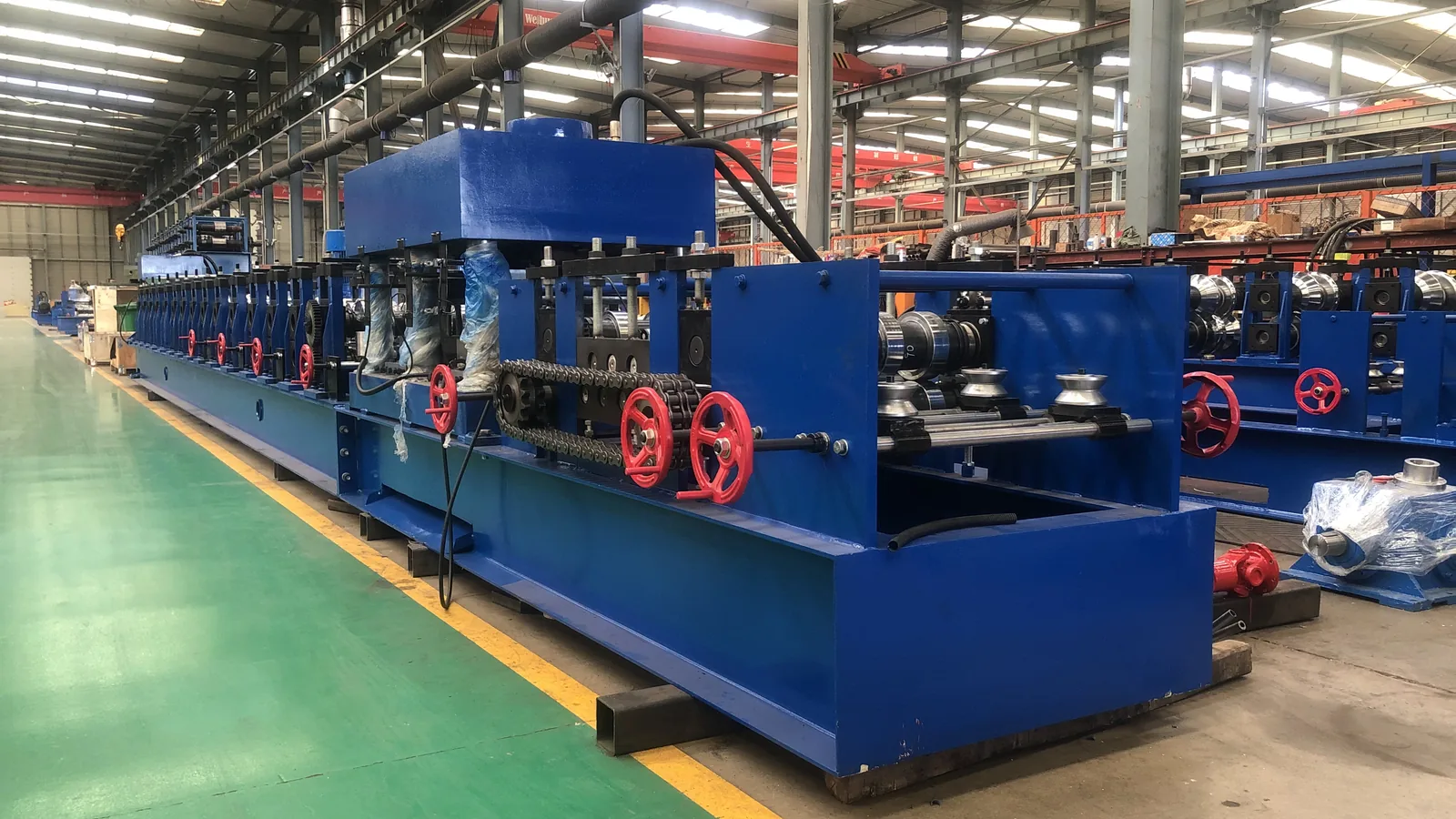
W-Beam Guardrail Machine
Highway guardrail to EN 1317 / ASTM M180, 4320 mm output, inline bolt punching
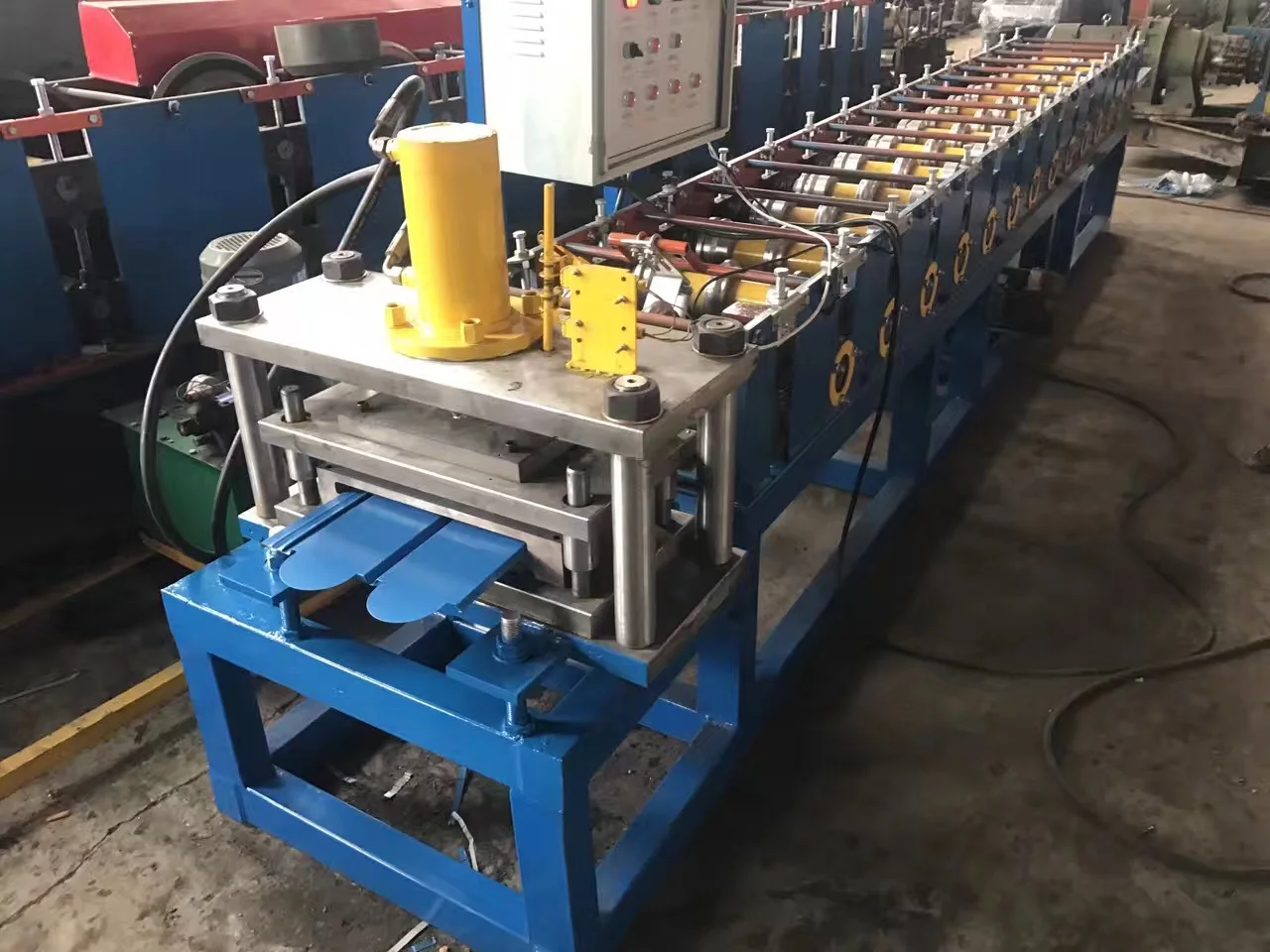
Fence Panel Roll Forming Machine
Palisade pales, rails and panel sections for perimeter security fencing
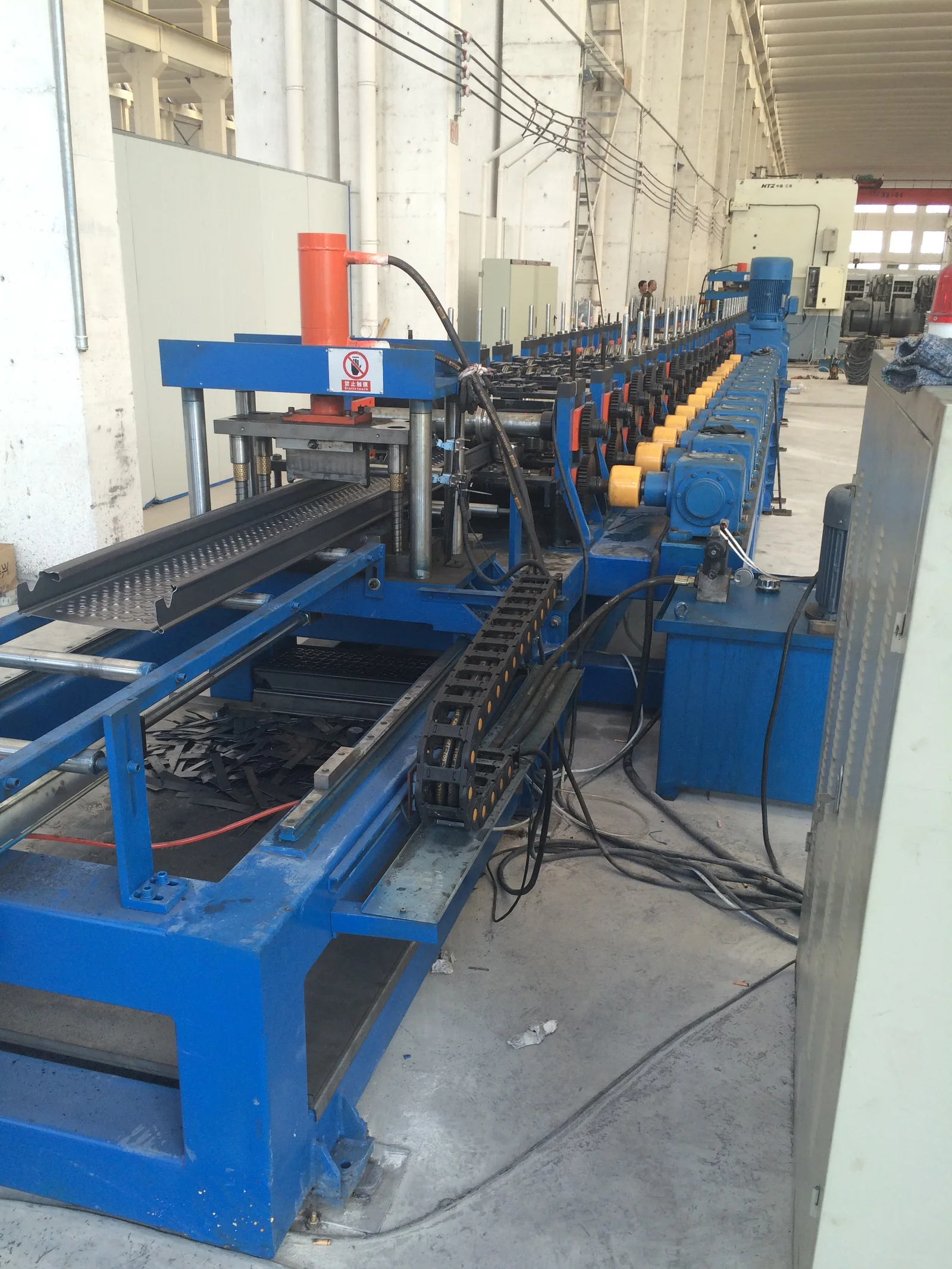
Scaffold Plank Line
Anti-slip steel scaffold planks formed and perforated in one pass
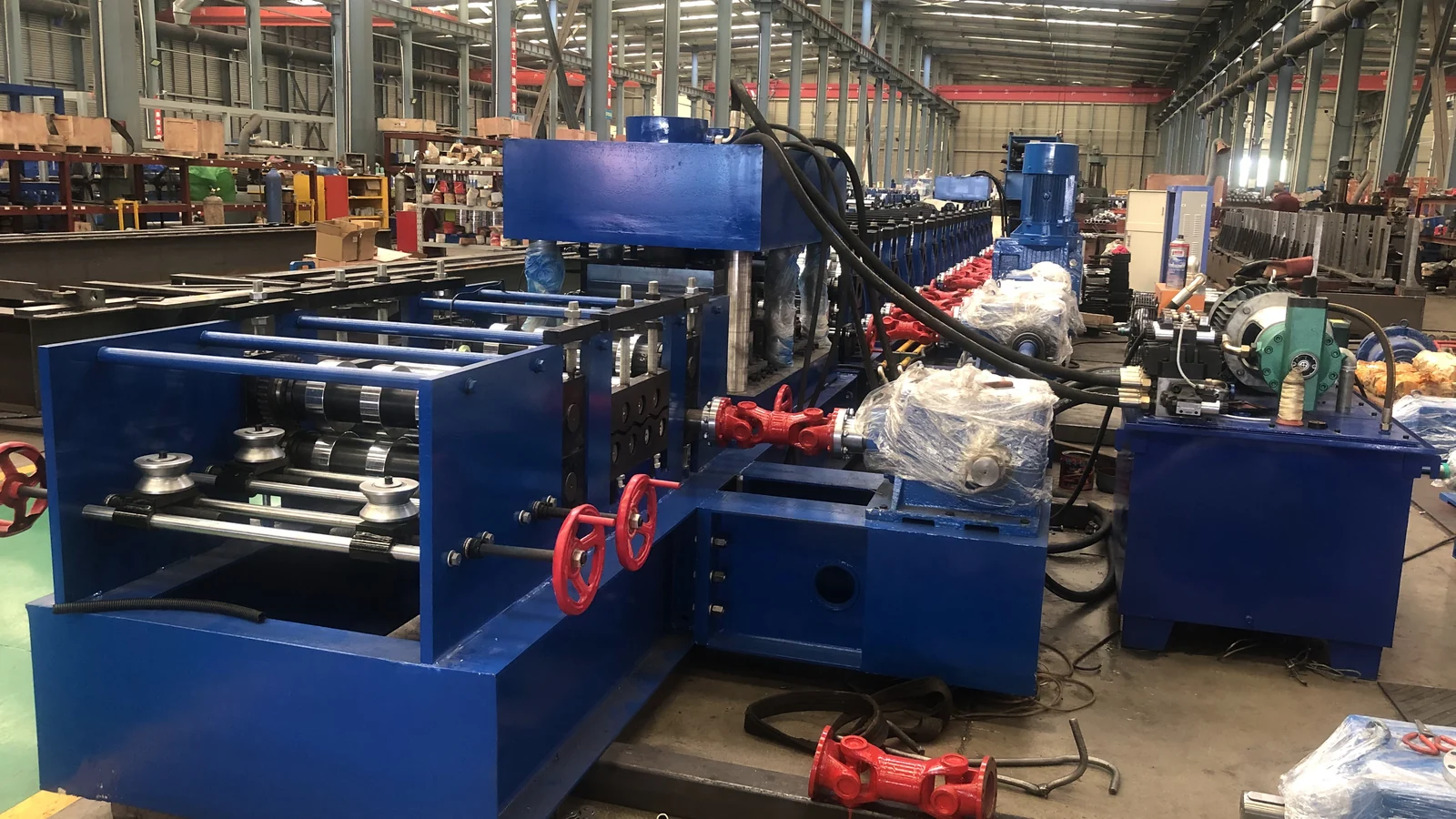
ASTM M180 Guardrail Roll Forming Machine
North American W-beam guardrail line. ASTM M180 Class A and Class B, 3,810 mm (12'6") sections, inline bolt hole punching — the specification US, Canadian and Latin American road authorities require.
How to choose a barrier line
- Which standard does the product have to satisfy?
- This is the first question, because it changes the machine. Guardrail is made to EN 1317-2 at 4320 mm, ASTM M180 at 3810 mm, or AS/NZS 3845 at 4320 mm — the rail lengths differ between markets, and the hole pattern and material grade differ with them. Scaffold plank is rated to a scaffolding standard rather than a section size.
- Is the machine certified, or the product?
- CE applies to the machine. Product approval is a different thing: guardrail gets its approval from impact testing of the installed barrier, and scaffold plank from load testing of the plank. Those approvals are held by the producer, not supplied with the machine, so confirm which one your customer is asking for.
- What thickness am I actually running?
- Guardrail runs 2.5–4.0 mm, scaffold plank 1.2–2.5 mm and fence pales 0.8–2.5 mm. Thickness is the single most important thing to fix before ordering, because roll loads, press tonnage and drive power are all designed around it. If you intend to run thin material on the same line as thick, say so.
- Do I need punching on the line, or off it?
- On all three products the answer is on the line, and specifically on the flat strip before forming. Guardrail needs bolt slots and fixing holes at a standard pitch, scaffold plank needs its perforation and dimpling, and fence pales need the rail fixing. Punching a formed heavy section distorts it and loses position accuracy.
- Are the posts, hooks or end fittings made in-house?
- Normally not. Scaffold plank hooks, guardrail posts and fence posts are heavier and made in lower volume than is economic to tool, so they are bought in and the line covers the roll formed parts. If you intend to make them, tell us — it is a separate and heavier machine.
- What finish is specified?
- Hot-dip galvanising is the standard for outdoor barrier and fencing work, and it is specified on expected life rather than appearance — around 20–25 years outdoors with minimal maintenance. Powder coating over galvanising is added where a colour is specified. Neither is done on the roll forming line.
Barrier and safety products compared
| Product | Standard | Section / size | Thickness |
|---|---|---|---|
| Highway W-beam guardrail | EN 1317-2 (4320 mm) · ASTM M180 (3810 mm) · AS/NZS 3845 | W-beam, 490 mm in / 312 mm cover · 90 mm height | 2.5 – 4.0 mm |
| Thrie-beam guardrail | Project specification | Three-wave, for higher impact load | 2.5 – 4.0 mm |
| Scaffold plank | Scaffolding standard — load rated per plank | Width 210 / 230 / 250 / 320 mm · length 1.0–4.0 m | 1.2 – 2.5 mm |
| Fence pale (palisade) | Project specification | Pale width 50–100 mm · fence height 1.2–3.0 m | 0.8 – 2.5 mm |
What to fix before you order
Name the standard, not the product
Saying "guardrail" is not enough. EN 1317-2 and ASTM M180 specify different rail lengths and hole patterns, so a line tooled for one will not supply a project that calls for the other. Give us the standard clause your customer is citing.
Separate machine CE from product approval
A CE Declaration of Conformity for the machine is not the same as product approval for the barrier or the plank. If your customer is asking for a certified product, that certification has to be obtained by testing the installed or manufactured product, and no machine supplier can hand it over.
Punching flat is what buys the tolerance
Guardrail length accuracy of ±2 mm is achievable because the bolt slots are punched while the strip is flat. Punching or drilling the finished section does not hold that, and on 4 mm material it also distorts the profile. This is worth confirming explicitly with any supplier you compare.
Thickness range is the most expensive thing to get wrong
Roll loads and press tonnage follow the thickness range. A line built for 2.5–4.0 mm cannot simply be re-set to run 1.5 mm, and a line built for 1.5 mm cannot be pushed up to 4 mm. Fix the range before the quotation, not after.
Posts, hooks and fittings are usually bought in
That is normal and it is not a weakness in the line. What matters is that the roll formed part — the rail, the plank, the pale — is made to the standard, because that is the part that carries the load and gets inspected.
Finish is a separate supply chain
Hot-dip galvanising is a subcontract operation. Confirm the galvaniser’s tank length against your maximum product length before you commit to the product length, because an oversized rail cannot be dipped and has to be spliced.