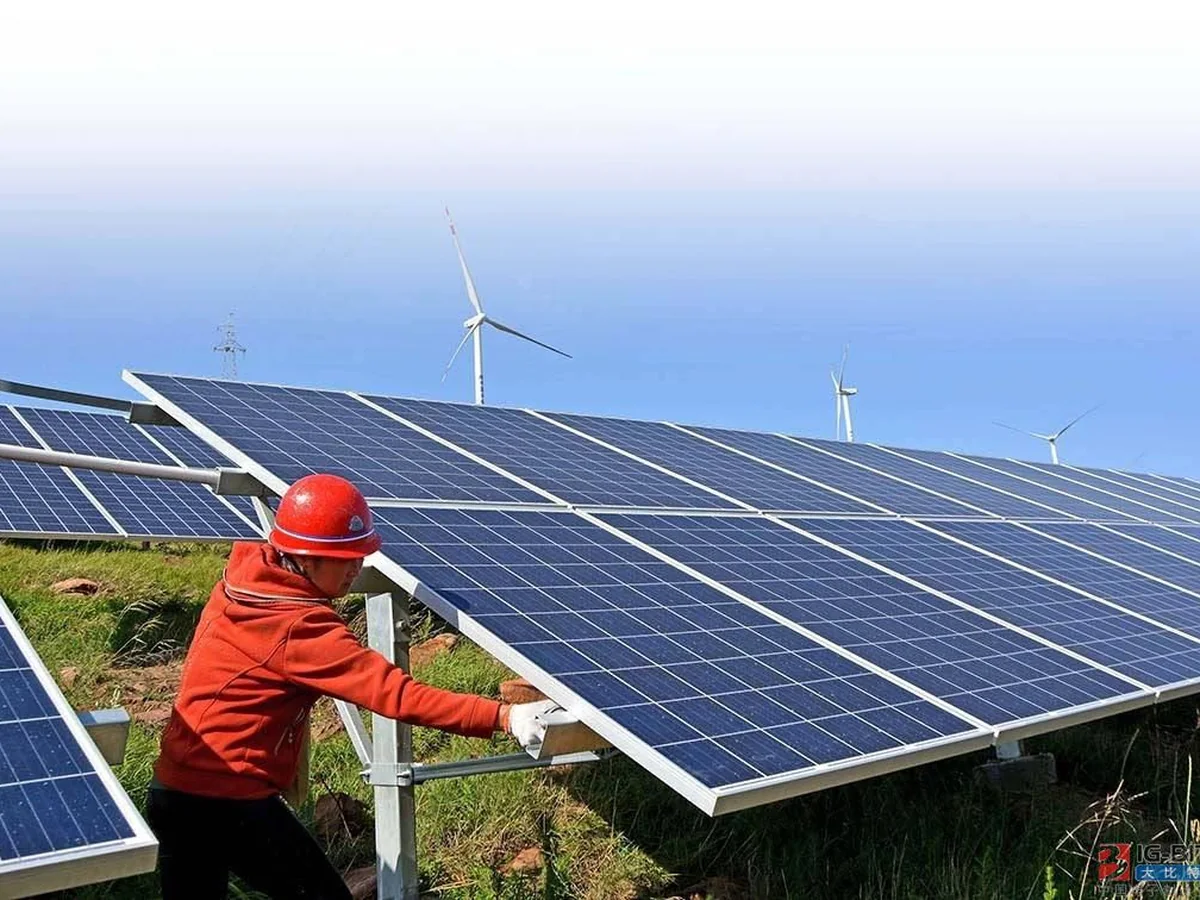
Solar Mounting Roll Forming Machines
Roll forming lines for solar PV mounting structures: strut channel, omega rails, photovoltaic brackets and cable management systems.
The global rollout of solar photovoltaic capacity has created one of the fastest-growing markets for roll-formed steel and aluminium profiles.
Every PV panel installation — from a rooftop array of a few kilowatts to a utility-scale ground-mount farm of hundreds of megawatts — requires a mounting structure, and the vast majority of those structures use cold-formed profiles produced on roll forming lines.
Understanding the roll forming side of the solar mounting business is essential for producers considering this market.
Solar Mounting Profiles: What Gets Produced
Three main profile families cover the majority of the solar mounting market. Strut channel (also called Unistrut, P1000 channel, or simply channel) is a C-section with in-turned lips and a continuous row of 9 mm x 18 mm slots punched at 25 mm or 50 mm pitch. The slots accept standard strut nuts, allowing panels, cable trays and junction boxes to be bolted at any point along the channel. Strut channel is the standard structural member for rooftop commercial PV and utility-scale racking in most markets. Omega rail (also called hat-section or top-hat rail) is an open inverted-U section used as the horizontal panel rail in residential rooftop PV systems. Cable tray manages the DC cabling from panel strings to the inverter station, running on the same support structure as the panels.
Strut Channel Production in Detail
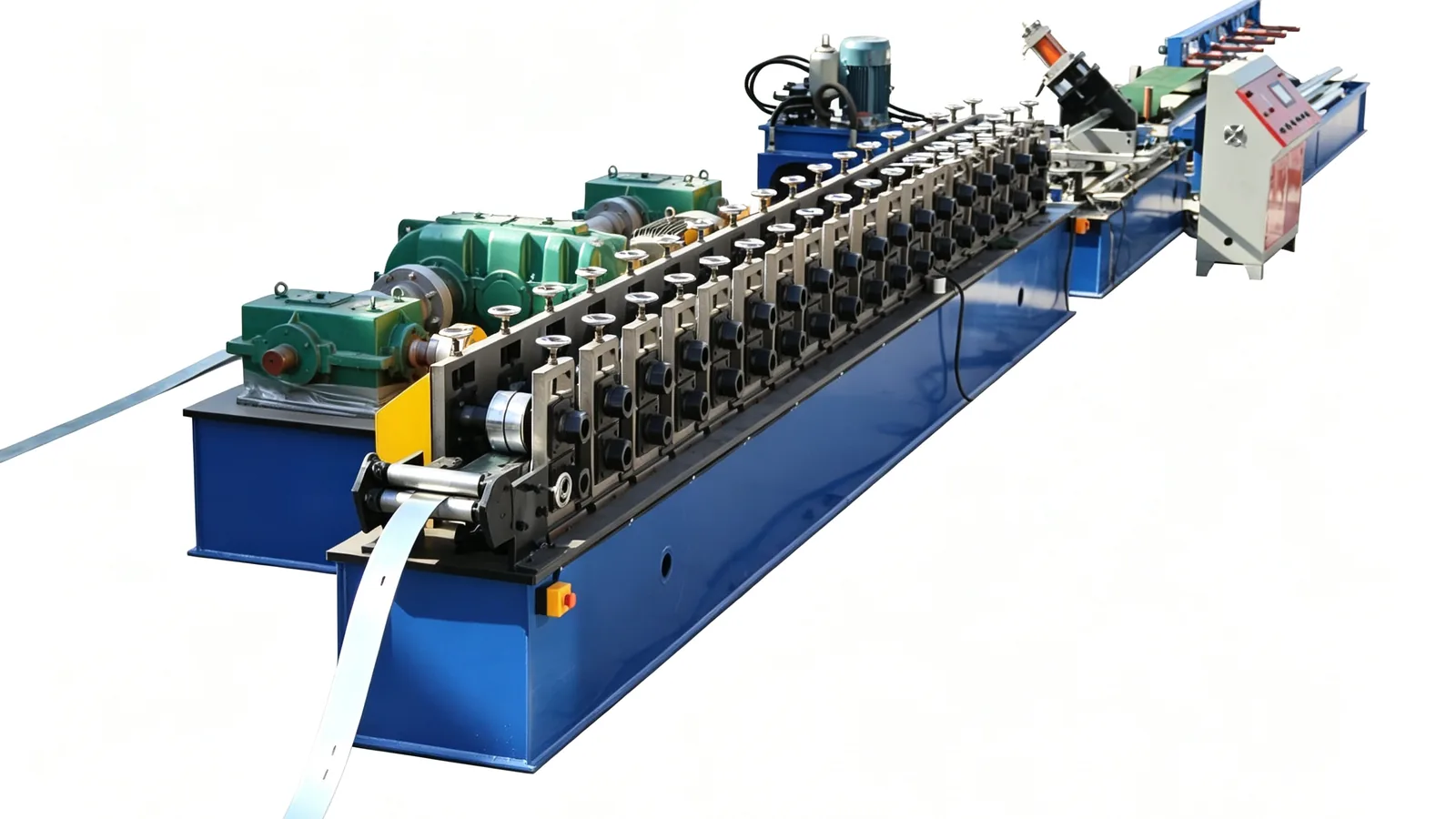
A strut channel machine is perhaps the most versatile single-product roll forming line available, because the same profile sells into four distinct markets: solar mounting, industrial cable management, HVAC ductwork support, and warehouse racking. For a producer entering the solar market, this multi-market capability significantly reduces commercial risk.
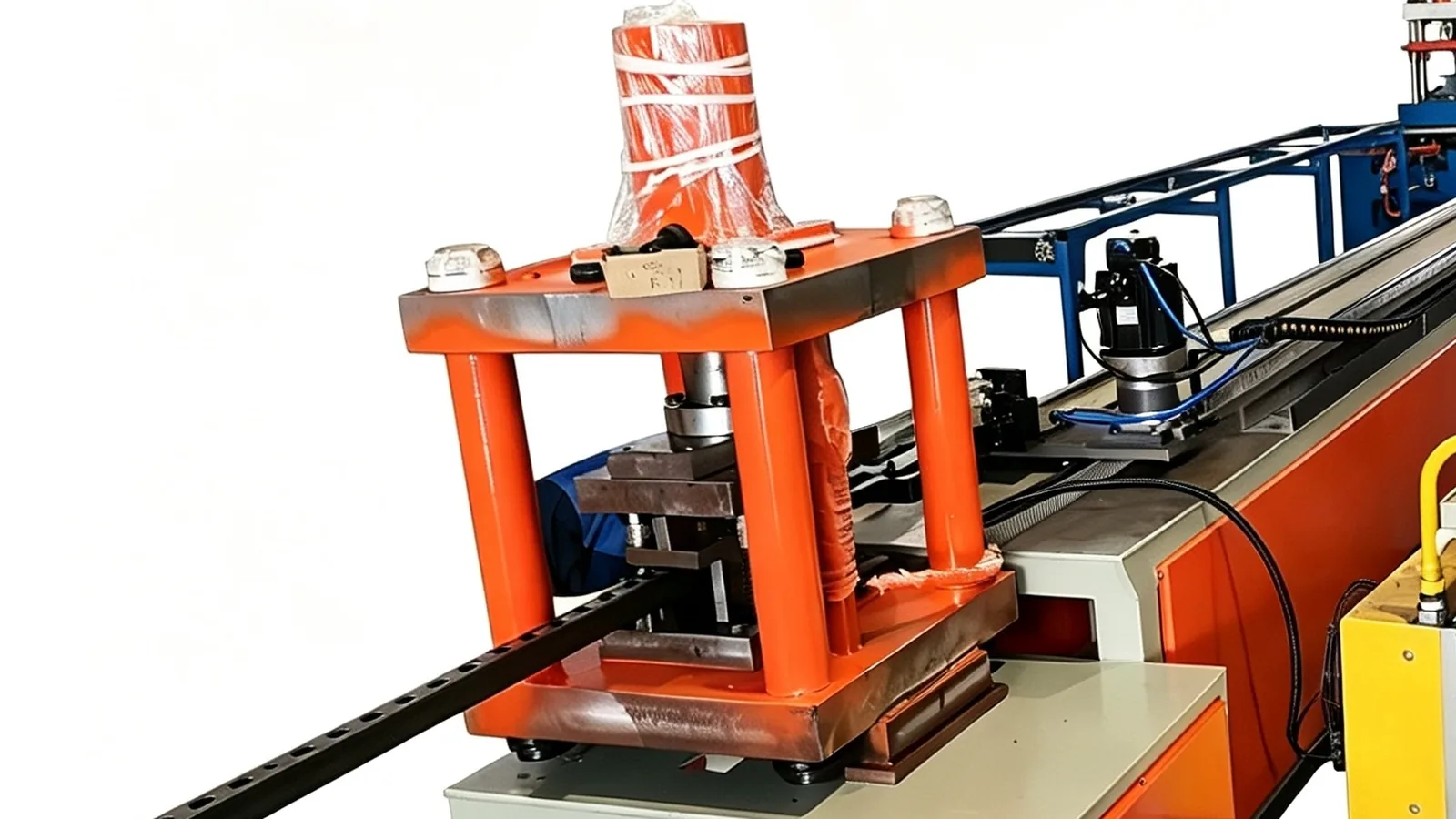
The inline slot punch is the critical component that differentiates a strut channel line from a generic C-section line. It must produce the 9 mm x 18 mm slots at precise 25 mm or 50 mm pitch to accept standard strut hardware.
The punch is hydraulically actuated and synchronised to the forming speed, allowing continuous production without stopping the line between punching cycles.
The standard slot pattern is the P1000 or B11 pattern used with North American and European hardware, but producers serving markets with different standards can order custom punch tooling.
Material Selection for Solar Profiles
Steel strut channel for utility-scale solar is almost always hot-dip galvanised after forming (HDG), because the aggressive outdoor environment of a ground-mount solar farm demands a thicker zinc coating than pre-galvanised coil can provide.
The post-forming HDG process requires steel suitable for galvanising — typically S235JR or Q235B at 2.0–3.0 mm. Some markets accept pre-galvanised Z600 or Galvalume AZ150 for rooftop installations where the profile is sheltered by the panel above it.
Aluminium omega rails can be roll formed for smaller producers who cannot justify the high tooling cost of extrusion; roll-formed aluminium omega requires polyurethane guide rolls to prevent surface scoring and careful leveling, because aluminium work-hardens differently from steel.
Cable Tray for Solar Farms
DC cable management in utility-scale solar involves kilometre lengths of cable tray running from string combiner boxes to the inverter stations.
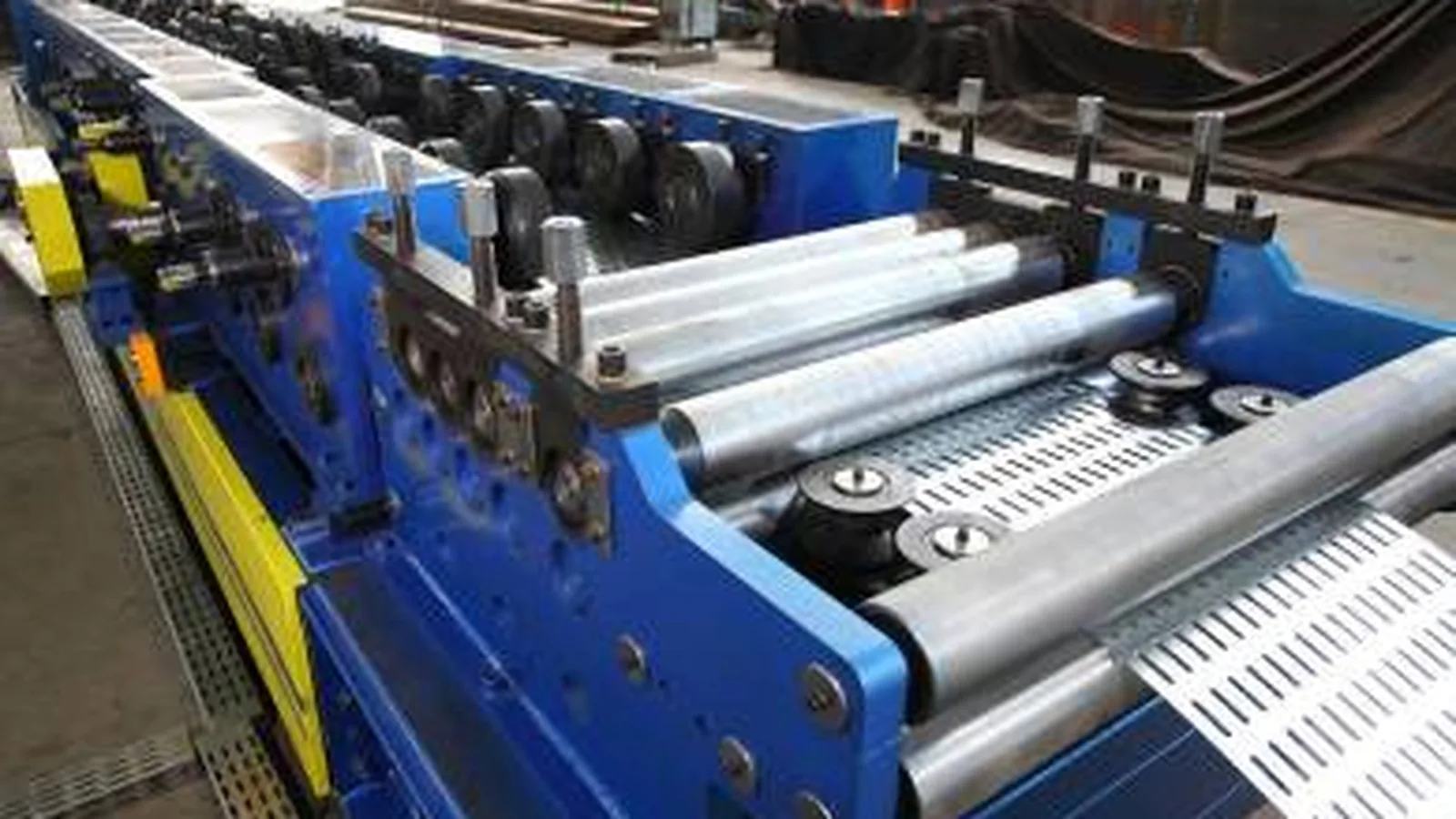
5 mm galvanised steel, produced on the same platform as the strut channel machine but with a different roll cassette and perforation die.
Some producers run cable tray on the strut channel machine with a cassette change; others invest in a dedicated cable tray line when volume justifies it.
Output and Market Opportunity
A strut channel line with inline slotting runs at 10–20 m/min and produces roughly 600–800 m per shift.
For a producer serving regional solar EPCs (engineering, procurement and construction contractors), that output is sufficient to supply several mid-scale commercial rooftop projects per week.
Utility-scale projects require much larger volumes in a short delivery window — typically several hundred tonnes over 2–4 weeks — which favours producers who can run multiple shifts or maintain pre-formed stock.
The solar mounting market rewards producers who can offer quick delivery, consistent quality in hole location and straightness, and CE certification.
Machines for This Application
Typical Production Line Setup
| Component | Role | Necessity |
|---|---|---|
| Hydraulic decoiler | Uncoils galvanized or aluminium coil | Must-have |
| Leveling unit | Removes coil set before forming | Standard inclusion |
| Servo feeding unit | Accurate length control for slotting | Recommended |
| Strut channel machine | Forms the C-channel section | Must-have |
| Inline slot punch | 9×18 mm slots at 25 or 50 mm pitch | Must-have for strut |
| Hydraulic cutting unit | Cuts to length | Must-have |
| Runout table | Receives finished profiles | Standard inclusion |