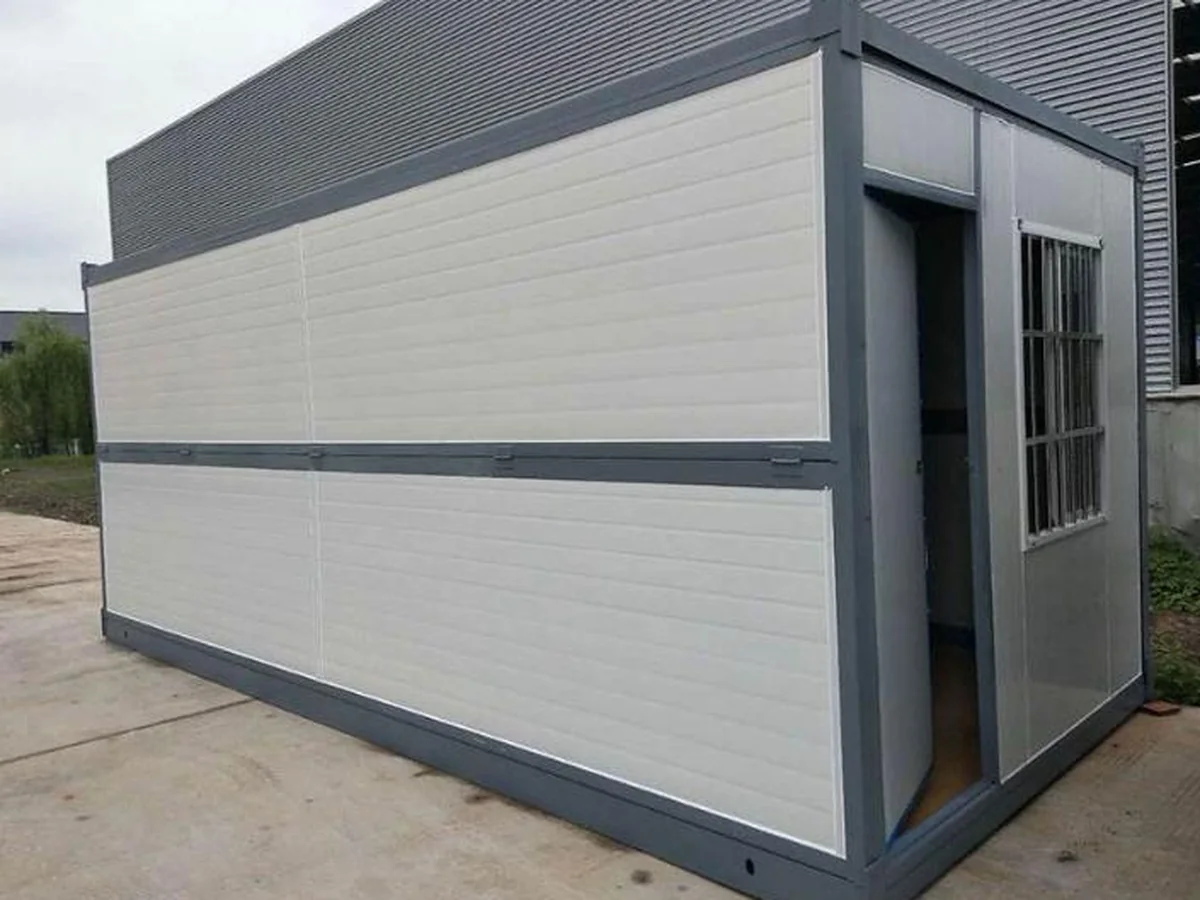
Sandwich Panel Production Lines
Continuous and discontinuous insulated panel production lines for PU, PIR, EPS and rock wool core sandwich panels.
Insulated sandwich panels combine structural facing sheets with a thermally insulating core in a single factory-produced component.
They are used as roof and wall cladding in cold storage facilities, food processing plants, clean rooms, logistics warehouses and modular buildings — anywhere that thermal performance, speed of construction and low ongoing maintenance cost matter.
The machines that produce sandwich panels are among the most complex and capital-intensive in the roll forming industry.
Panel Structure and Core Types
All sandwich panels share the same basic structure: two profiled metal facing sheets bonded to a continuous insulating core. The facing sheets are produced by roll forming from 0.4–0.6 mm pre-painted galvanised steel coil. The core material determines the panel insulation value, fire rating, cost and processing requirements.
Polyurethane (PU) and polyisocyanurate (PIR) are the most widely used core materials. PU gives a thermal conductivity of around 0.022 W/m·K, which allows a 100 mm panel to achieve a U-value of around 0.2 W/m²K — adequate for cold storage down to about -25°C. PIR gives slightly better fire performance (Euroclass C vs B2 for PU) and is specified for many European markets where fire regulations have tightened. Both PU and PIR are foamed in-place on the continuous production line using a heated double-belt press.
EPS (expanded polystyrene) is a lower-cost core used in less demanding applications, made on discontinuous batch lines where pre-formed EPS blocks are bonded between the face sheets with adhesive. Rock wool (mineral wool) core panels offer significantly better fire performance — Euroclass A2, non-combustible — at the cost of higher weight. Rock wool panels are specified for buildings where fire regulations require non-combustible cladding: airport terminals, car parks, high-rise buildings and industrial plants handling flammable materials.
The Continuous PU/PIR Production Line
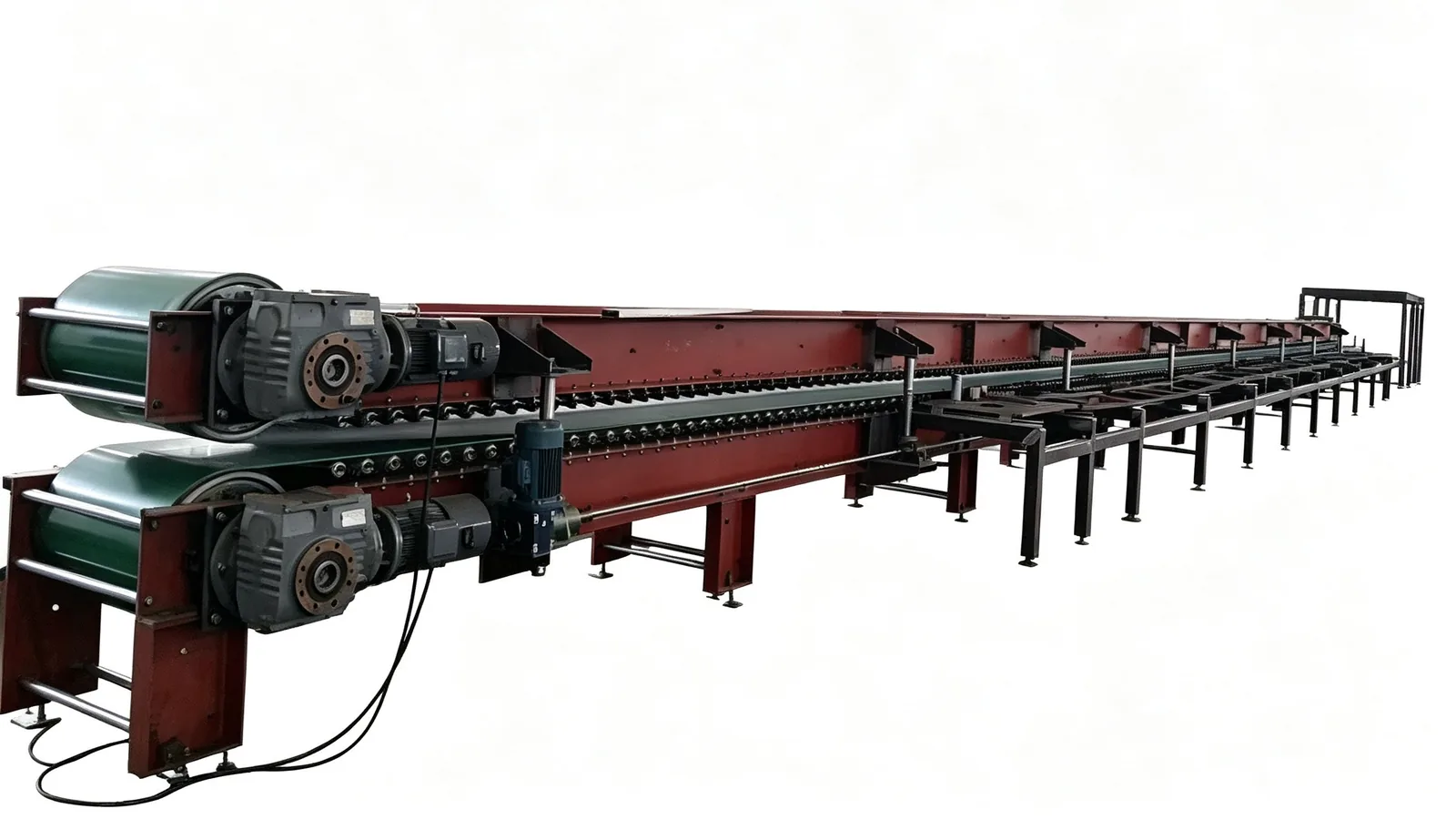
A continuous sandwich panel line for PU or PIR production is 40–60 m long and includes: double decoilers for upper and lower face sheet coils, profile forming sections for both face sheets, the foam injection and mixing head, a heated double-belt press (typically 20–30 m, the most capital-intensive component), a cross-cut panel saw, and a stacker or vacuum lifter.
Line speed is 3–8 m/min depending on panel thickness and core density — slower for thick (150–200 mm) panels because the foam needs longer cure time in the belt press.
Controlling foam quality is the central challenge: the mixing ratio of polyol to isocyanate, the injection temperature and the press temperature must all be kept within tight tolerances to achieve consistent density, cell structure and bond strength.
Panel Dimensions, Applications and Output
Standard panel thicknesses are 40, 50, 60, 80, 100, 120, 150 and 200 mm. Standard panel widths are 950 mm, 1000 mm and 1150 mm depending on the profile.
Panel lengths are cut to order, typically 2–12 m for wall panels and up to 14–16 m for roof panels. Wall panels are installed vertically, with the shiplap edges interlocking horizontally to create a weathertight joint.
Roof panels span between purlins — for a 100 mm PU panel at typical industrial loads, spans of 4–6 m are typical.
Cold storage panels have a dedicated joint system that eliminates thermal bridging at panel edges, which is a significant source of heat gain if not properly detailed.
Typical Production Line Setup
| Component | Role | Necessity |
|---|---|---|
| Double decoiler | Upper and lower face sheet coil | Must-have |
| Profile forming machine | Forms both face sheets | Must-have |
| Foam injection unit | Meters and injects PU/PIR chemicals | Must-have for PU |
| Heated double-belt press | Cures the foam, sets thickness | Must-have |
| Cross-cut saw | Cuts panels to length | Must-have |
| Stacker / vacuum lifter | Handles finished panels | Recommended |