Solar & Cable Tray Machines
Strut channel, omega rails and cable tray roll forming lines for solar PV and cable management.
This group covers three sections that look unrelated but share one requirement: strut channel, omega rails and cable tray are all long, light profiles that are assembled on site with standard fittings, clamps and couplers rather than being cut and drilled to fit.
That single fact decides where the engineering goes. On these lines the critical unit is the punching or slotting station, not the forming stations — because if the slot pitch is wrong, a standard fitting will not slide into it, and the whole section is unusable regardless of how well it was formed.
Solar & Cable Tray Roll Forming Machines
All models available with matched decoiler, leveling unit and runout table as a complete line.
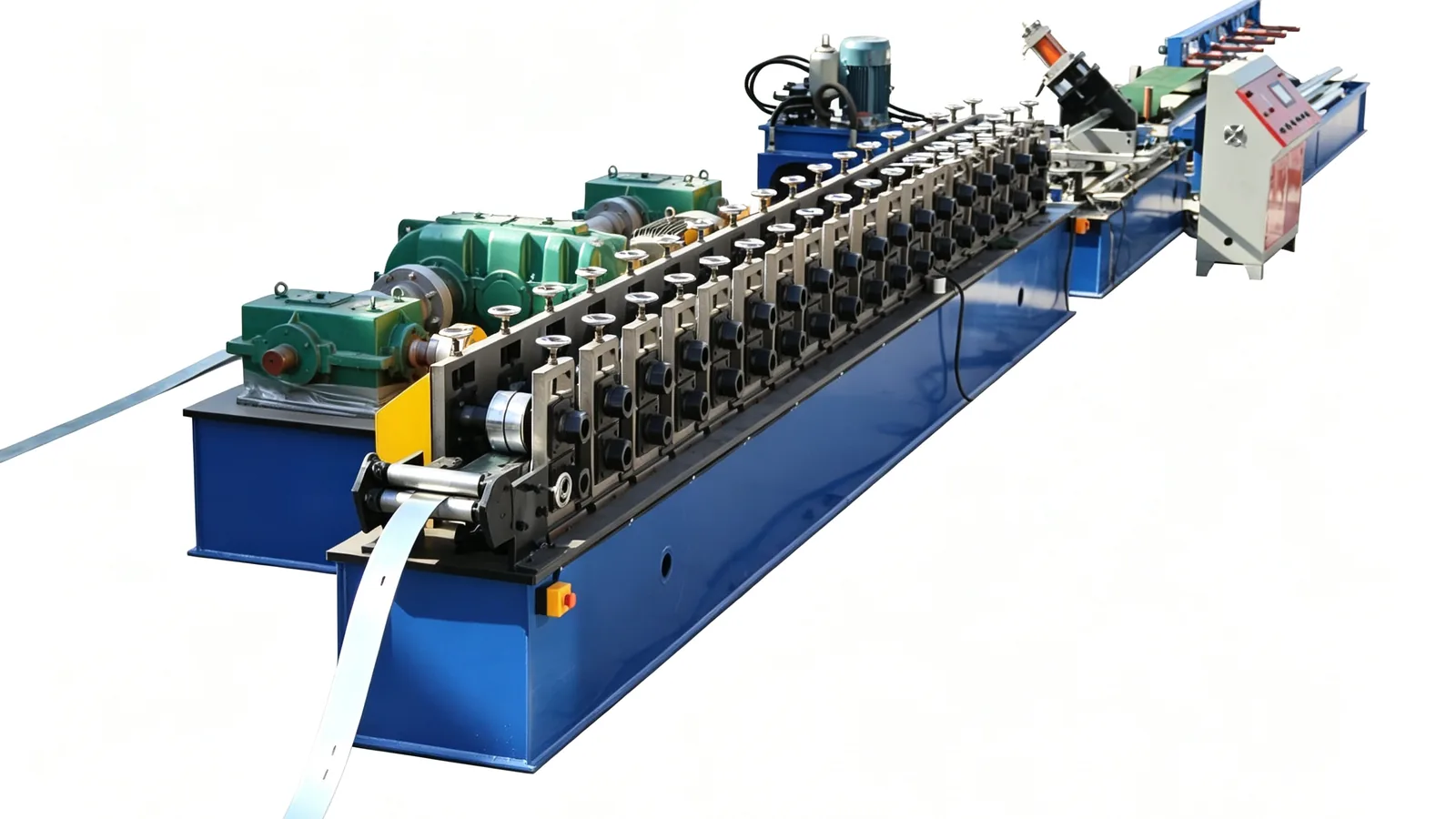
Solar Strut Channel Machine
Unistrut / P1000 channel with inline slotting; racking uprights on the same platform
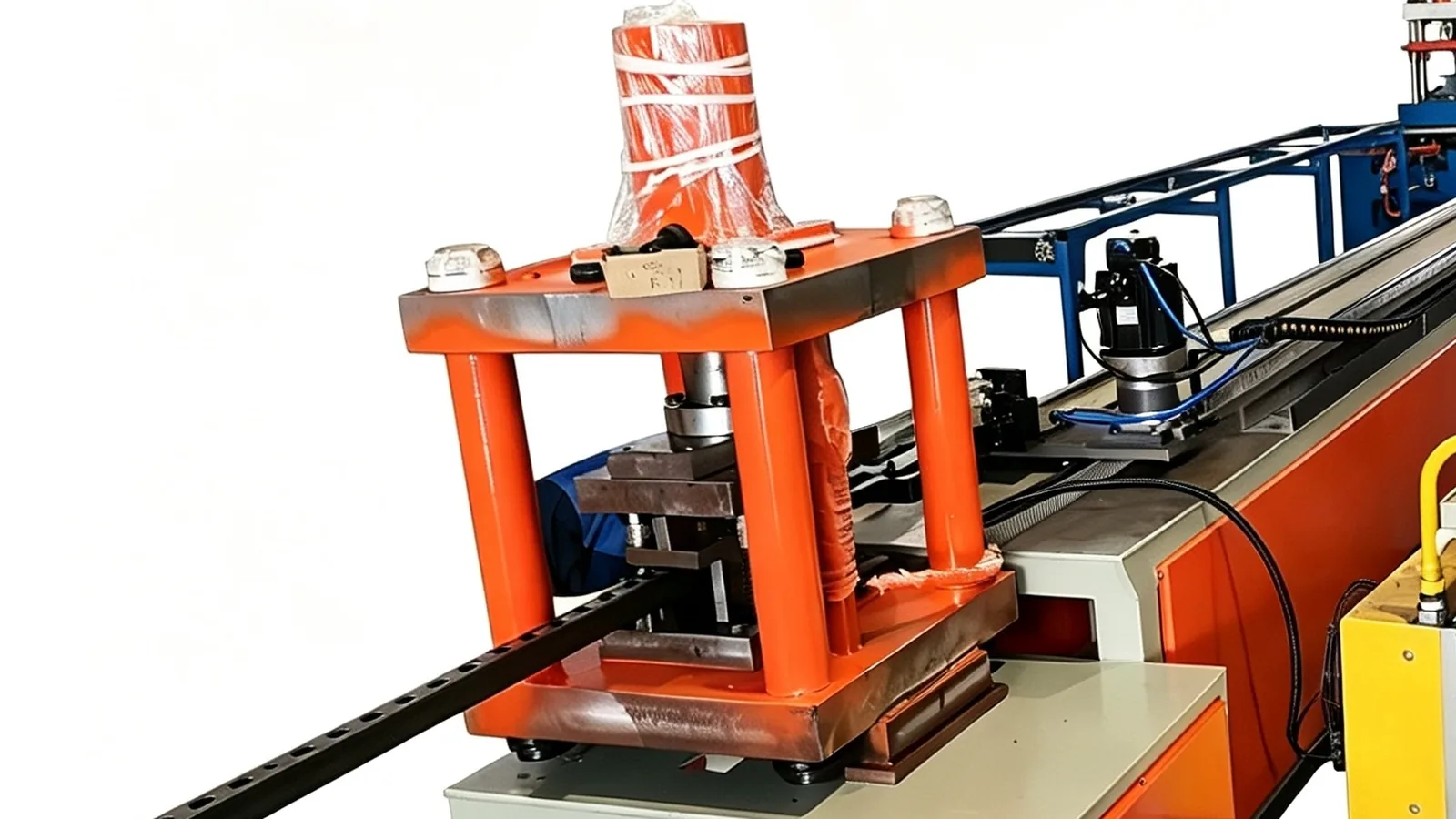
Solar Omega Rail Machine
Omega and hat-section PV mounting rails in aluminium or galvanised steel
Cable Tray Roll Forming Machine
Perforated, solid and ladder cable tray, 100–600 mm wide, with inline perforating
NEMA Cable Tray Roll Forming Machine
Produces NEMA VE 1 ventilated trough, solid bottom trough and ladder tray side rails. Width-adjustable from 6" to 24" without cassette change — the standard for North American electrical installations.
How to choose a solar or cable line
- Am I supporting panels, or carrying cable?
- Strut channel and omega rails carry the modules and take the wind and snow load. Cable tray carries the DC and AC runs and is governed by its own standard with its own load classes. The two are usually bought by different people in the same company, and they are different machines.
- Does the section have to accept standard fittings?
- If it does, the width and the slot pattern are not negotiable. Strut channel is expected to take standard strut nuts, and the 9 × 18 mm slot at 25 mm or 50 mm pitch is what makes that possible. Change the pitch and you have made a proprietary section that nobody can buy fittings for.
- Do I need NEMA or IEC cable tray?
- NEMA VE 1 is the North American series with imperial widths and its own load classification; IEC 61537 is the metric series used in Europe, the Middle East and much of Asia. A project specification names one of them, so ask which before choosing the tooling.
- Aluminium or steel?
- Aluminium is lighter and does not corrode, which matters where the roof structure has limited load capacity or the site is coastal. Steel is cheaper and stiffer, so it wins on longer spans. Aluminium needs polyurethane guide rolls and lower forming pressure, because anodised and mill-finish surfaces mark easily.
- Do I need slots, perforations, or plain section?
- Slotted channel and perforated tray are the standard products. Plain tray is used where the installation is fully enclosed, and it needs the perforating unit disengaged rather than absent — so specifying the option at order stage costs far less than adding it later.
- Do I need rails, or will I buy them in?
- Omega and hat rails are simple sections and are cheap to produce once you have the machine, but they are also widely available. Run the numbers on your annual volume before buying: below a few hundred tonnes a year, buying rails in and concentrating the machine on the section that is harder to source often makes better sense.
Sections in this group compared
| Section | Compatibility | Size range | What to know |
|---|---|---|---|
| Strut channel | Unistrut P1000 compatible | 41 × 41 · 41 × 21 · 41 × 82 mm | 9 × 18 mm slots at 25 or 50 mm pitch, so standard strut nuts and fittings fit without modification |
| Omega / hat rail | Project specific | Top flange 30–80 mm · height 20–45 mm | Aluminium 6063 or 6061 T5–T6, or galvanised steel. No universal standard — tooling follows the drawing |
| Cable tray — NEMA VE 1 | North America | Width 100–600 mm · depth 50–100 mm | Imperial widths and its own load classification. Punching and width adjustment determine the usable range |
| Cable tray — IEC 61537 | Europe, Middle East, Asia, Latin America | Width 100–600 mm · depth 50–100 mm | Metric widths and IEC load classes. Perforation typically drives around half the material cost, so the inline punch is the unit that decides whether the line is economic |
What to fix before you order
The slot or perforation is the product
A strut channel that will not accept a standard fitting is scrap, however well formed. Set the slot pitch and hole size against the fittings your customers actually buy, and specify the punching unit accordingly — it is the station that decides whether the line is usable.
Aluminium needs different rolls and pressure
Anodised and mill-finish aluminium marks under steel guide rolls. Polyurethane rolls, reduced forming pressure and smooth transfer tables are what keep the surface saleable. This is not an upgrade to negotiate later; it changes the machine.
Settle the standard before the tooling
NEMA VE 1 and IEC 61537 describe different width series and load classifications. Tooling built for one will not match a drawing that calls for the other, so name the standard at enquiry stage rather than the width.
Width adjustment decides how many products one machine can make
Tray widths from 100 to 600 mm can run on one machine, but manual screws take 15–30 minutes per change against about 5 minutes for servo presets from the control panel. If you quote mixed-width orders, that difference is the whole margin.
Tension control matters as much as forming
These are long, light sections. Slack or over-tensioned coil produces a rail that is curved along its length, and a curved rail will not sit flat on the roof hooks it is meant to span.
Check whether buying in is the better answer
Omega rails and simple tray are widely available. Below a few hundred tonnes a year, the capital and the operator time can cost more than the margin on bought-in material — we will tell you honestly which side of that line your volume falls on.