Roofing & Cladding Machines
Metal roofing sheet, wall cladding, standing seam and tile-effect roll forming lines.
Roofing and cladding is the largest group we build — eleven lines covering the four profile families that between them account for most metal roofs and walls: trapezoidal, corrugated, tile-effect and standing seam. Which one you need is normally decided by the market you sell into, not by the machine.
The most common mistake when buying into this group is choosing on forming speed. Speed is the cheapest specification to increase and the easiest one to regret: what actually decides whether a roofing line pays is whether the profile it forms is the one your customers ask for by name, and whether its coil width matches the coil you can actually buy.
Roofing & Cladding Roll Forming Machines
All models available with matched decoiler, leveling unit and runout table as a complete line.
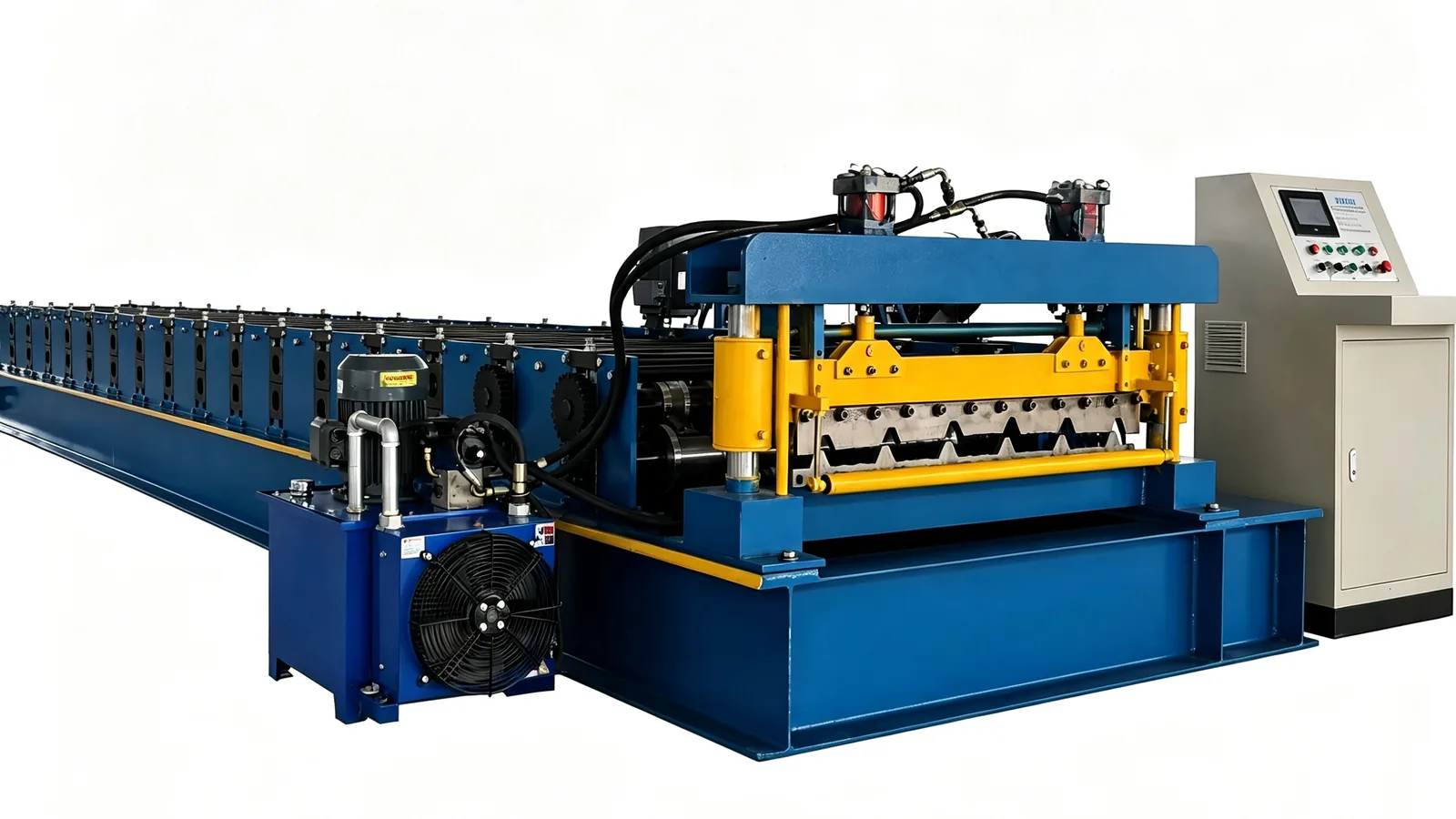
Roof Sheet Roll Forming Machine
IBR, TR4/TR5, C20/C35/C44 — one base frame, interchangeable roll cassettes
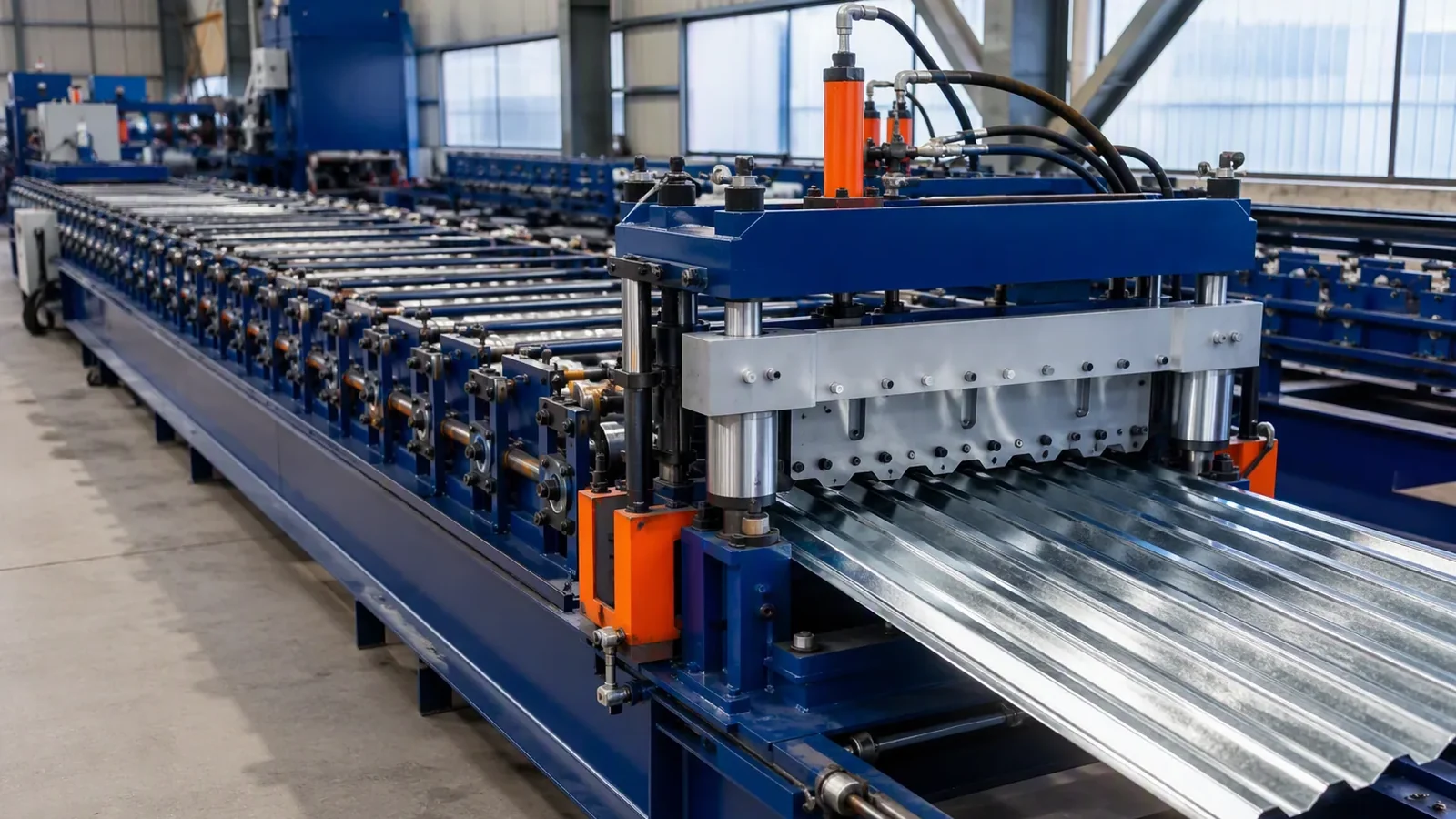
Corrugated Sheet Roll Forming Machine
762 / 900 / 1000 mm corrugated iron roofing sheet, up to 30 m/min
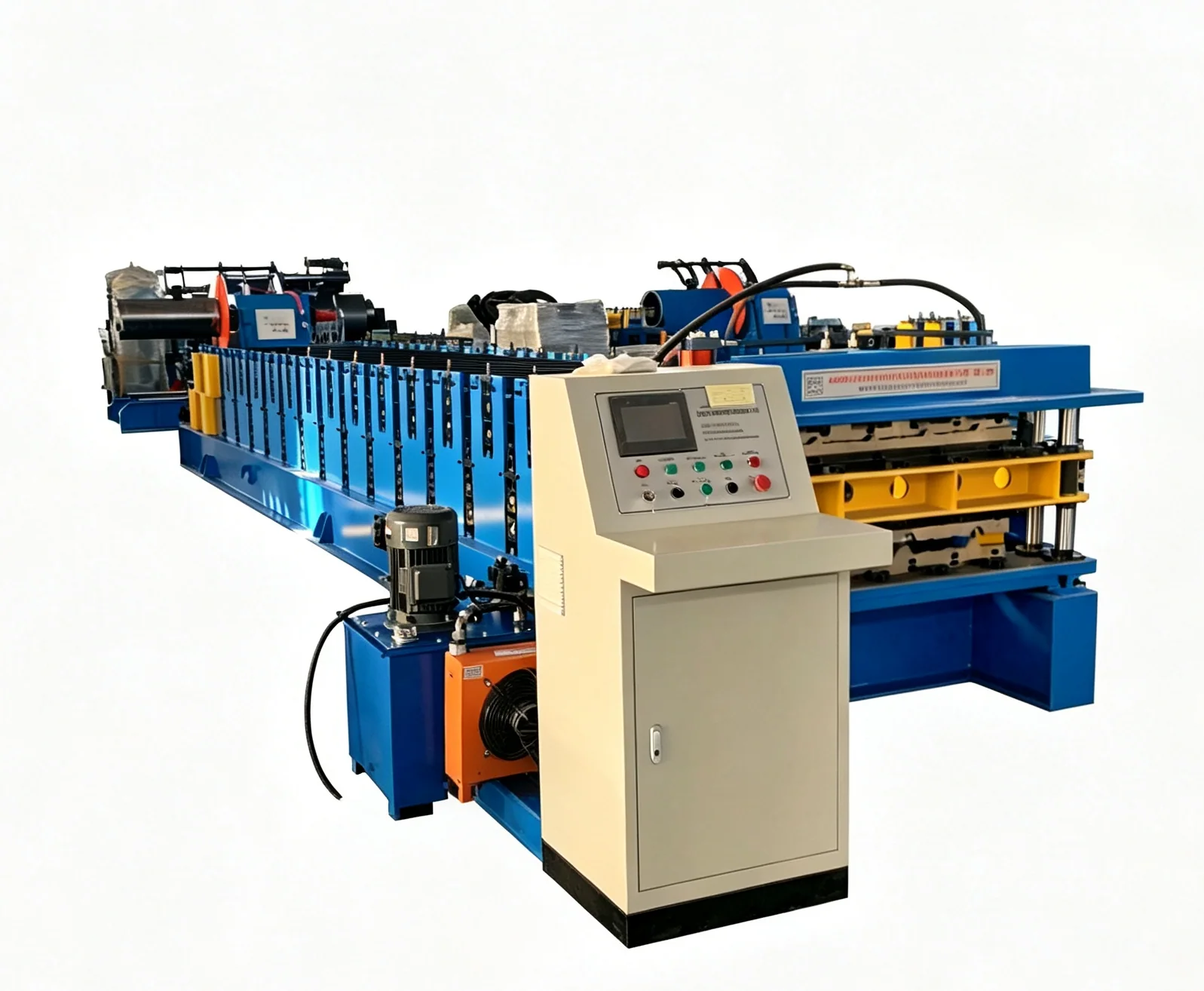
Double Layer Roofing Machine
Two profile sets on one frame — ≈40% less floor space than two machines
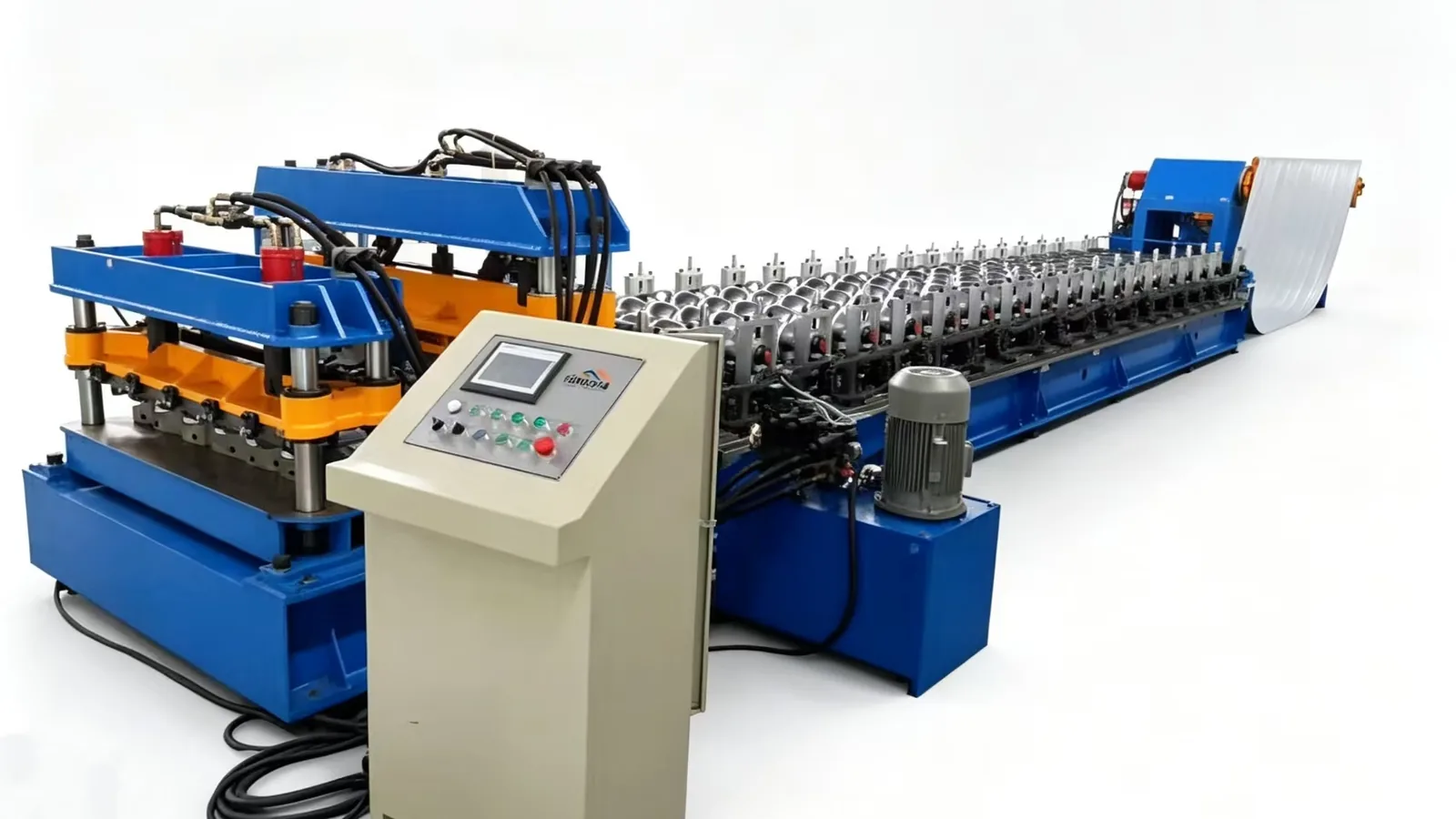
Glazed Tile Roll Forming Machine
Roman, Spanish and stone-chip coated tile profiles, 828 / 1050 mm cover
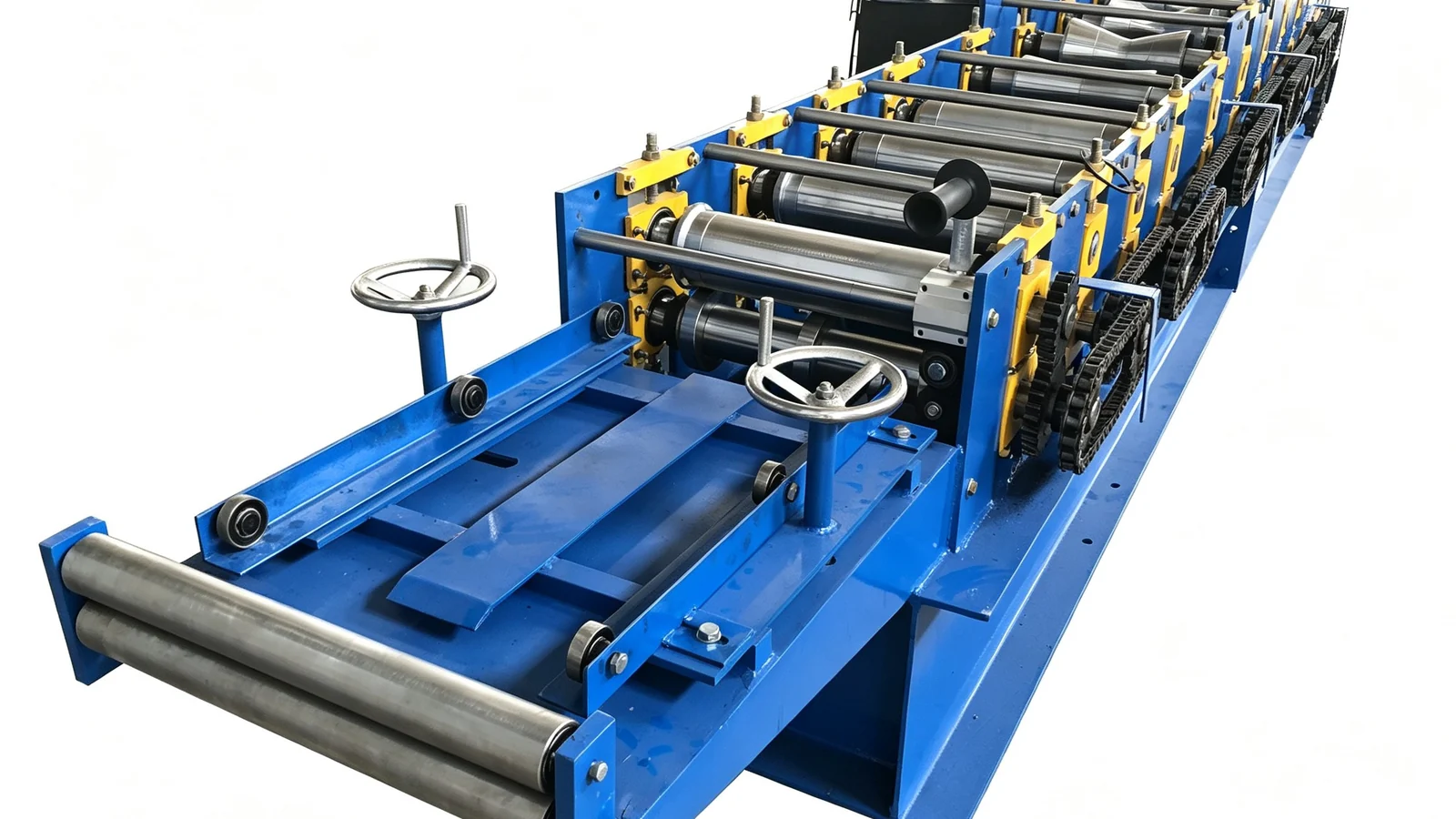
Ridge Cap & Flashing Machine
Ridge, barge, valley and apron flashings — the accessory line that completes a roofing package
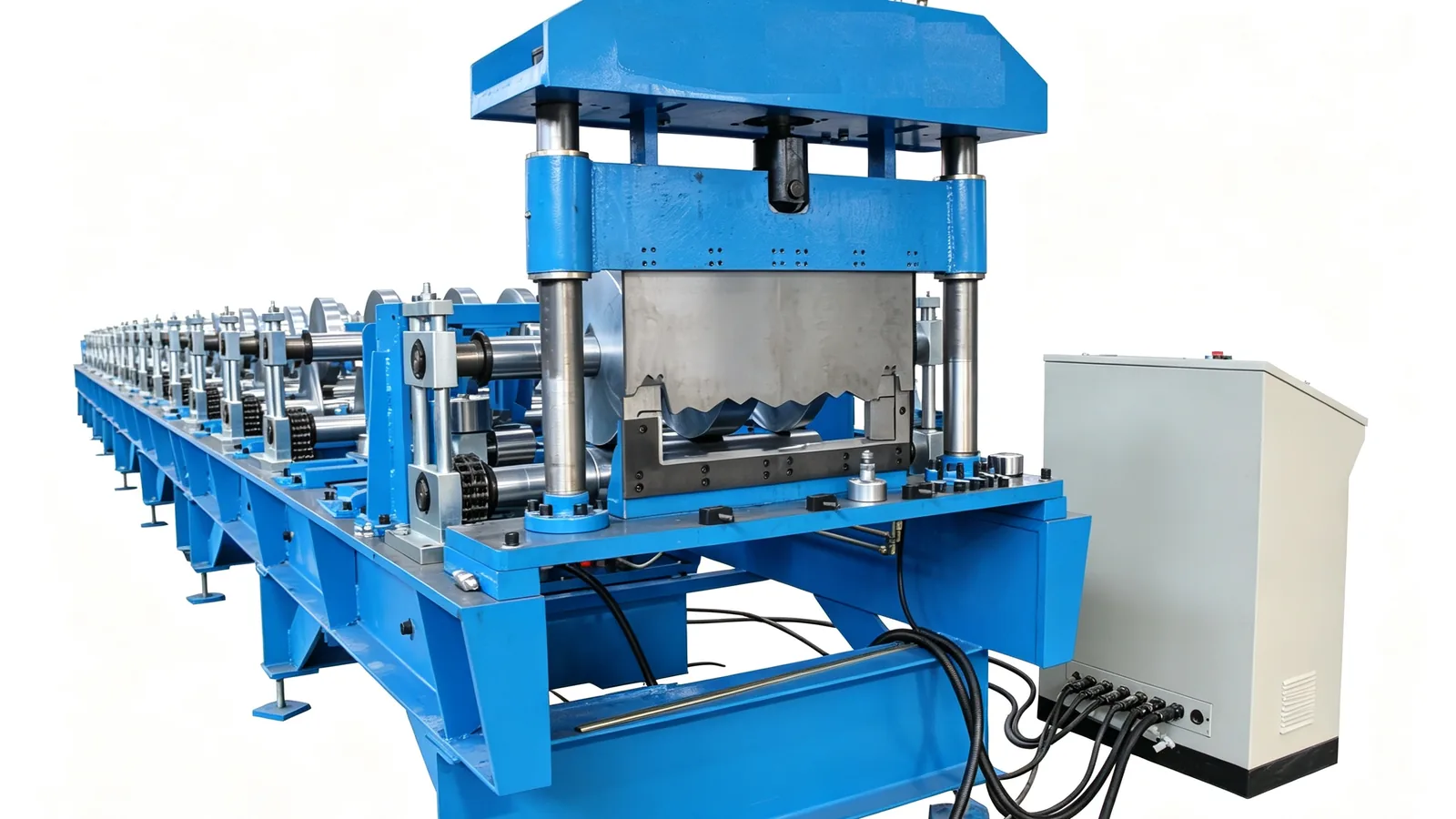
Standing Seam Roll Forming Machine
Klip-Lok, snap-lock and T-bar concealed-fastener profiles
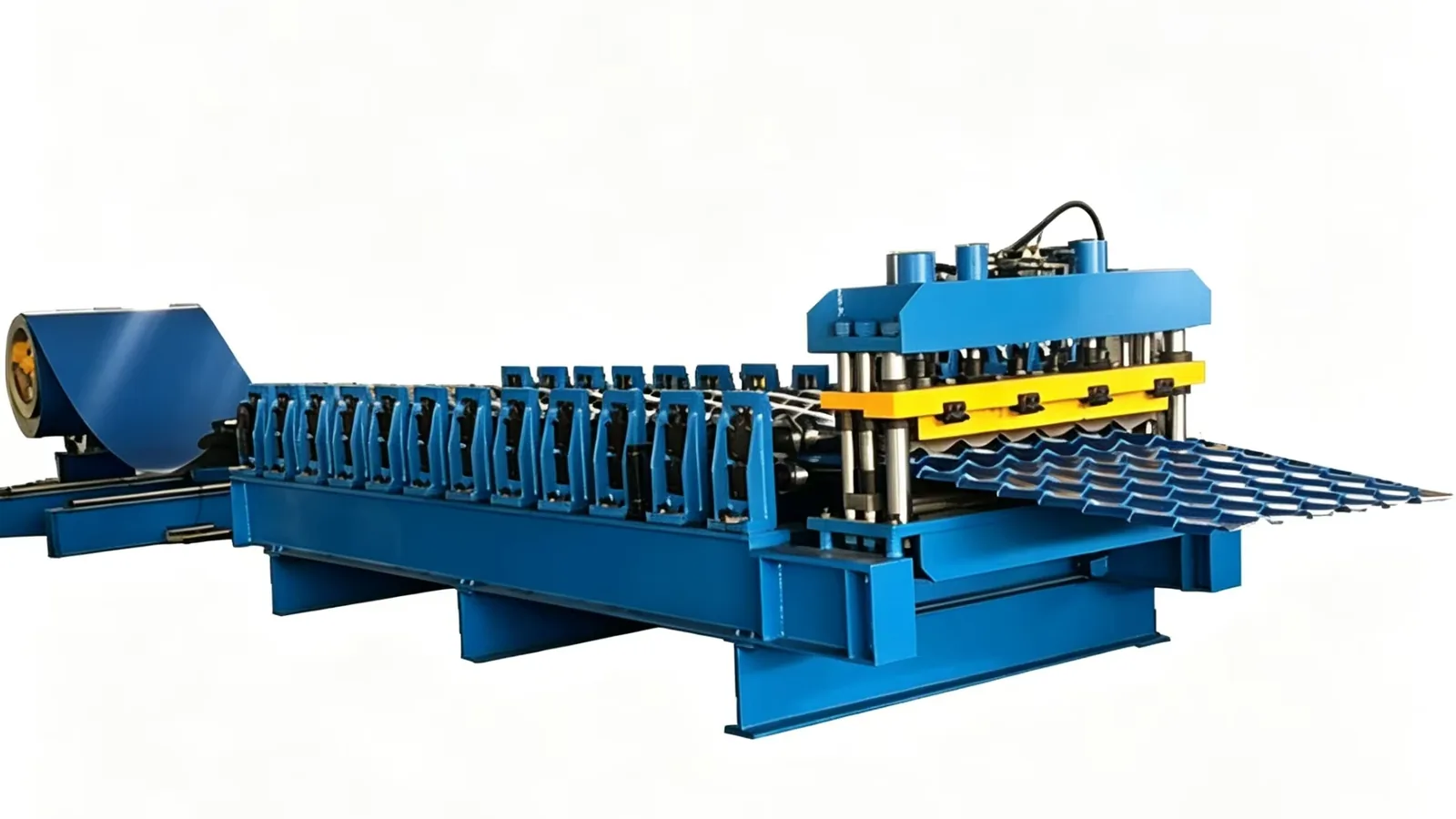
Spanish Tile Roll Forming Machine
S-tile and barrel profiles reproducing traditional Mediterranean clay tiles
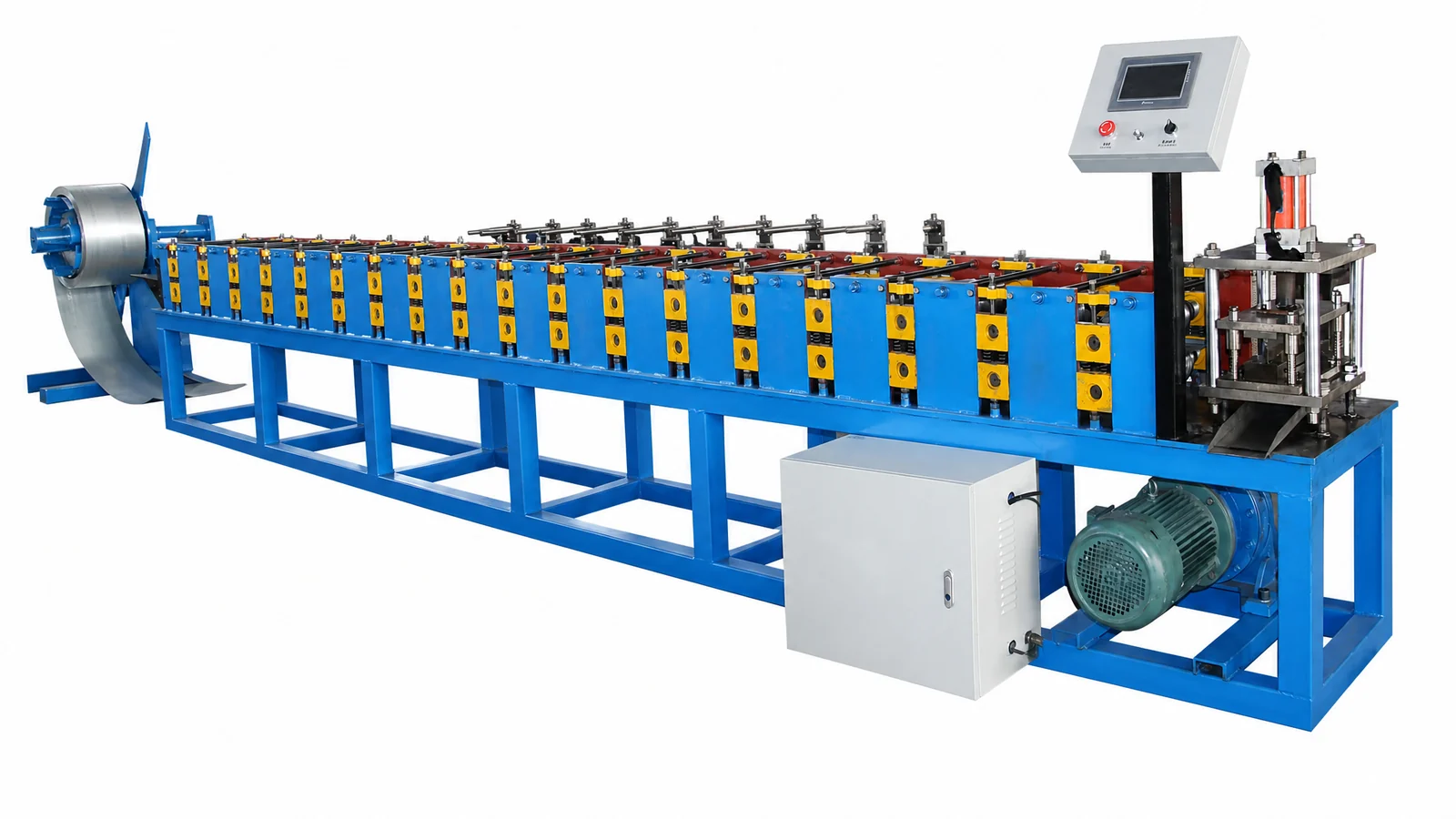
Metal Wall Cladding Machine
Ribbed, concealed-fix, soffit and fascia wall profiles for industrial buildings
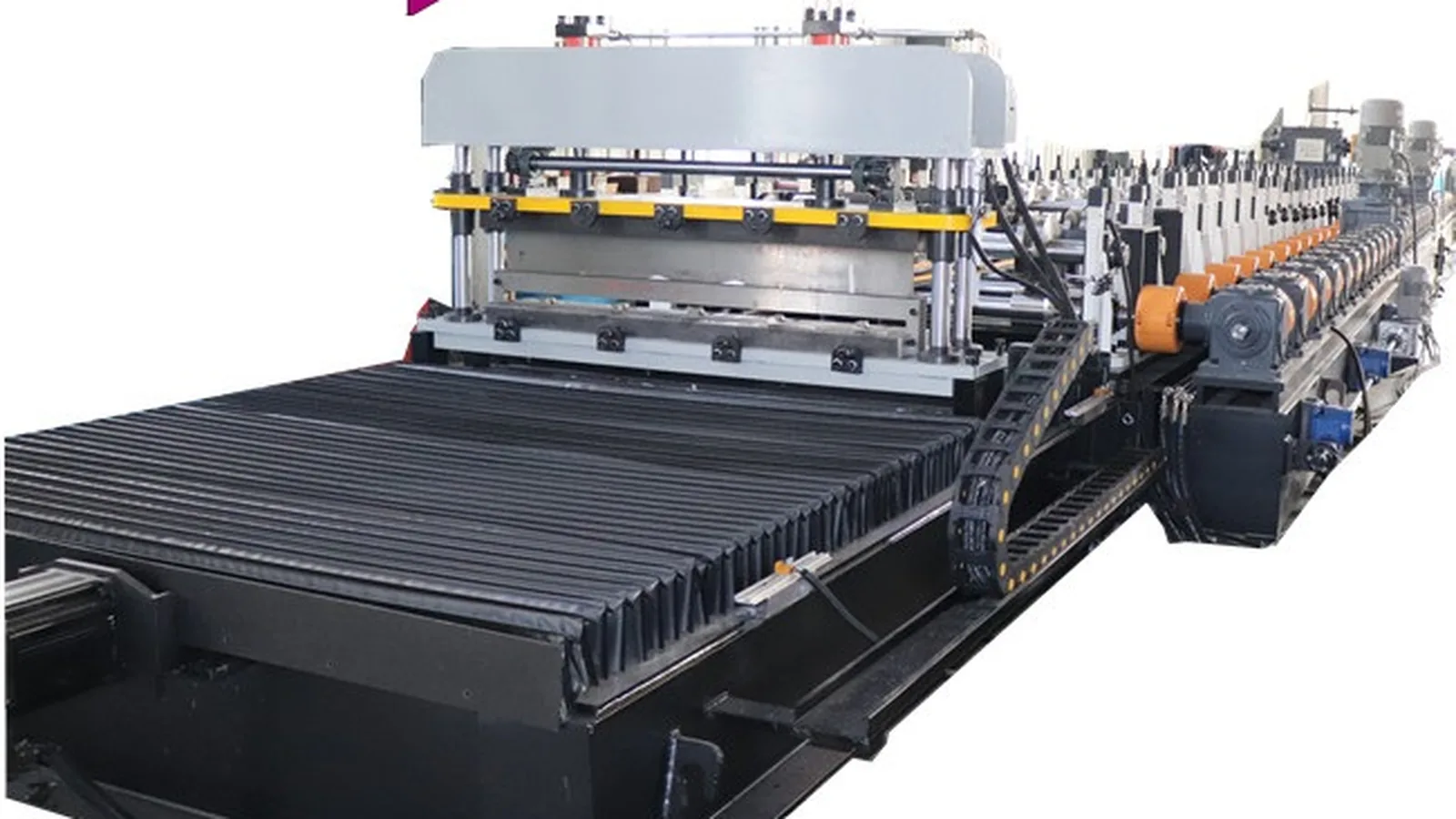
Sound Barrier Panel Machine
Perforated and corrugated acoustic panels for highway and railway noise walls
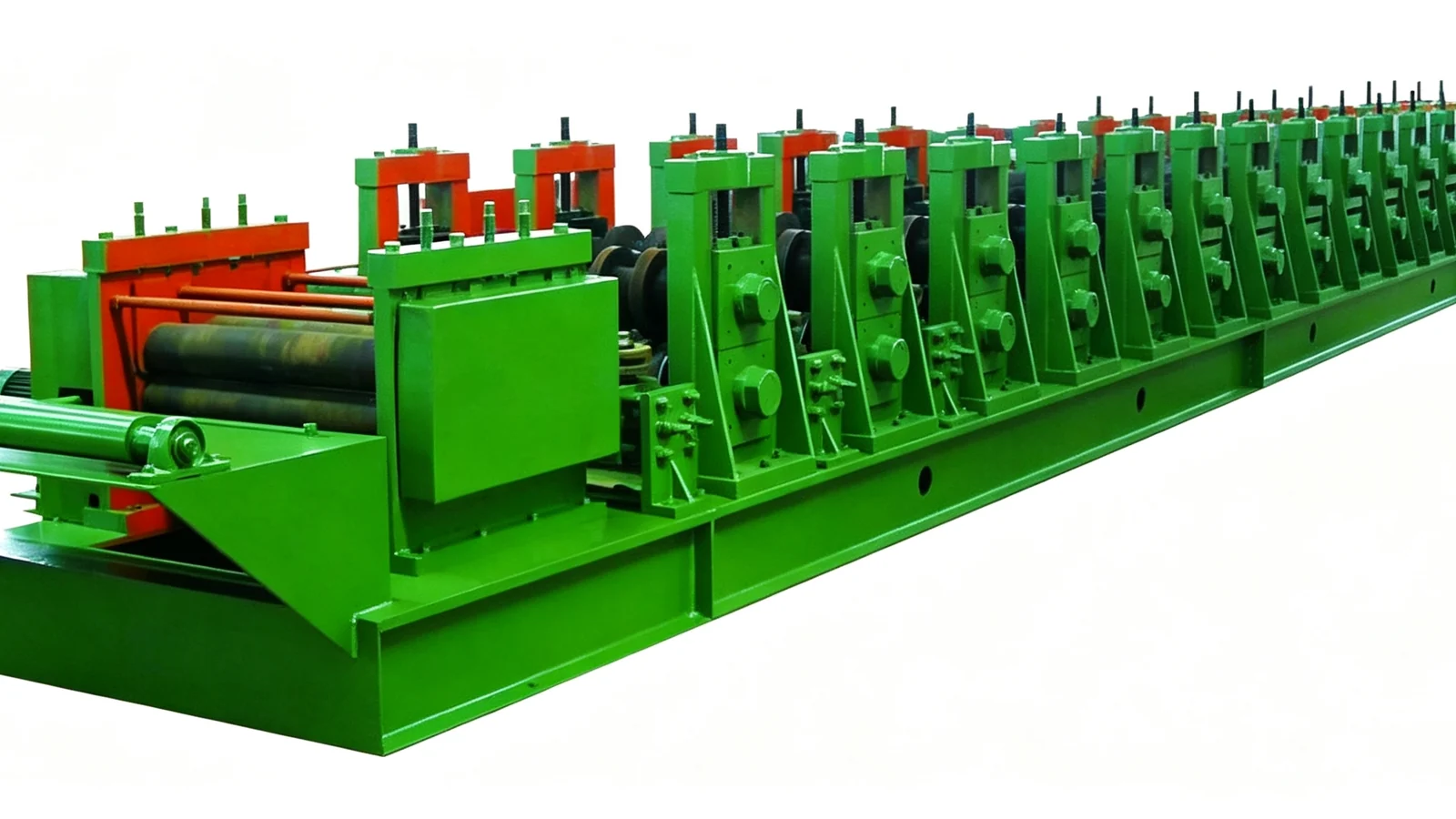
Container & Modular Wall Panel Machine
Thin-gauge ribbed and flat panels for container conversions and prefab buildings
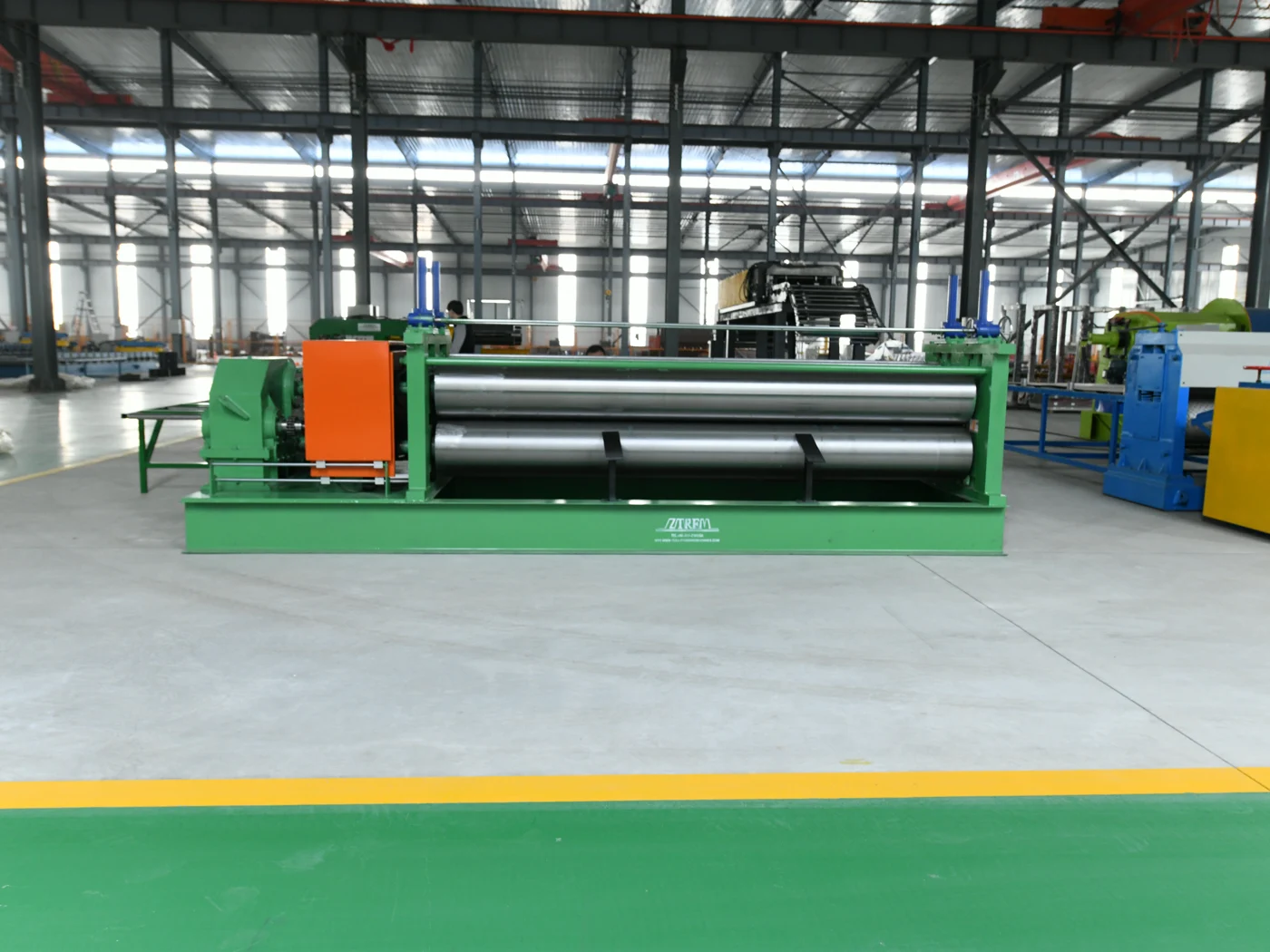
Roof Panel Curving Machine
Crimp curving and roll curving for arched and barrel roofs, minimum ≈3 m radius
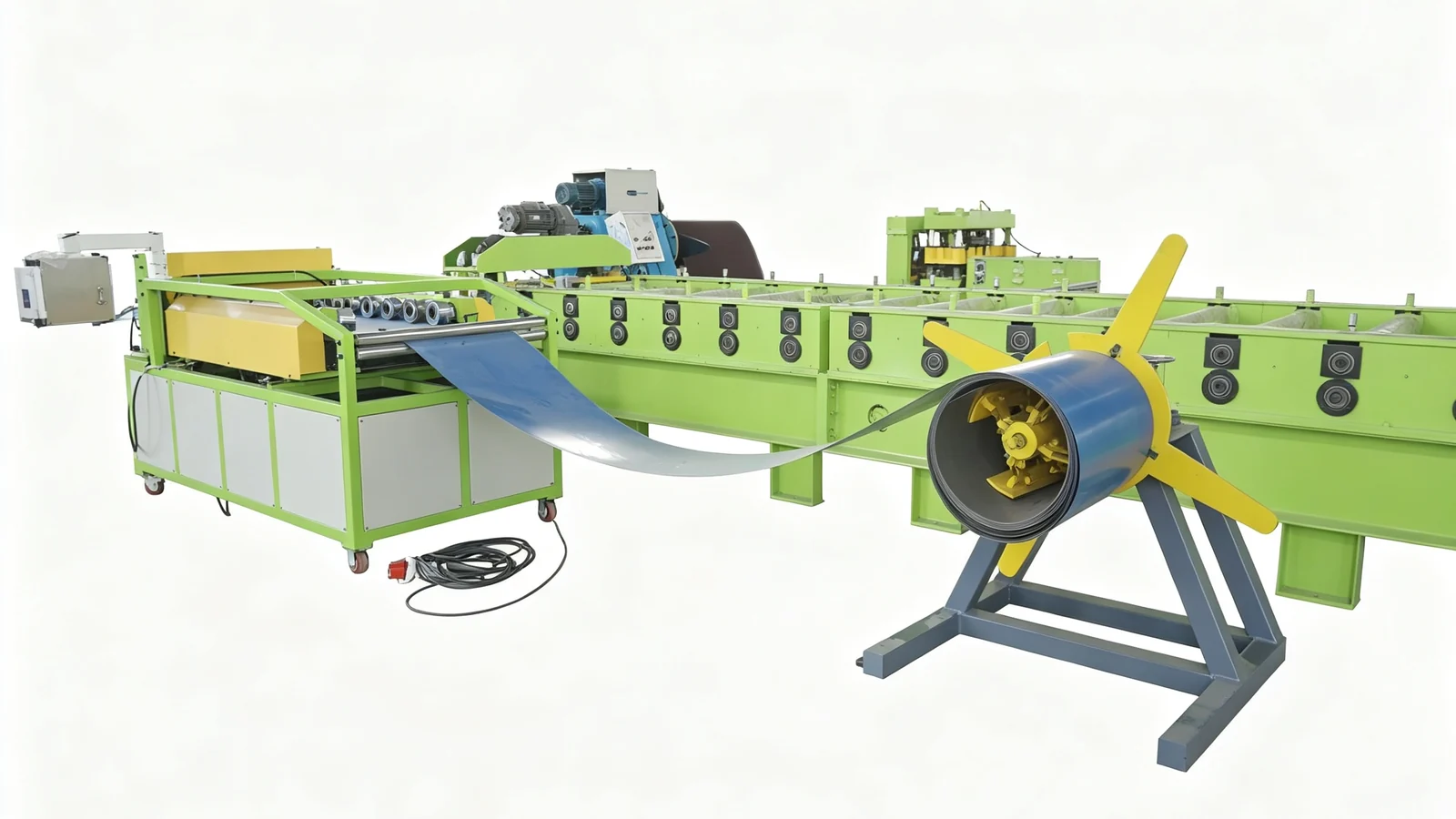
US Standing Seam Roll Forming Machine
Standing seam panels in the imperial widths North American contractors specify — 12", 16" and 18". Snap-lock and mechanically seamed variants; factory line or portable site-roll configurations.
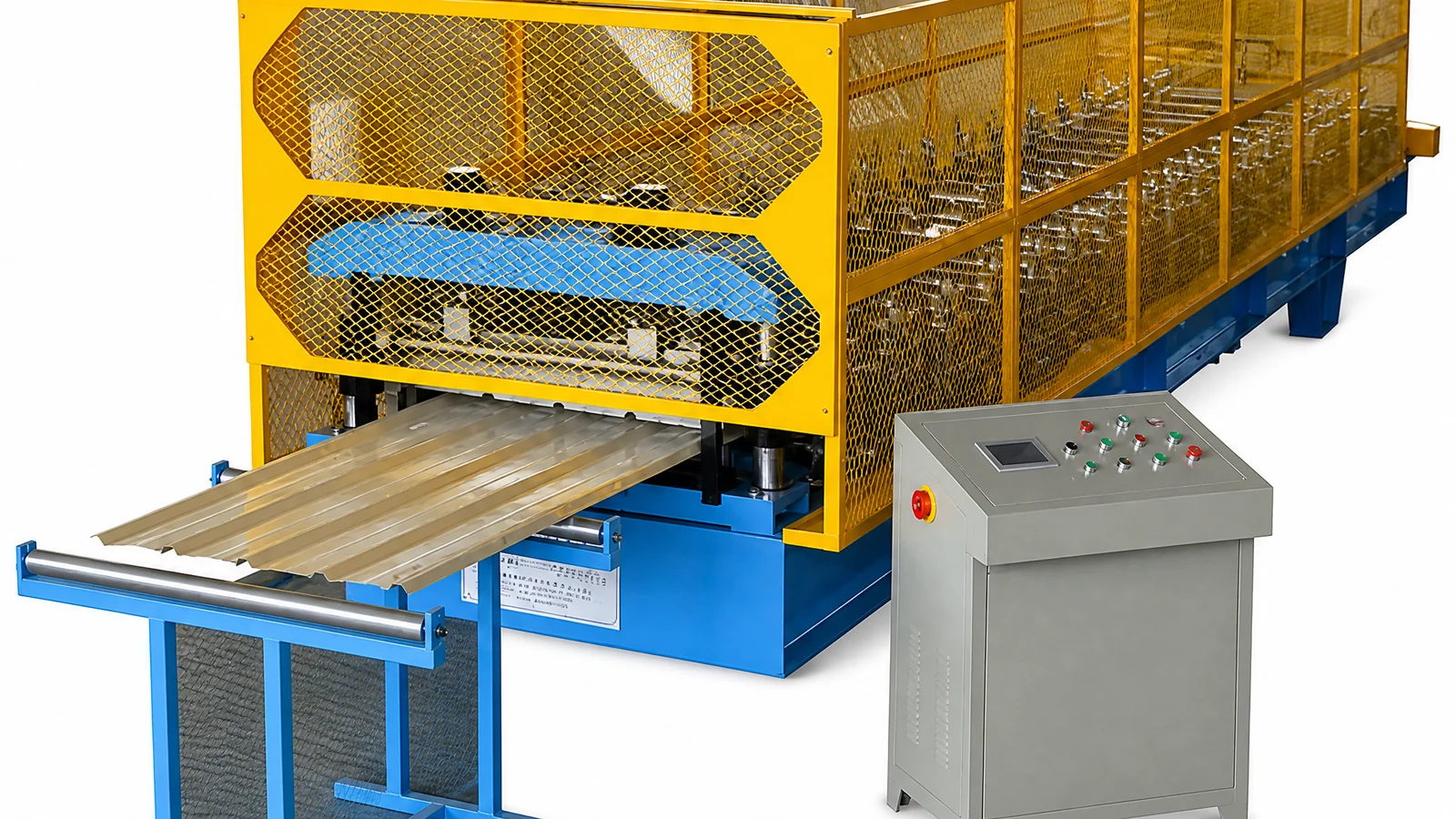
IBR Roof Sheet Roll Forming Machine
The IBR variant of the roof sheet line. IBR is its own profile family — 686 mm cover width, five ribs at 36-38 mm height — specified by name across Africa, the UK, Australia and India.
How to choose a roofing line
- Which profile do my customers ask for by name?
- In Europe and the Middle East that is usually trapezoidal TR4/TR5. In the UK, Ireland, Australia and much of Africa it is IBR or corrugated. In North America it is standing seam. If you sell into more than one of those, buy a line with interchangeable cassettes rather than a faster single-profile machine.
- What coil width can I actually buy locally?
- Trapezoidal profiles run on 914 mm or 1000 mm coil; 762 mm corrugated needs 800 mm. Match the machine to your local coil supply, because edge trim waste on a mismatched width erases the margin quietly rather than visibly.
- Do I need one profile or several?
- A single-profile line is cheaper and runs faster. A cassette line costs more and takes 4–6 hours per change, or under 2 hours with servo assist, but it lets you quote into more than one market. Most producers start with the profile they already have orders for and add cassettes as new orders arrive.
- Is thin or thick material the real constraint?
- Thin pre-painted coil is the harder product to run: 0.3–0.5 mm marks easily and shows every leveling defect on the finished face. If most of your work is 0.5–0.8 mm, the line is more forgiving and the reject rate is lower.
- Do I need to make accessories as well?
- Ridge caps, barge and valley flashings are made from the same coil as the roof sheet, so producing them in-house is what guarantees the colour matches. Most producers run them on a small accessory line, or off a decoiler shared with the main roofing line.
- Will the line sit in one plant or go to site?
- Standing seam panels are long, and on large architectural roofs forming on site avoids transport joints entirely. Standing seam lines and curving machines can be supplied container- or trailer-mounted — worth considering if you intend to quote that kind of work.
Roofing and cladding profiles compared
| Profile family | Where it is the standard | Thickness | What to know |
|---|---|---|---|
| Trapezoidal (TR4 / TR5, C20 / C35 / C44) | Europe, Middle East, Russia | 0.3 – 0.8 mm | Fastest of the group at 15–25 m/min; 18–24 stations |
| Corrugated, 762 / 900 / 1000 mm | UK, Ireland, Australia, Africa, SE Asia | 0.3 – 0.8 mm | 32 mm pitch wave; only 12–16 stations, which is why it runs at 20–30 m/min |
| IBR (inverted box rib) | Africa, UK, Ireland, Australia, India | 0.3 – 0.8 mm | Its own rib geometry — a generic trapezoidal line will not produce what an IBR customer is asking for |
| Tile-effect (glazed, Spanish) | Europe, Mediterranean, Latin America, SE Asia | 0.3 – 0.6 mm | Deepest profile at 25–40 mm; needs a minimum roof pitch around 15–17° because the side lap is not a sealed seam |
| Standing seam | North America, Europe, Australia | 0.4 – 0.7 mm | Closed seam, so it is rated down to 1–3° pitch; 20–26 stations and runs more slowly at 8–15 m/min |
| Wall cladding | Everywhere | 0.4 – 0.8 mm | Ribbed or concealed fix. Flat panels are the most demanding product, because a flat face hides nothing |
What to fix before you order
Profile is set by your market, not by the machine
Tell us the profile name your customers use, not a generic shape. If they say IBR, they mean IBR — the rib geometry differs from a generic trapezoidal sheet and the order will be rejected on sight if it is wrong.
Coil width drives your waste
A 1000 mm coil cannot run on a machine built around 914 mm without cutting off the edge. Match the machine to your local coil supply and check the trim waste on a full coil, not on one sheet.
Station count is not a quality score
More stations usually means a more complex profile, not a better machine. What matters is whether the rolls are hardened to suit the steel you run and whether the line holds tolerance at the top of its thickness range.
Servo-assist tooling change only pays if you actually change
Manual cassette change takes 4–6 hours, servo assist under 2. If you run one profile, do not pay for the option. If you change weekly, it pays back inside a season.
Accessories are part of the roofing business
Ridge, barge and valley flashings are a meaningful part of the invoice on a roofing package, and they are made from the same coil. Deciding to buy them in hands the colour match to a third party.
Ask what the line does at both ends of its thickness range
A line specified at 0.3–0.8 mm runs very differently at 0.3 mm than at 0.8 mm. Ask for the practical speed at the bottom of the range, because that is where the reject rate comes from.