Drainage & Gutter Machines
Rain gutter, downpipe and steel drainage channel roll forming lines.
Drainage is the smallest group we build — one platform that covers the whole rainwater package, because gutters, downpipes and ground drainage channels all start from the same coil and the same forming principle. What changes between them is the cassette, not the machine.
It is still worth treating as its own group, because buyers almost always need more than one of those products. A roofer running a roof sheet line can add gutters to match the roof, but the section is completely different from a roofing profile — so it is a second machine on a common platform rather than a second cassette on the roof line.
Drainage & Gutter Roll Forming Machines
All models available with matched decoiler, leveling unit and runout table as a complete line.
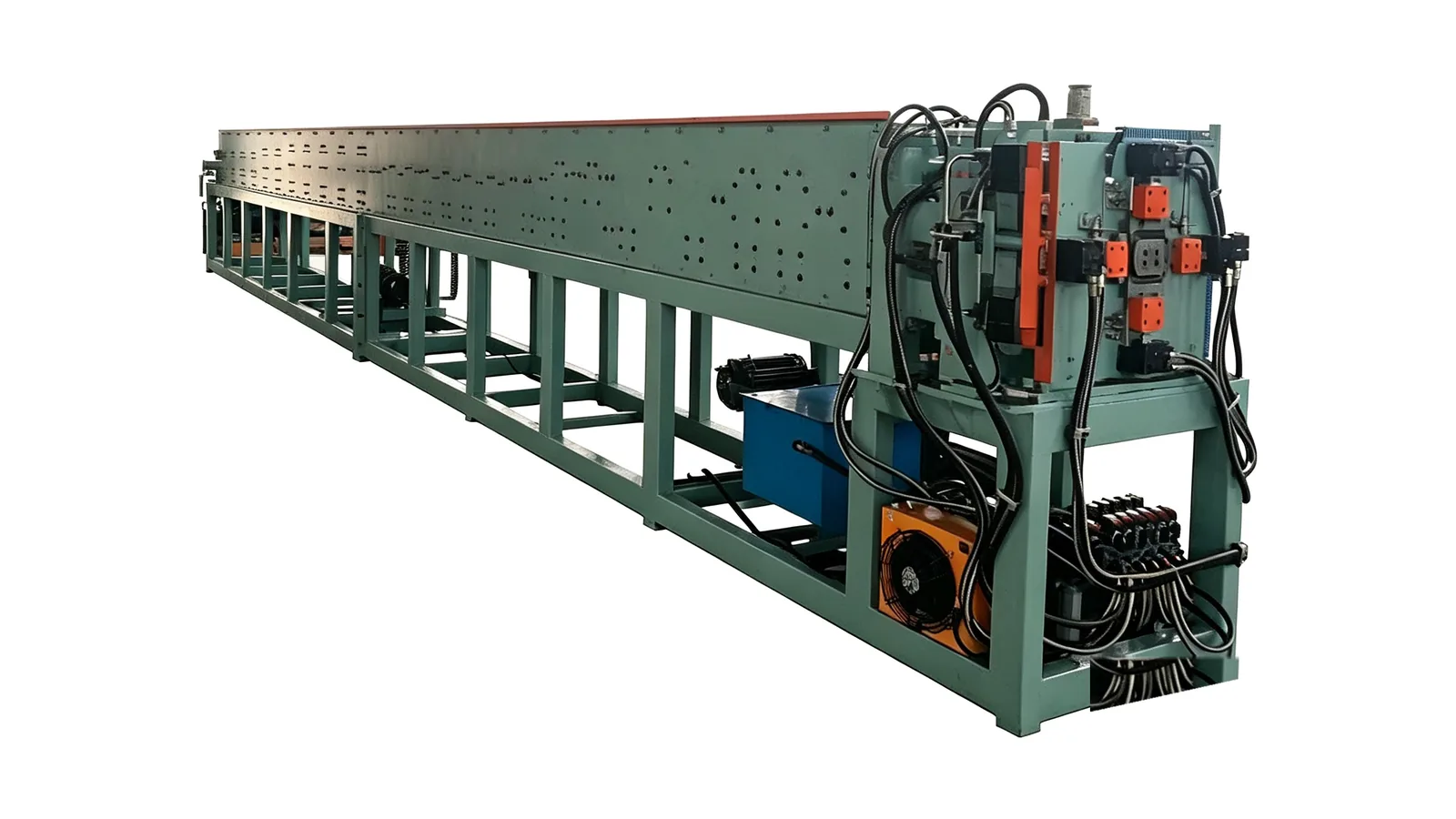
Gutter & Downpipe Machine
Half-round, K-style and square gutters, downpipes and steel drainage channels
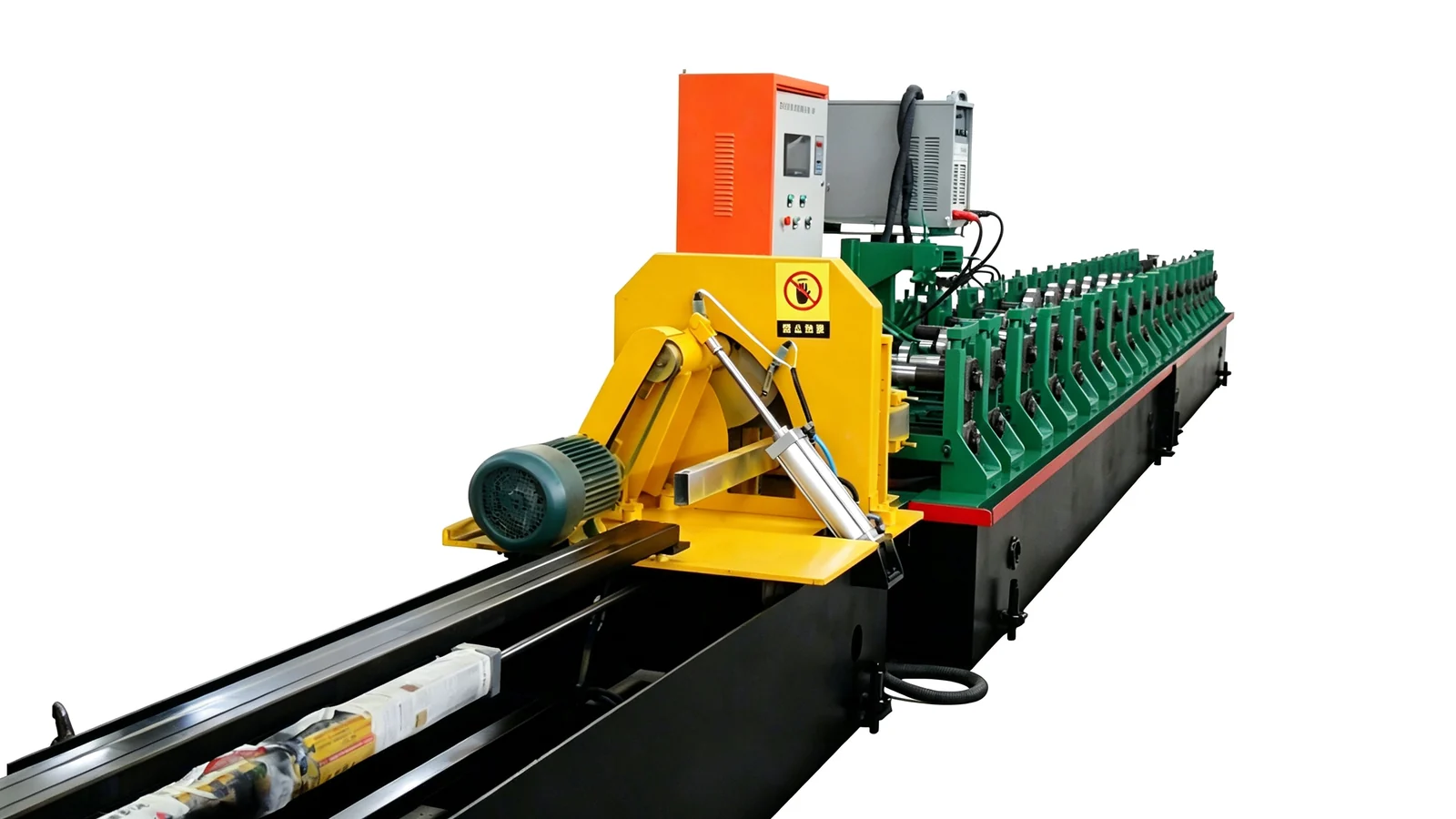
K-Style (Ogee) Gutter Roll Forming Machine
The North American gutter line. K-style (ogee) profiles in 4", 5" and 6" — the sizes a US seamless-gutter contractor actually runs — not the half-round used across Europe and Australia.
How to choose a drainage machine
- Which gutter market am I selling into?
- Half-round is the traditional specification in the UK, Europe and Australia. K-style dominates North America and fixes to a flat fascia. Square gutter is common in the Middle East, Asia and on industrial buildings, where flow capacity per width matters more than appearance. This decides the cassette, so it is the first question rather than a detail.
- Do I need downpipes, as well as gutters?
- A gutter is an open section and a downpipe is a closed tube, so they cannot share tooling. Both run from a common base frame but need two cassettes, and changing between them takes about 3–4 hours. If downpipes are a small part of your volume, buying them in can be the cheaper answer.
- Am I making rainwater goods or ground drainage?
- Rainwater gutters run 0.5–0.8 mm at 15–20 m/min. Drainage channels run 1.5–3.0 mm at 8–15 m/min in widths from 100 to 600 mm, because the channel is a load-bearing section carrying vehicles and ground load. The two sit on the same platform but need different drive power.
- What material and colour will the market accept?
- PPGI is the most common choice because it can be colour-matched to the roofing or the fascia. Aluminium is chosen where weight matters on long runs, and stainless 304 for coastal or industrial environments with high corrosion exposure. The material decision is normally driven by the project, not by preference.
- Does the gutter match the roof or the fascia?
- Both are normal, and it is a market convention rather than a technical one. In the UK and Europe gutters are usually matched to the fascia or the window frames; in North America K-style gutter is normally matched to the roof or the trim. Forming from coil is what gives you that choice.
- How many different lengths will I cut?
- A gutter is cut to the fascia length, so an order mixes sizes. A PLC with an encoder sets the length from the panel and a batch counter lets you produce a whole building set in one run, rather than cutting piece by piece or changing mechanical stops.
Rainwater and drainage sections compared
| Profile | Section / size | Main markets | Notes |
|---|---|---|---|
| Half-round | Semi-circular, 100 – 150 mm | UK, Europe, Australia | Traditional specification, matches a cast-iron look; needs its own downpipe profile |
| K-style | Flat back with a decorative front face | North America | Looks like a moulded timber fascia; the flat back fixes straight to the fascia board |
| Square | Rectangular, 100 – 200 mm | Middle East, Asia, industrial buildings | Highest flow capacity per width and the easiest to join; common on industrial roofs |
| Downpipe | Square 65 × 65 / 80 × 80 · round Ø 75 – 110 mm | All markets | A closed tube — needs its own cassette, it cannot be formed on a gutter cassette |
| Drainage channel | U or trapezoidal, 100 – 600 mm · depth 50 – 200 mm | Civil, landscape, road drainage | Load-bearing ground drainage; thicker material, gratings and end caps added on site |
What to fix before you order
Count the cassettes before you compare prices
A gutter cassette, a downpipe cassette and a channel cassette are three different purchases on one machine. Quotations that differ by a wide margin are usually quoting a different cassette count, so compare on the profiles you will actually run rather than on the headline price of the base machine.
Changeover is a real cost, not a setting
Switching between gutter and downpipe takes about 3–4 hours because they are different tooling sets. If you make small batches of both, plan production so each cassette runs a full campaign instead of changing over every day or two.
Match the drive to your heaviest section
Rainwater goods at 0.5–0.8 mm are light work. Drainage channel at up to 3.0 mm in 600 mm width is not, and needs the heavier end of the 5.5–15 kW range. If channel work might come later, specify the drive at order stage — it is not a field upgrade.
Settle the coating question with your customer first
PPGI is what lets you match roof, fascia or trim, which is the commercial argument for forming in-house. Aluminium and stainless 304 are specified for weight and corrosion respectively, so they follow the project rather than preference. Deciding late means re-quoting the coil, not just the machine.
Plan the finishing steps that are not on the line
Gutters are joined with brackets and running outlets, downpipes with bends and shoes, channels with gratings and end caps. All of that is added on site or in a separate operation — the machine produces the formed section only, and it is worth costing that step honestly.
Check the section against the local fixing system
A gutter has to receive the brackets and outlets that are standard in your market. Bringing a bracket sample or a fitting specification to the order stage is much cheaper than discovering a small dimensional mismatch after the tooling has been cut.