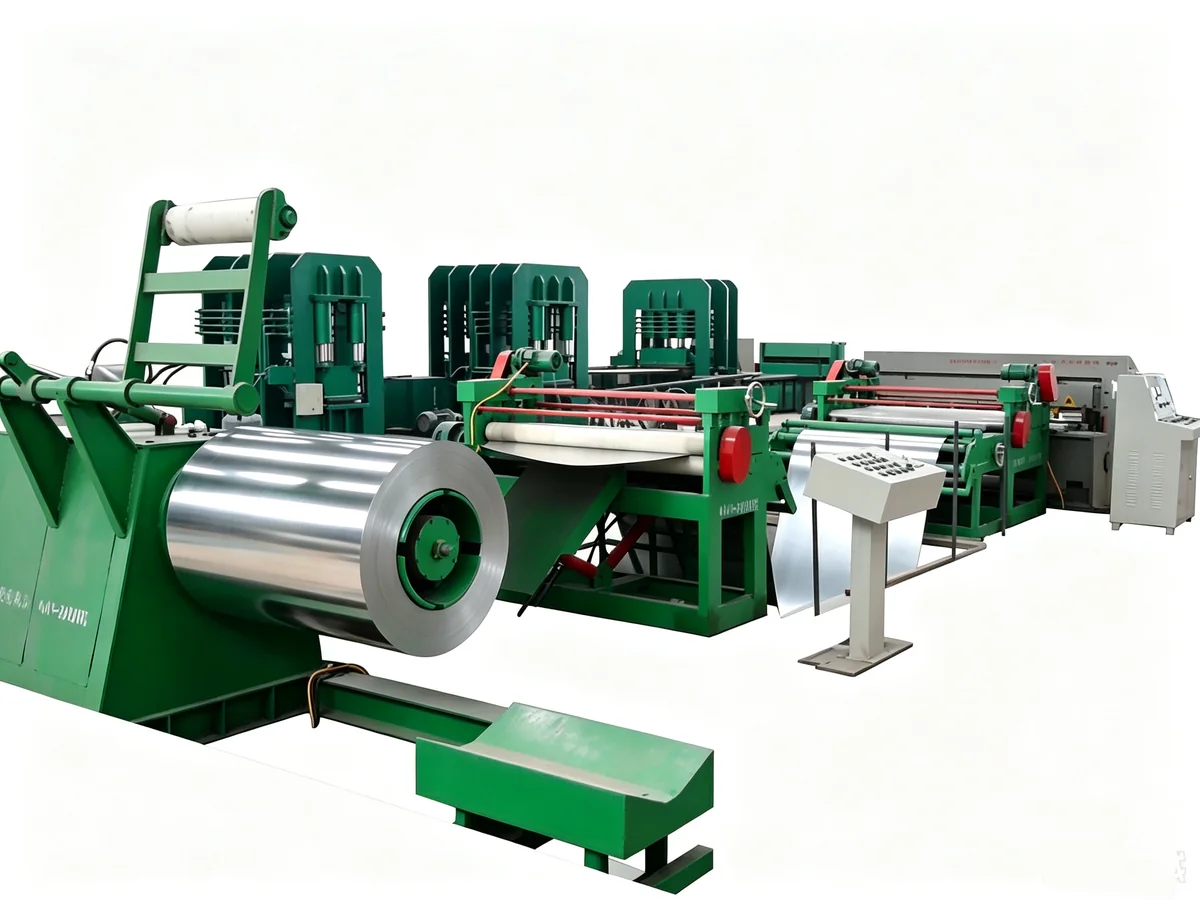
Auxiliary Equipment & Coil Processing Lines
The machines that feed and finish a roll forming line — decoilers, levelers, slitting lines and coil processing equipment.
The performance of any roll forming production line depends not only on the forming machine itself but on the auxiliary equipment that feeds steel coil into it and processes the material before forming.
Decoilers, leveling units, slitting lines and other coil processing equipment are not accessories — they are integral components of the production system, and under-specifying them is one of the most common and costly mistakes that new roll forming producers make.
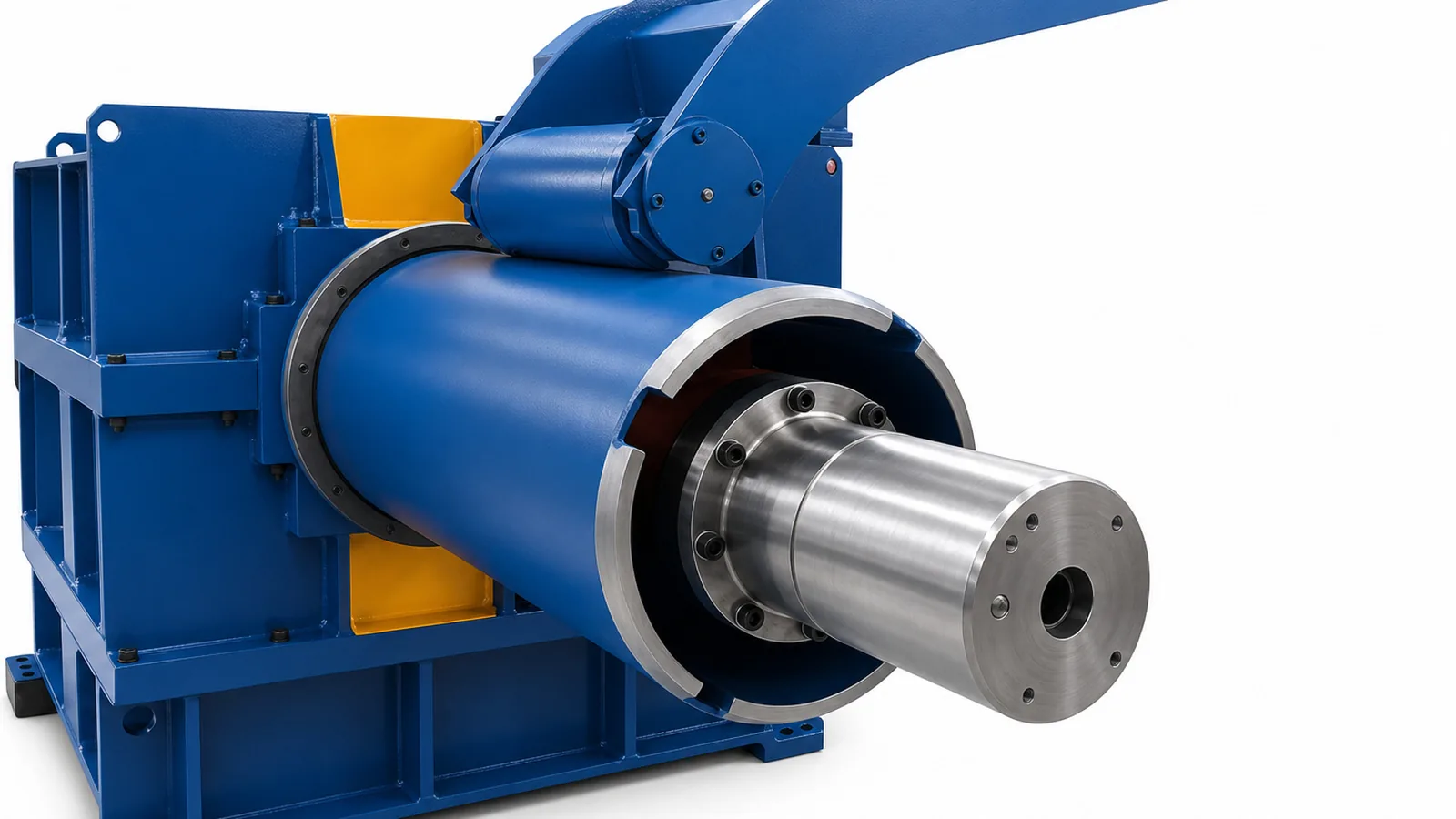
The Hydraulic Decoiler
The decoiler is the first machine in every roll forming line.
Its function is to hold the steel coil on a mandrel, allow the strip to pay off as the forming machine pulls it, and apply controlled back-tension to prevent the strip from running free and creating a loose, uncontrolled loop.
Decoilers are rated by maximum coil weight: 3 T, 5 T, 8 T and 10 T are the most common ratings.
Matching the decoiler capacity to the actual coil weights you will buy is critical — a 3 T decoiler used with 5 T coils will overstress the mandrel bearings and the brake system, leading to premature failure.
Double-head decoilers carry two coils simultaneously: one running and one pre-loaded.
When the running coil is exhausted, the operator welds or tapes the tail to the head of the pre-loaded coil, reducing coil change downtime from 15–30 minutes to 2–5 minutes.
For high-volume production where coil changes would otherwise occur every 1–2 hours, a double-head decoiler can recover its capital cost in improved utilisation within 12 months.
Leveling Units and Straightening Machines
Steel coil arrives from the mill with two geometric defects that have a direct impact on finished profile quality: coil set (longitudinal curvature — the strip curves in the direction it was wound) and cross-bow (transverse curvature across the width). Both are invisible on the coil but propagate through roll forming into the finished profile if not corrected upstream. A leveling unit corrects both defects by bending the strip repeatedly over alternating upper and lower rolls. A 7-roll leveler handles thin (0.3–1.0 mm) roofing sheet adequately. A 9–11 roll leveler is needed for structural purlin material (1.5–3.0 mm) where the higher yield strength requires more bending work. For heavy guardrail material at 3.0 mm, a dedicated straightening machine with large-diameter rolls and hydraulic roll adjustment is necessary. Inadequate leveling shows up as bow, camber or twist in finished profiles — all of which create real problems on site.
The Decoiling and Leveling Combined Machine
For smaller workshops or single-line operations, a combined decoiler-leveler integrates both functions in one compact machine. The combined unit saves floor space and eliminates one inter-machine looping pit.
Modern combined units have tension control systems that coordinate the decoiler brake with the leveler feed speed throughout the coil diameter range.
For a single-line operation, the compactness and cost savings of the combined unit usually outweigh the servicing disadvantage (servicing the leveling rolls requires stopping the decoiler as well, whereas separate machines allow independent servicing).
Steel Coil Slitting Lines
A slitting line cuts a wide master coil into multiple narrower strips, each wound into a sub-coil for use on a forming line.
Slitting in-house becomes economically attractive when a producer is consuming significant tonnage across several different strip widths and paying a service centre slitting margin on every tonne.
The break-even point is broadly 300–500 tonnes per year across multiple widths.
A slitting line consists of an uncoiler, a slitter head with rotary circular knives, a separator and looping system, and a recoiler that winds each strip into an individual sub-coil.
Setting the knife gaps correctly for the material thickness is critical: too small a gap produces burrs and knife wear; too large a gap produces a ragged edge that can cause micro-cracks during subsequent forming.
Selecting the Right Auxiliary Equipment Package
The starting point for any auxiliary equipment specification is the forming machine it will serve. For a single light-gauge roofing line, a 5 T decoiler and a 7-roll leveler is a serviceable entry-level package.
For a structural purlin line or guardrail line, a 5–10 T decoiler and a 9–11 roll leveler are minimum requirements, and a coil car for safe coil loading is strongly recommended.
For a high-volume multi-line operation, a double-head decoiler on each line and a dedicated slitting line are normal practice.
Investing in the right auxiliary equipment at the start avoids the common and costly pattern of retro-fitting after production problems become visible — problems that typically appear not as obvious machine failures but as subtle profile defects that are difficult to diagnose once they have been built into a production routine.
Machines for This Application
Hydraulic Decoiler
3 T / 5 T / 10 T single or double-head decoilers
View specs & pricing →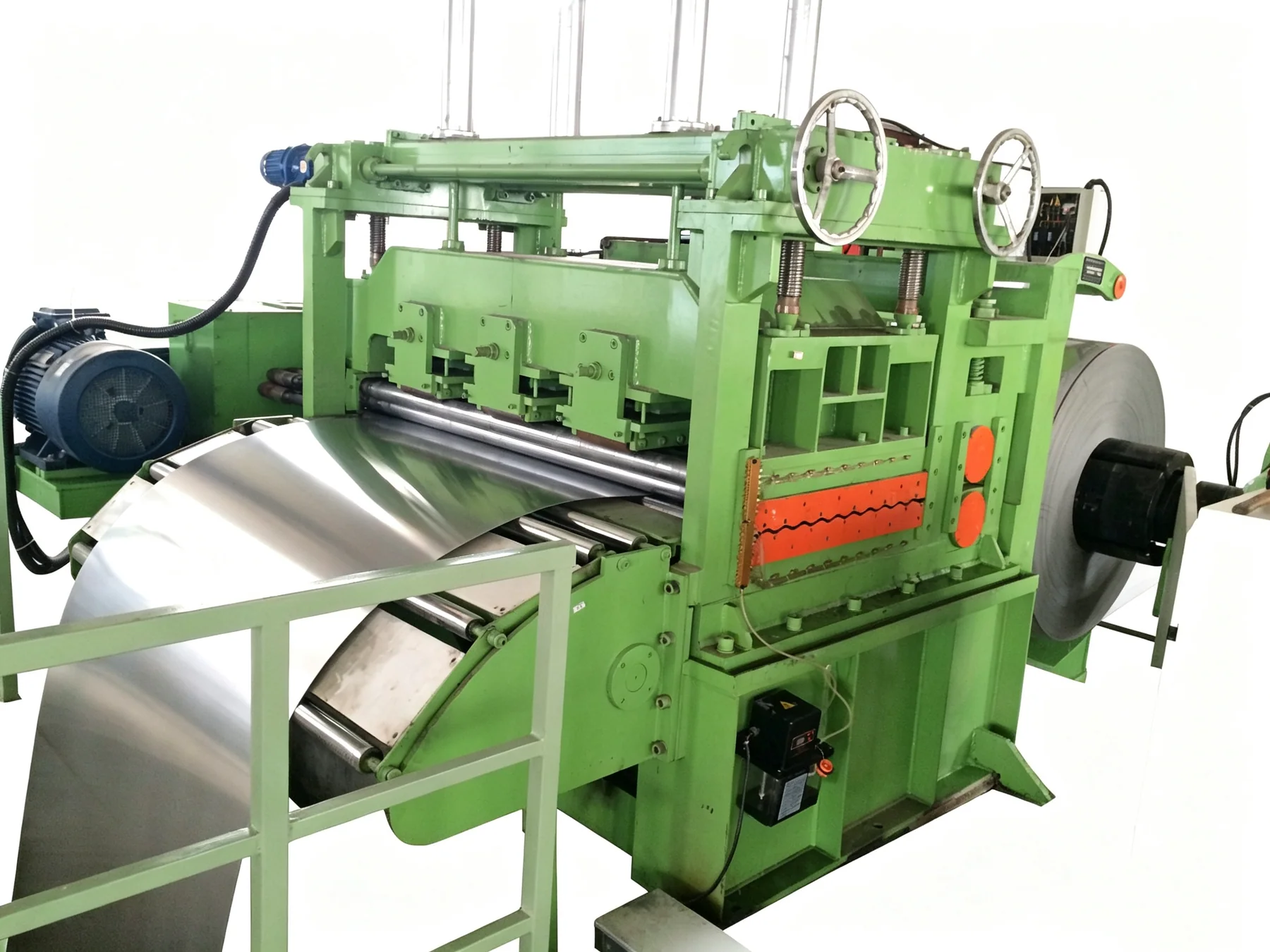
Decoiling & Leveling Machine
Combined decoiler and leveler, 7–11 rollers
View specs & pricing →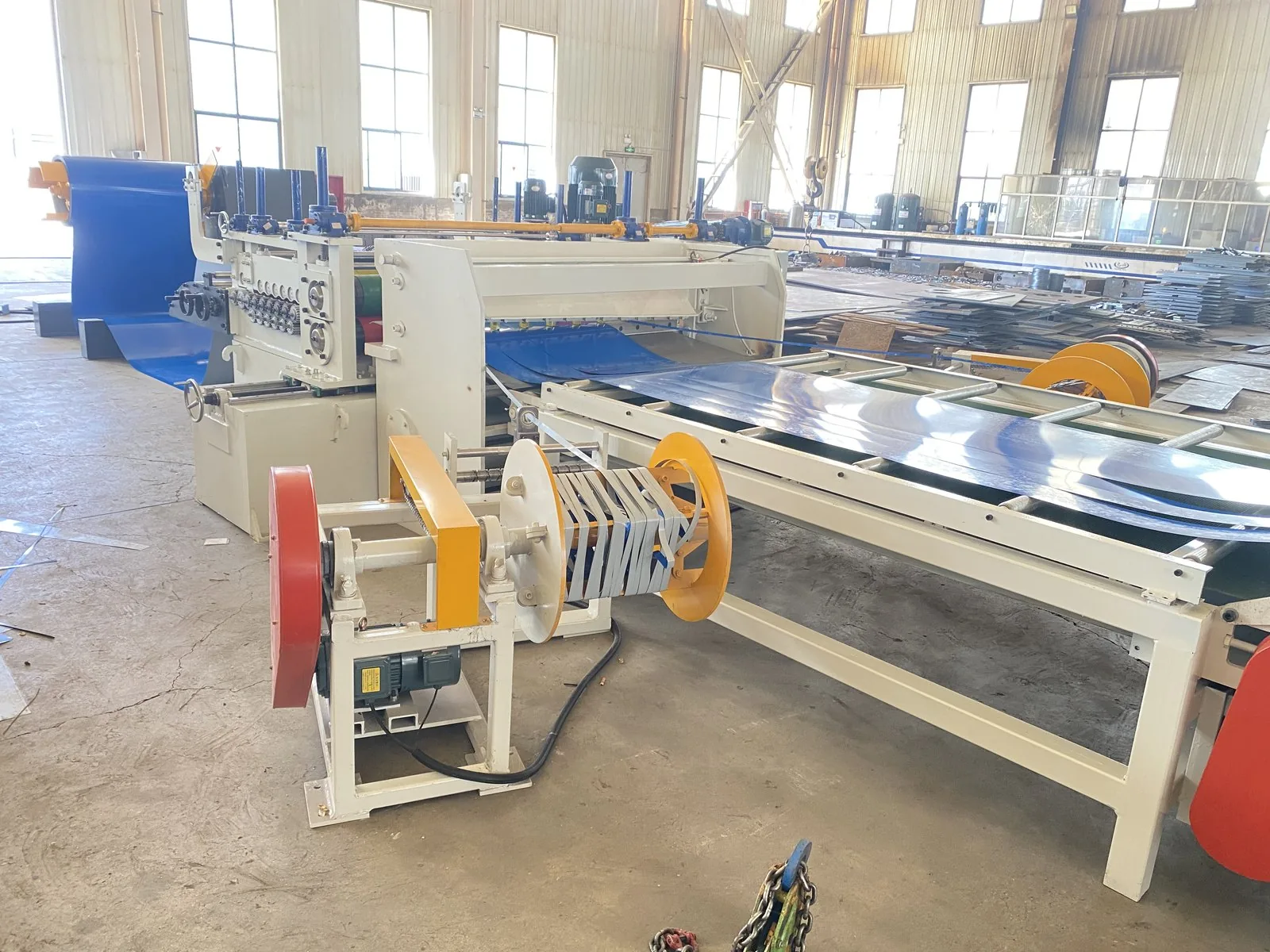
Steel Coil Slitting Line
Cut master coil to width, down to 20 mm
View specs & pricing →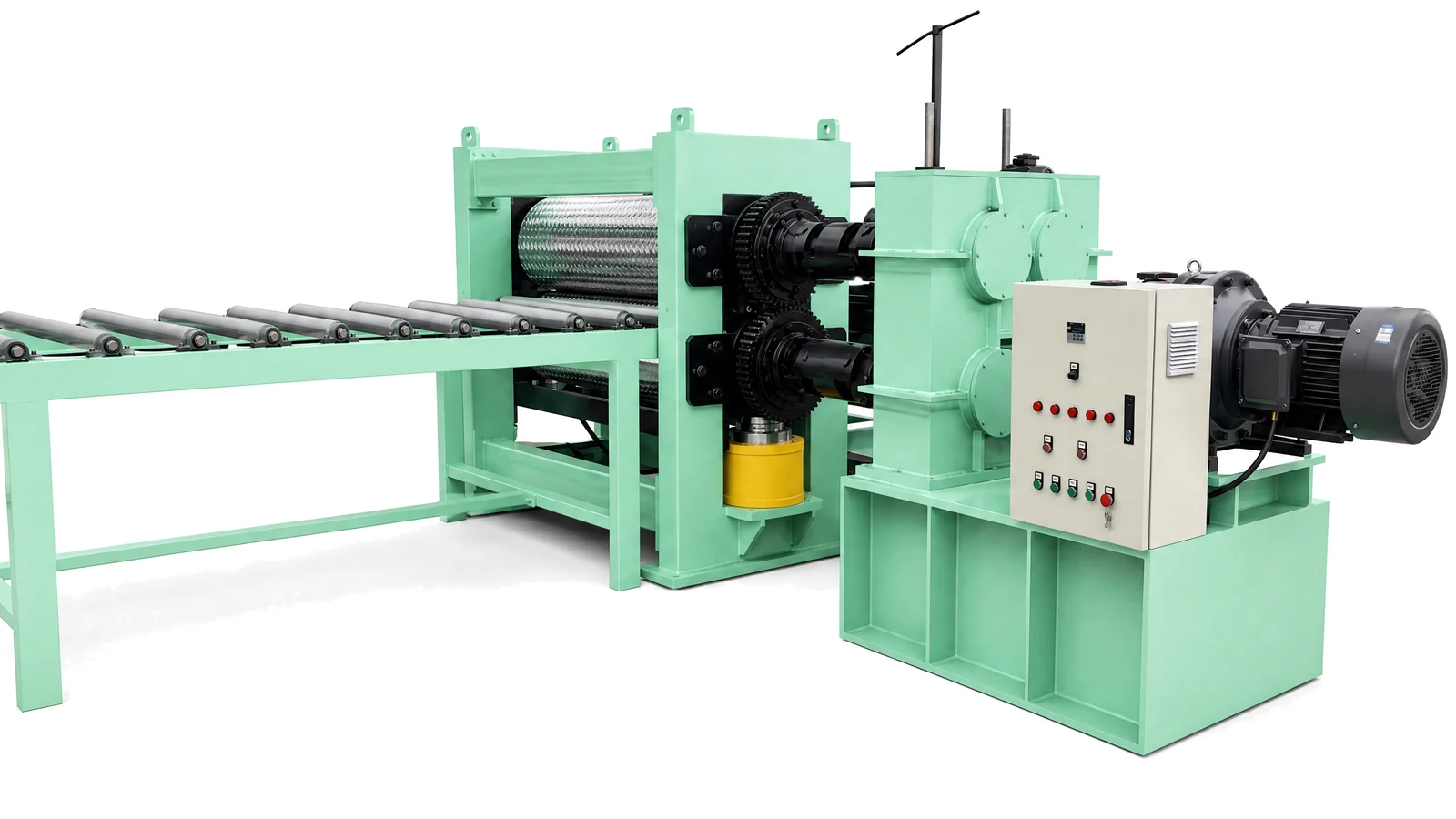
Metal Embossing Machine
Decorative and functional coil embossing
View specs & pricing →Typical Production Line Setup
| Component | Role | Necessity |
|---|---|---|
| Hydraulic decoiler | Uncoils and holds back-tension on the coil | Must-have |
| Coil car | Loads coil onto the mandrel safely | Recommended above 5 T |
| Leveling unit | Removes coil set and cross-bow | Must-have for export coil |
| Slitting line | Converts master coil into required widths | Optional, above ~300 t/yr |
| Embossing unit | Textures the strip before forming | Optional |
| Tension control | Keeps constant back-tension as coil diameter falls | Must-have |