Light Steel Framing Machines
Purlins, studs, tracks, sigma sections and drywall framing roll forming lines.
Light steel framing covers the cold-formed members that make up the non-structural and structural parts of a building: purlins and rails that carry the roof and walls, studs and tracks that form partitions and walls, and the finishing profiles — ceiling grids and corner beads — that close the job.
What makes this group different from roofing is that the sections are load-bearing or dimensionally critical. A purlin that is bowed by two millimetres will not lap with its neighbour on a long roof; a stud that is twisted will not line up with the board it receives. So the specification emphasis here is on the leveling and drive quality of the line, not on forming speed.
Light Steel Framing Roll Forming Machines
All models available with matched decoiler, leveling unit and runout table as a complete line.
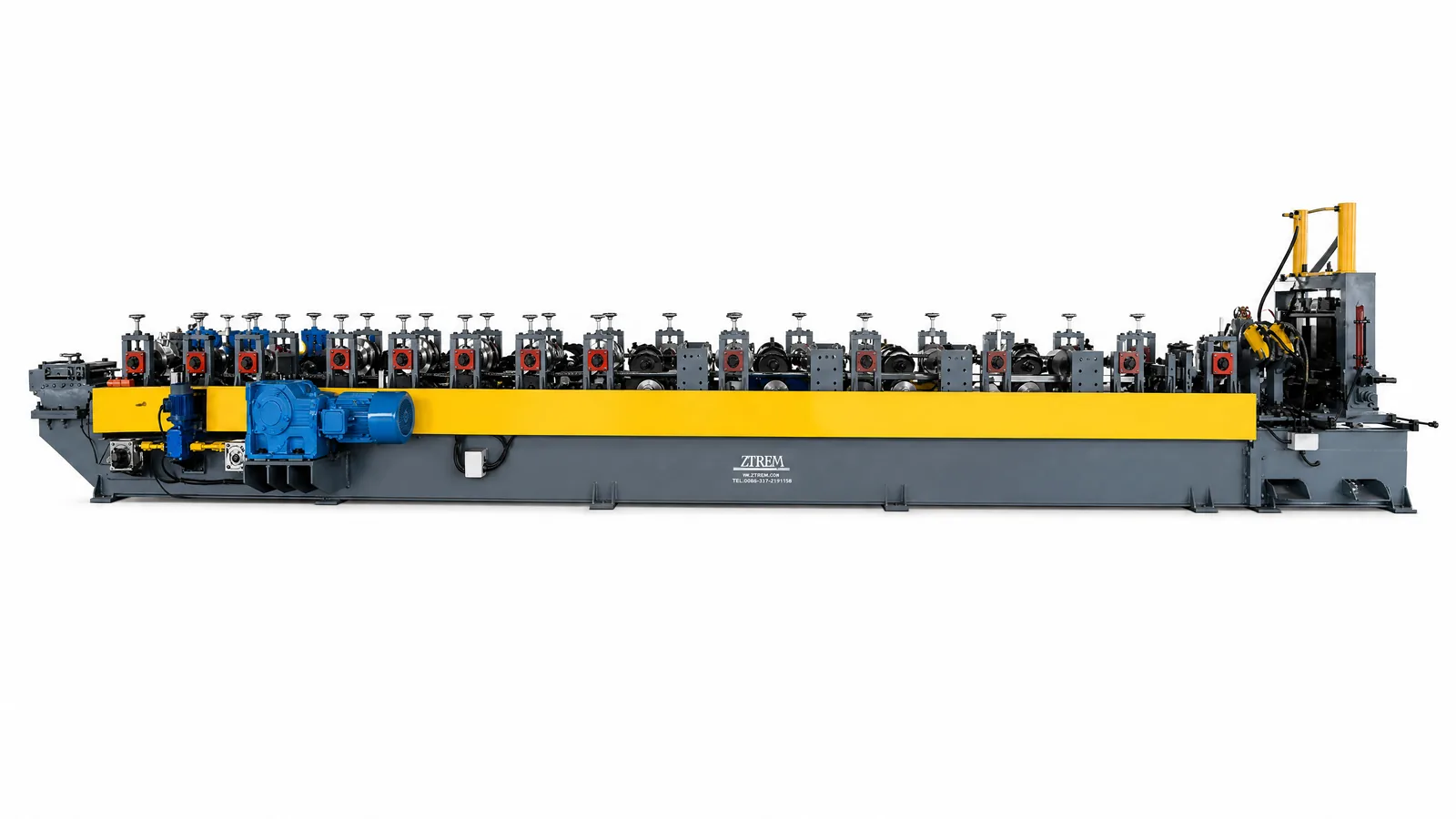
CZ Purlin Roll Forming Machine
C and Z interchangeable, 60–350 mm web, servo C→Z change under 10 minutes
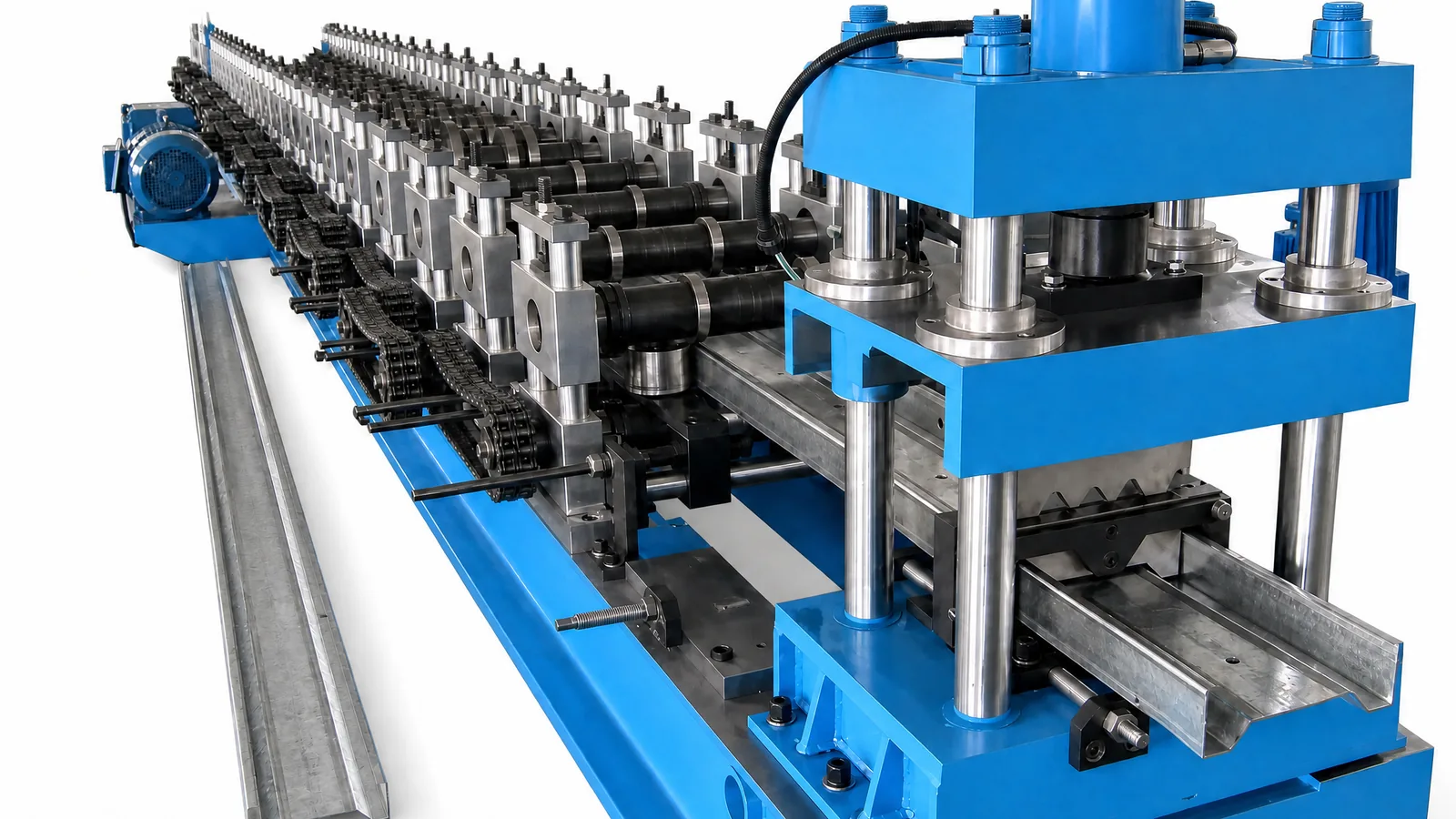
Sigma Purlin Roll Forming Machine
Sigma (Σ) and Omega (Ω) sections, higher capacity than a C purlin of the same depth
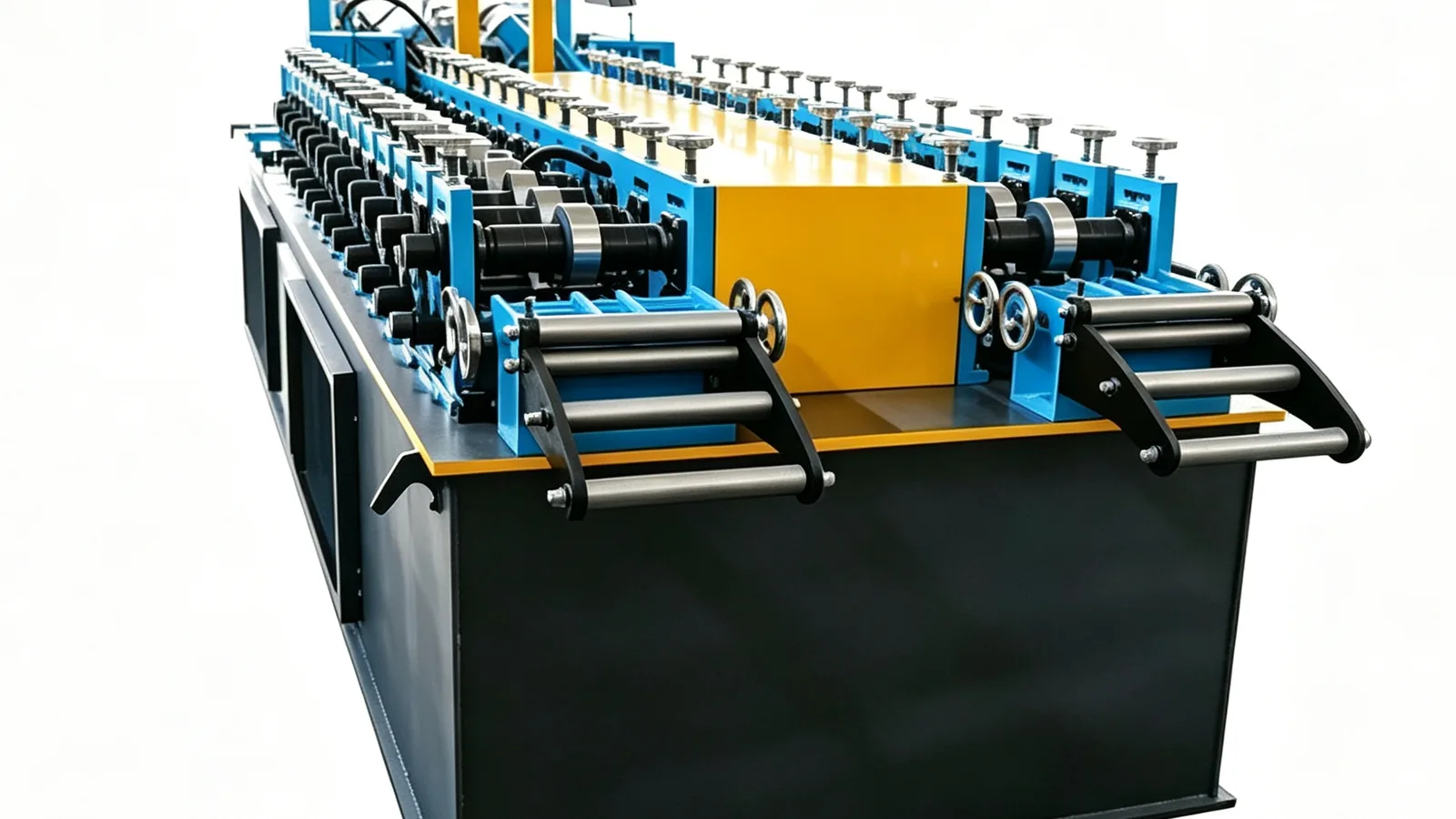
Light Gauge Steel Framing Machine
Structural LGS C/U profiles for wall, floor and roof framing, optional swage
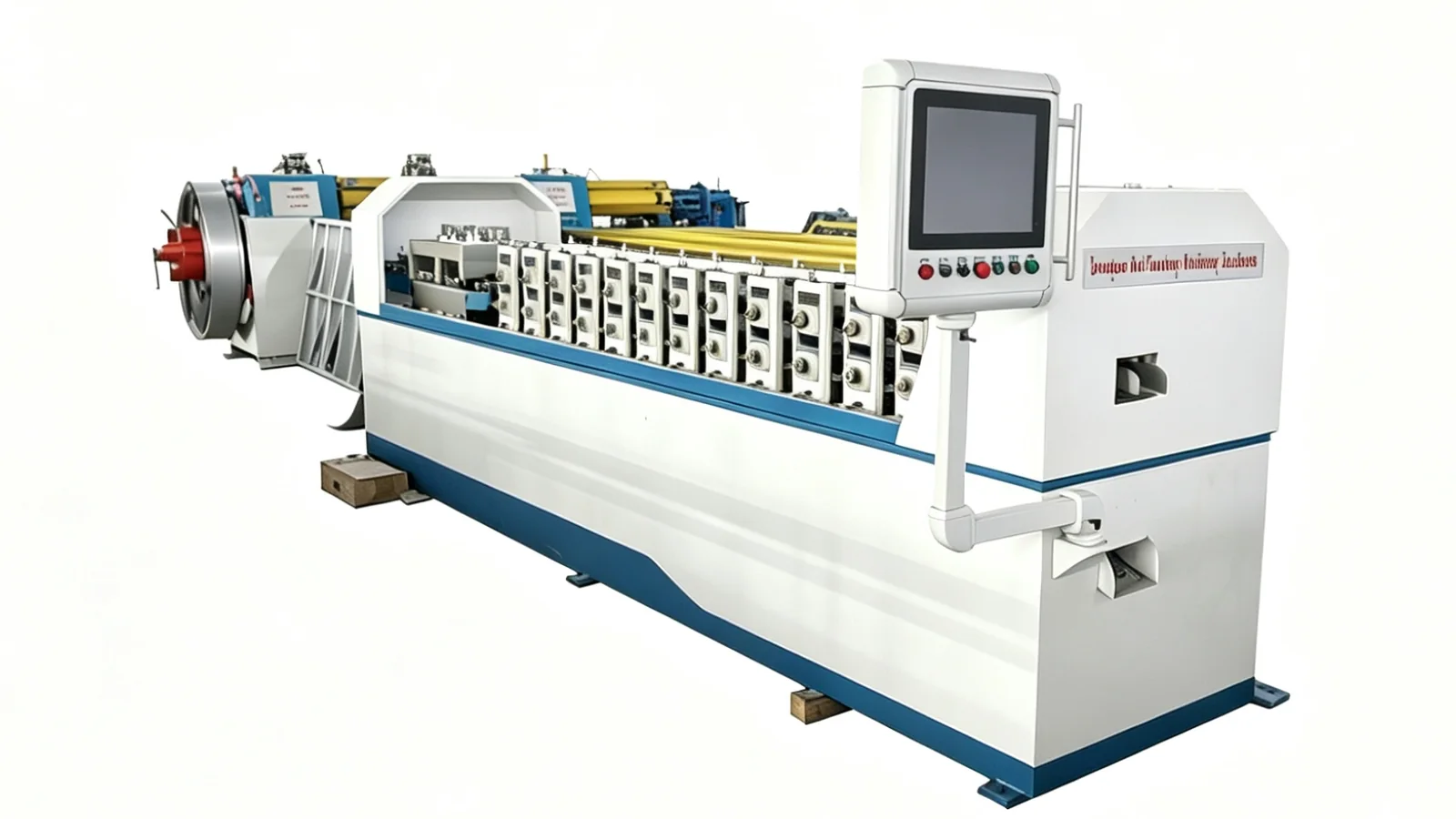
Stud & Track Roll Forming Machine
Drywall stud and runner at 20–40 m/min — the highest-speed line in the range
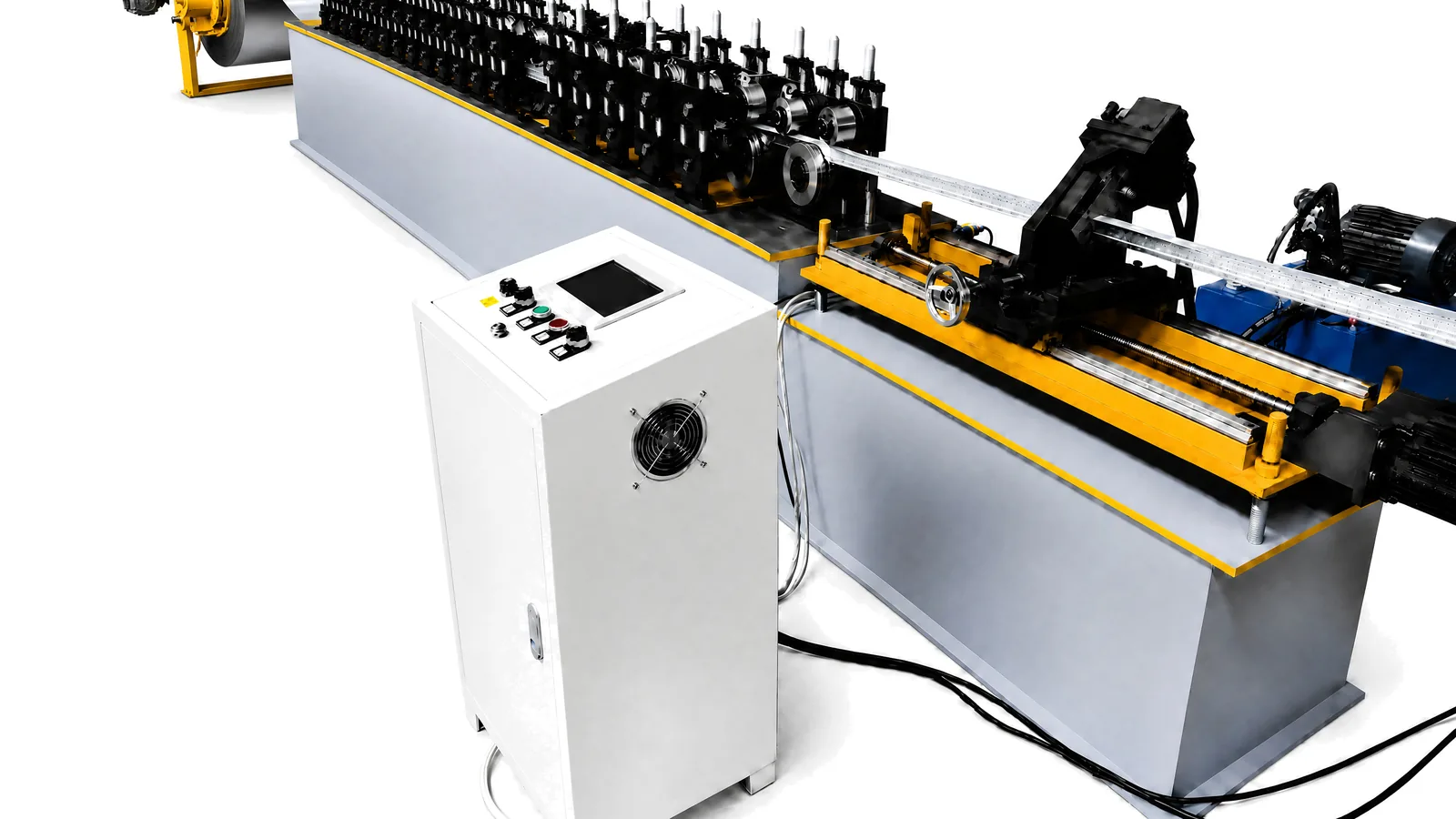
Ceiling T-Bar Roll Forming Machine
Main tees, cross tees and wall angle with the continuous slot for cross-tee clips
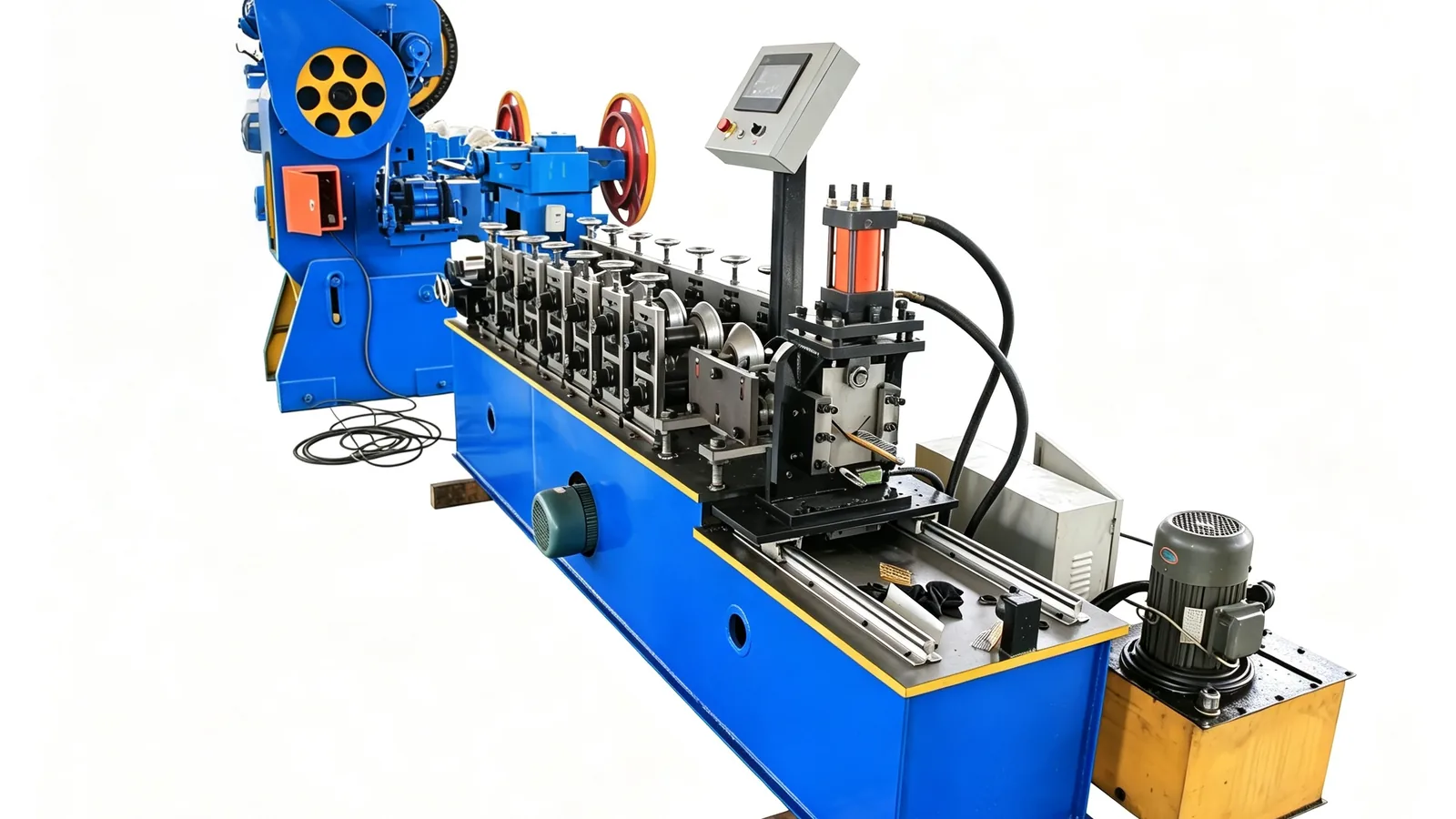
Wall Angle & Corner Bead Machine
Corner bead, wall angle and plaster stop profiles — the lowest-cost machine in the range
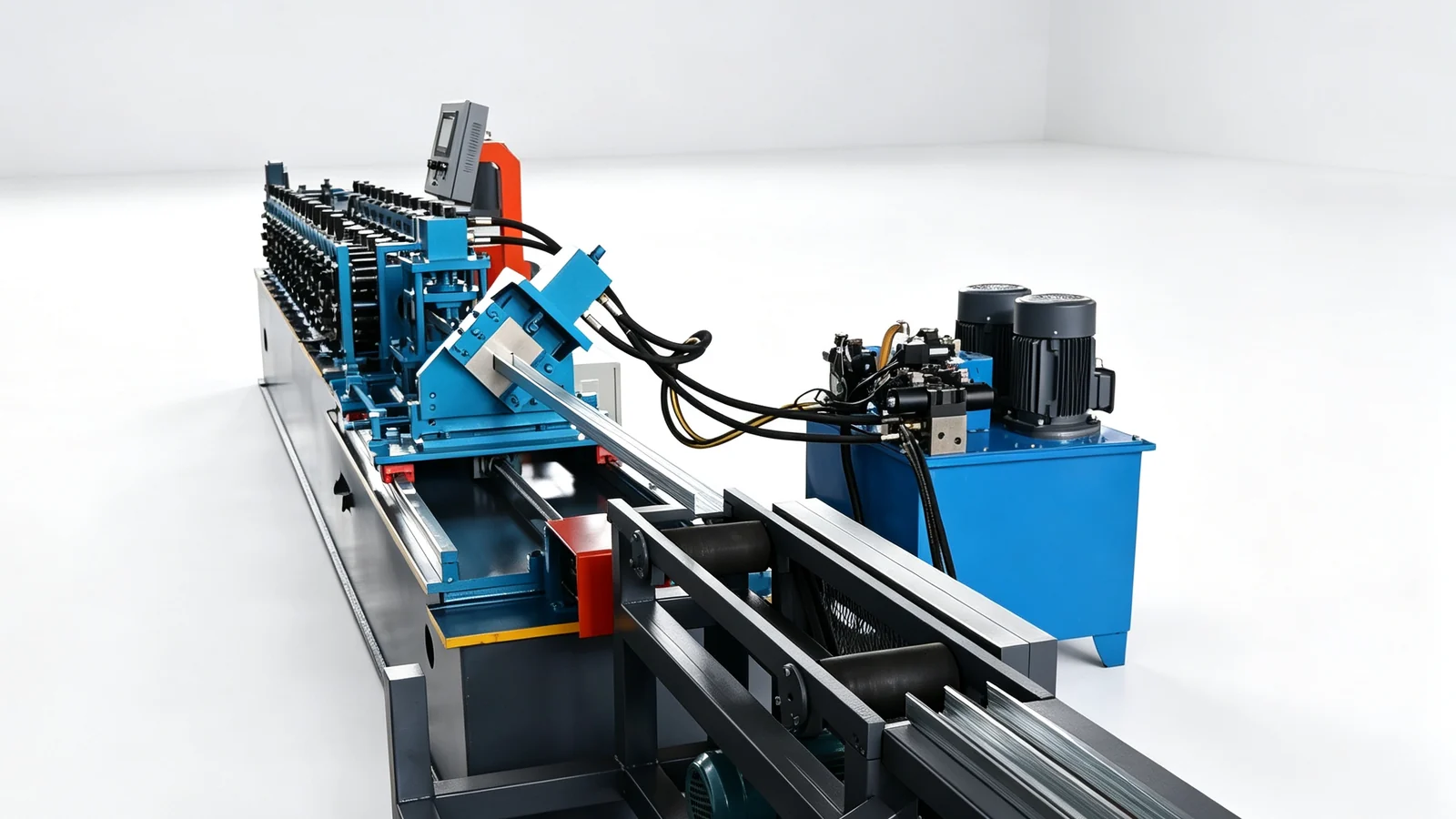
Imperial Metal Stud Roll Forming Machine
The partition stud line for North American interior framing. 3-5/8" is the most common web depth; the machine adjusts to 2-1/2", 3-1/2", 4" and 6" without roll change.
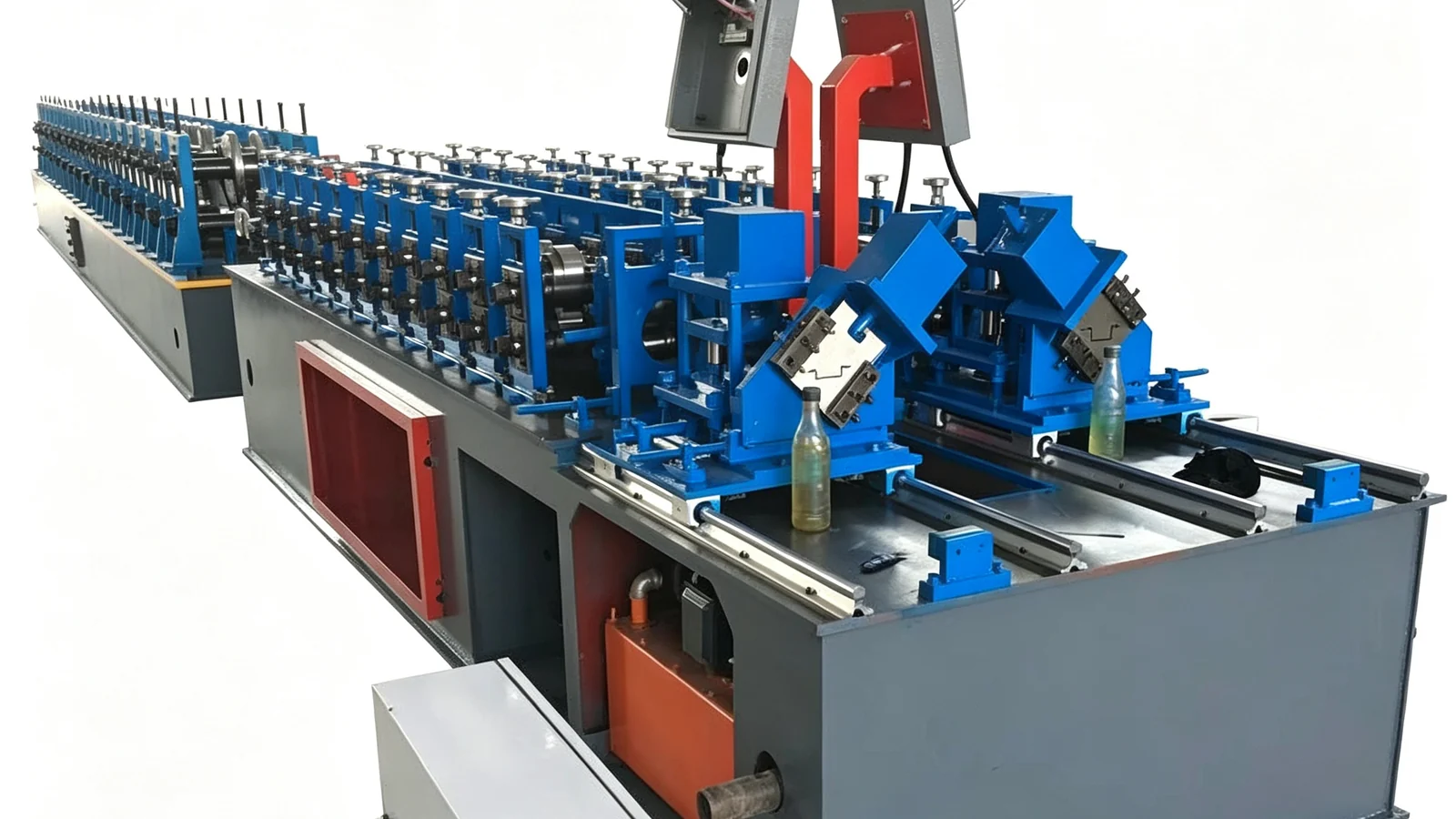
AISI Light Gauge Steel Framing Machine
Imperial stud and track for the North American market. AISI S240 structural and S220 non-structural, 1-5/8" to 8" web depths, width-adjustable without cassette change.
How to choose a framing line
- Am I making a structural member or a finishing profile?
- Structural members — purlins, floor joists, load-bearing studs — need a leveling unit, a heavier drive and consistent thickness capability, because straightness is the product. Finishing profiles such as corner beads and ceiling tees are far more forgiving and cost a fraction of the price. Do not buy a structural-grade line to make corner beads.
- Do I need C sections, Z sections, or both?
- C sections suit single spans; Z sections lap with the next purlin and turn a row of spans into a continuous beam, which on a long industrial roof roughly halves the bending moment. If you supply long roofs, Z capability matters. Both can run on one machine, but how fast you change between them is a purchase decision, not a detail.
- How often will I change section size?
- This single question decides the drive type. A servo machine changes web height and lip on the control panel in under 10 minutes. A manual gearbox machine needs every station re-set by hand, which takes 30–45 minutes. If you change weekly, servo pays for itself; if you run one purlin size for months, it does not.
- What steel grade will I actually be running?
- G300 and G550 behave differently in the same machine. Higher-yield steel needs more roll pressure and harder rolls, typically HRC 60–62 rather than a standard hardness. Telling us the grade at enquiry stage is what lets us specify the rolls correctly the first time.
- Do the members need punching, swaging or dimpling?
- Purlins usually need bolt holes at a programmed pitch. Structural studs usually need service holes; light steel frames benefit from swage dimples that set the screw depth so two members nest correctly. All of these are done on the flat strip before forming, which is the only way to hold their position.
- Will the members be cut from a design list?
- A frame design outputs hundreds of short members to different lengths. If you run structural framing rather than a single purlin section, a design-software interface that feeds the cutting and punching list to the machine control is the difference between running to a schedule and cutting by hand from a drawing.
Framing sections compared
| Section group | Typical use | Web / section size | Thickness |
|---|---|---|---|
| C and Z purlins | Roof and wall support on industrial buildings | C 60–350 mm · Z 60–300 mm web | 1.5 – 3.0 mm |
| Sigma and Omega | Purlins where section depth is constrained and more capacity is needed | 100 – 250 mm | 1.5 – 3.0 mm |
| Light gauge steel framing | Structural wall, floor and roof framing | 70 – 300 mm | 0.8 – 2.0 mm |
| Stud and track | Partitions and non-structural walls | 41 – 152 mm | 0.5 – 1.2 mm |
| Ceiling T-bar | Suspended ceiling grid | 24 / 32 / 38 mm | 0.3 – 0.8 mm |
| Wall angle and corner bead | Corners, wall ends, plaster stops | 20 – 50 mm leg | 0.3 – 0.8 mm |
What to fix before you order
Straightness is the product
A framing section is bought to be straight. That makes the leveling unit and the decoiler brake setting more important than the forming stations, and it is why we do not recommend buying a structural framing machine without a leveler.
Tell us the steel grade, not just the thickness
G300 and G550 at the same thickness need different roll hardness and different drive power. A machine specified for one will either under-form or mark the other. This is the single most common specification gap on framing enquiries.
Match the machine to the section range you sell
A Z purlin line that covers 60–300 mm web is a different machine from one built for 150–300 mm. Narrowing the range buys roll stiffness and accuracy in the range you actually use.
Punching and swaging belong on the flat strip
Bolt holes, service holes and swage dimples are all formed before the section is closed. If a supplier offers to punch the finished section, that is a compromise on position accuracy, not a feature.
Fasteners and accessories are usually bought in
Most producers buy screws, clips and brackets rather than making them. The machine decision is only about the members themselves, so do not let an accessory package inflate the comparison.
Decide whether you are selling members or a system
Selling loose purlins and selling a designed frame are different businesses with different machine requirements. The second needs the design-software interface and a much larger cutting throughput.