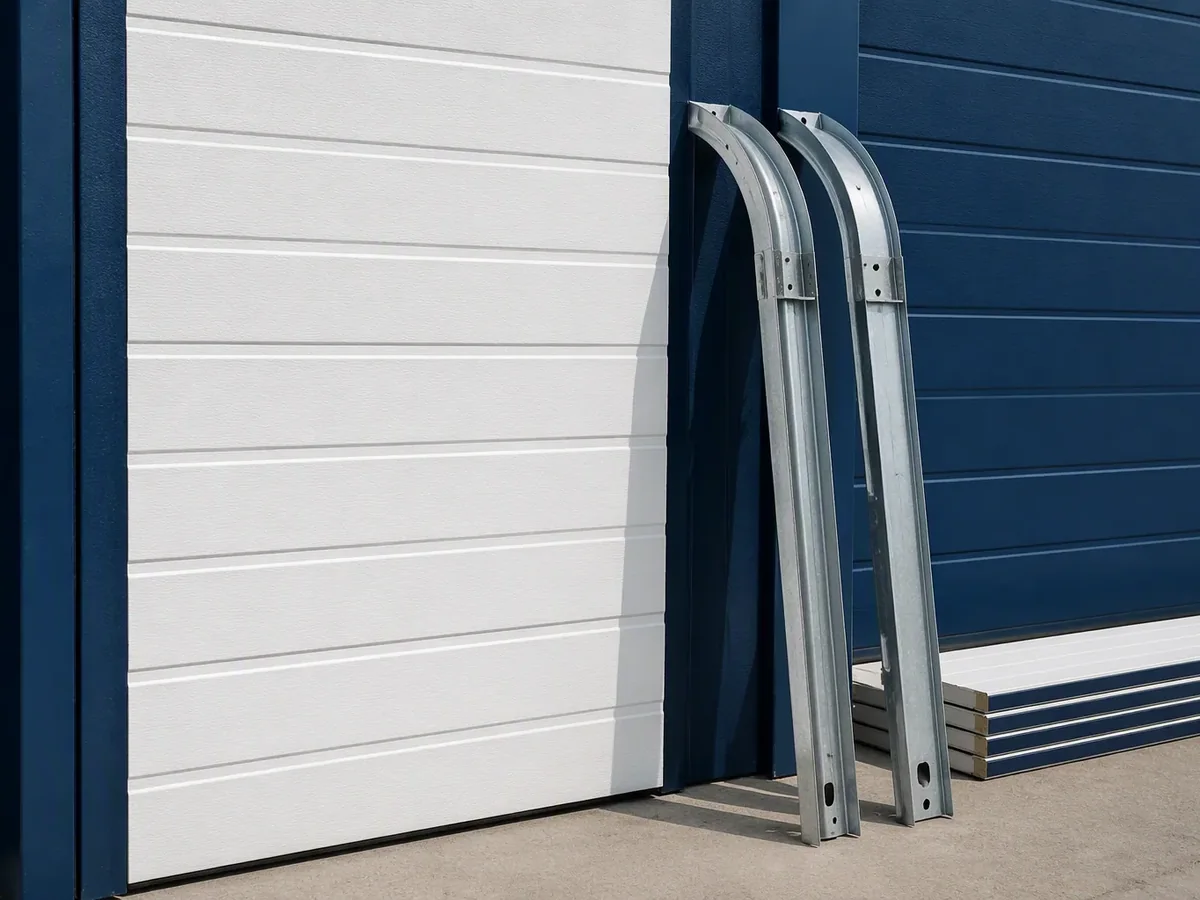
Door & Rolling Shutter Machines
Production lines for roller shutter slats, steel door frames, garage door panels and security doors.
Roller shutters and steel door frames are products sold in almost every country in the world, serving commercial, industrial and residential markets.
The roll forming machines that produce shutter slats, door frame profiles and garage door sections are straightforward to operate, produce high-volume output at low material cost, and serve markets with steady year-round demand.
For a producer looking for a reliable base product alongside higher-margin specialised lines, shutter and door frame production is a natural complement.
Roller Shutter Slat Profiles
A roller shutter curtain is made from hundreds of interlocking C-shaped or Z-shaped slats, each typically 77 mm or 105 mm in developed depth, formed from 0.6–1.2 mm pre-galvanised or pre-painted steel. The slats are formed on a roll forming machine, cut to the shutter width, and assembled by linking the curved hooks at the top of each slat into the rolled bottom of the slat above it. The assembled curtain rolls into a steel housing box above the door opening. The two dominant slat profiles are the C-slat, used in commercial and industrial applications where appearance is secondary to security and cost, and the Z-slat, which has an S-shaped cross-section creating a more tightly interlocking curtain preferred in higher-security and premium commercial applications. Perforated slats — where a pattern of round holes is punched during forming — are used for ventilated shutters in car parks and storage areas where air circulation is required.
The Shutter Slat Production Line
A complete shutter slat line is compact: decoiler, leveling unit, roll forming machine (12–18 stations), optional inline perforating unit, flying cut to length, and a batch counter that stops the line when the required slat count for one curtain is reached.
Line speed for 0.6–0.8 mm slat material is typically 20–30 m/min. At 20 m/min, one line produces roughly 800–1,000 m of slat per shift — enough for 15–25 standard shutters depending on size.
Insulated shutter slats include a cavity that is filled with foam insulation after forming, either by a continuous foam injection pass or by manually inserting pre-cut foam strips; the insulated slat commands a significant price premium over the standard solid slat.
Steel Door Frame Profiles
Steel door frames are produced on a separate machine from shutter slats, because the profiles are heavier (1.0–2.0 mm) and the section geometry is more complex. The standard door frame uses three profiles: an L-frame (the structural jamb that anchors into the wall), a U-channel stop (the profile against which the door leaf closes), and a Z-profile transom or head. All three can be produced on the same roll forming machine with cassette changes, or on dedicated single-purpose machines where volume justifies it. The dimensional accuracy of the roll-formed profiles — particularly the squareness of the corner bends — directly affects the ease of door fitting on site: profiles that are bowed or twisted produce frames that do not sit square in the opening and require shimming and adjustment that slows the installation process.
Market Structure
The shutter and door frame market is served by integrated manufacturers (who form the profiles, assemble the shutters and install them), subcontract profile producers (who supply formed slats and frame sections to assemblers and installers), and importers.
For a roll forming producer, the subcontract model — selling profile to assemblers — provides the highest volume and most predictable order book, because assemblers need a continuous supply of profile to keep their assembly and installation teams busy.
Building a reputation for dimensional consistency and on-time delivery is the most reliable competitive advantage in this market.
Machines for This Application
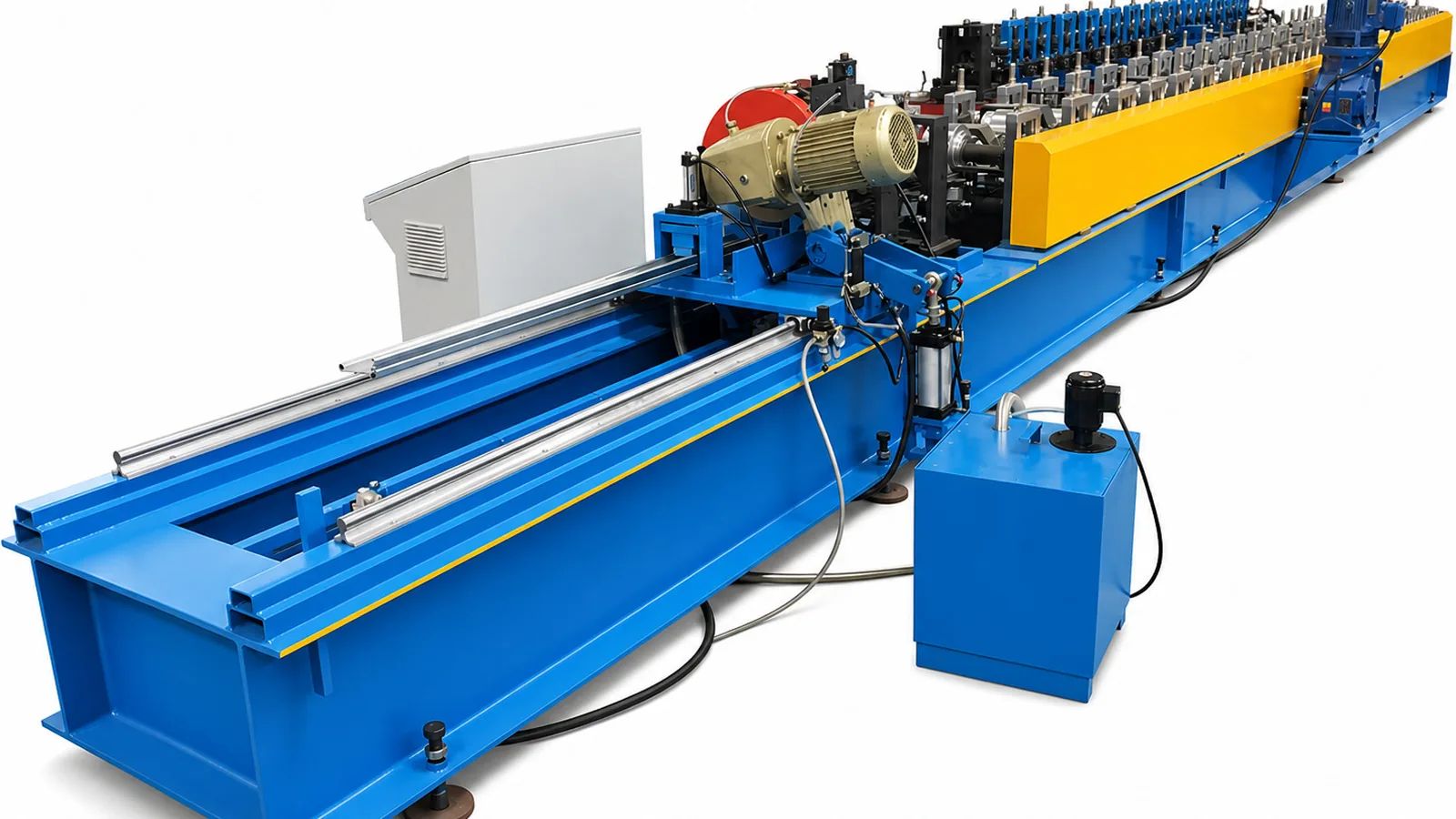
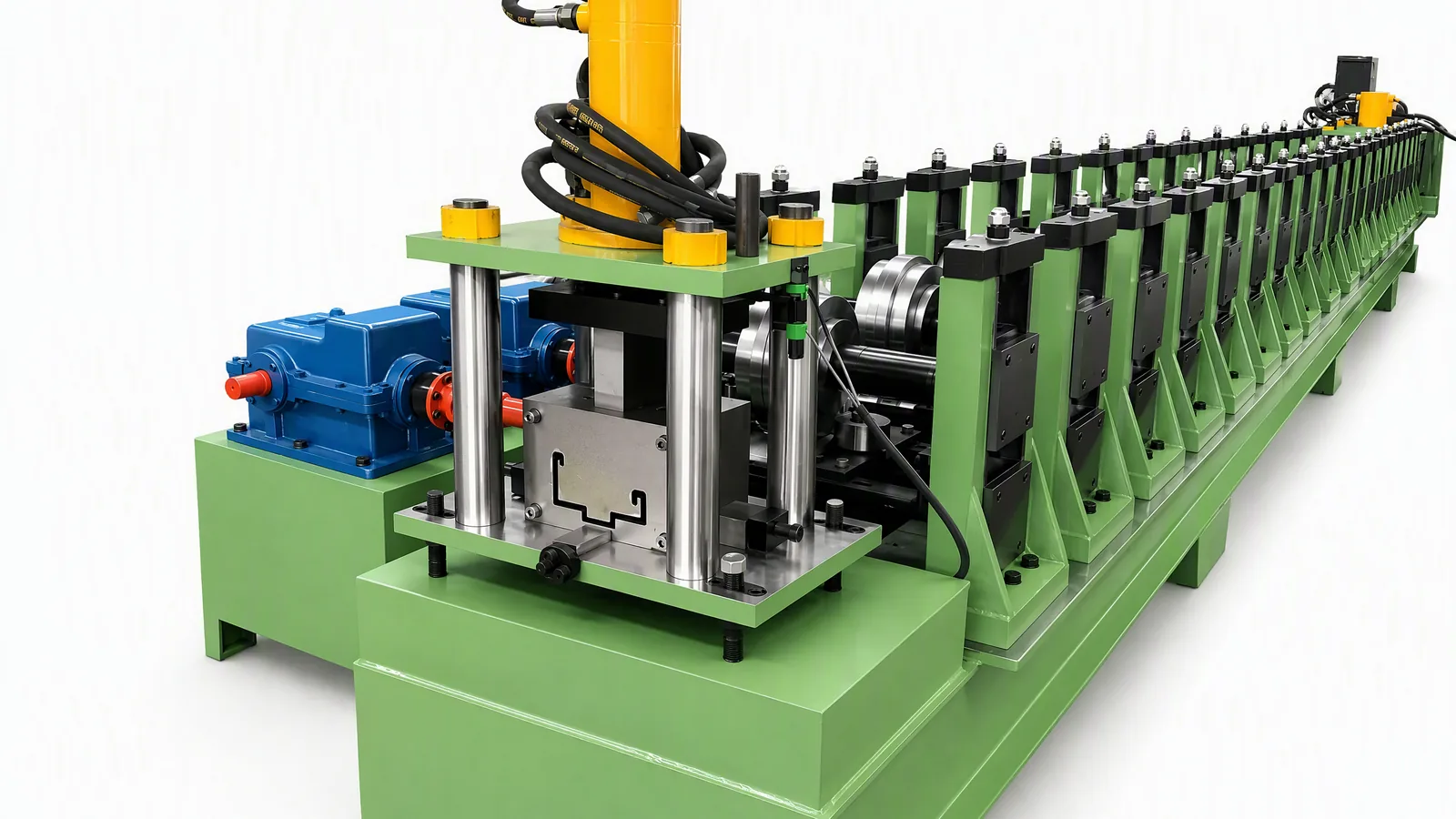
Typical Production Line Setup
| Component | Role | Necessity |
|---|---|---|
| Hydraulic decoiler | Uncoils 0.6–2.0 mm coil | Must-have |
| Leveling unit | Prepares coil for forming | Standard inclusion |
| Roll forming machine | 12–18 stations | Must-have |
| Inline perforating unit | Optional ventilation holes in slats | Optional |
| Flying cut to length | Cuts slats at speed | Must-have |
| Batch counter | Counts slats per bundle | Standard inclusion |