Door & Shutter Machines
Roller shutter slat and steel door frame roll forming lines.
The door group covers the two roll formed products around an opening: the frame that lines it, and the slats that close it. Both are high-volume, low-unit-value products, and in both cases the economics of the machine are decided by how many different sizes you have to make rather than by how fast it runs.
That is the opposite of a roofing line. A door frame is cut to a door height, a shutter slat is cut to a drop, and an order typically mixes several sizes — so setup time and cut-to-length control matter more than headline speed.
Door & Shutter Roll Forming Machines
All models available with matched decoiler, leveling unit and runout table as a complete line.
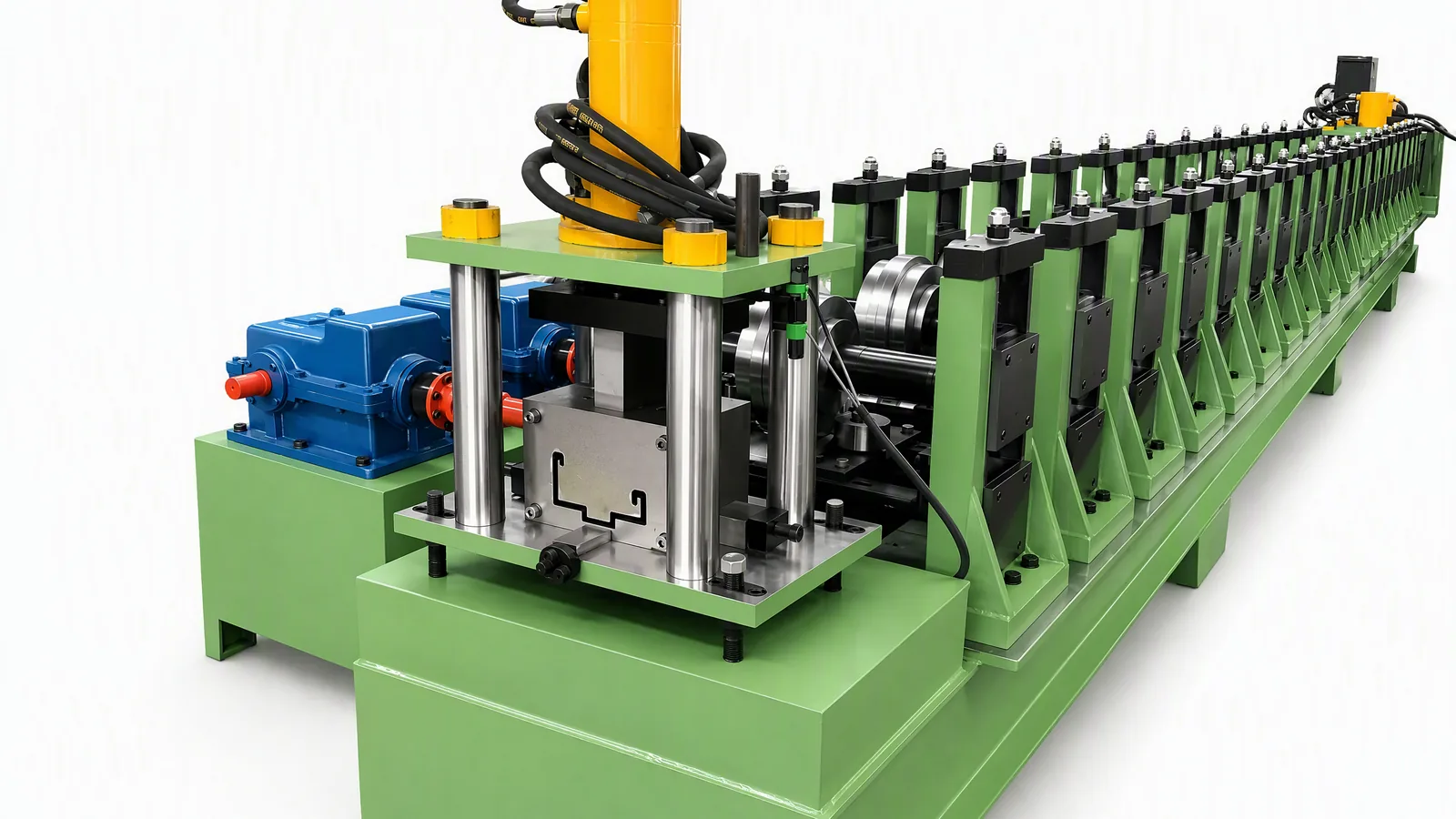
Steel Door Frame Roll Forming Machine
L-frame, U-channel and Z-frame door profiles with optional hinge-hole punching
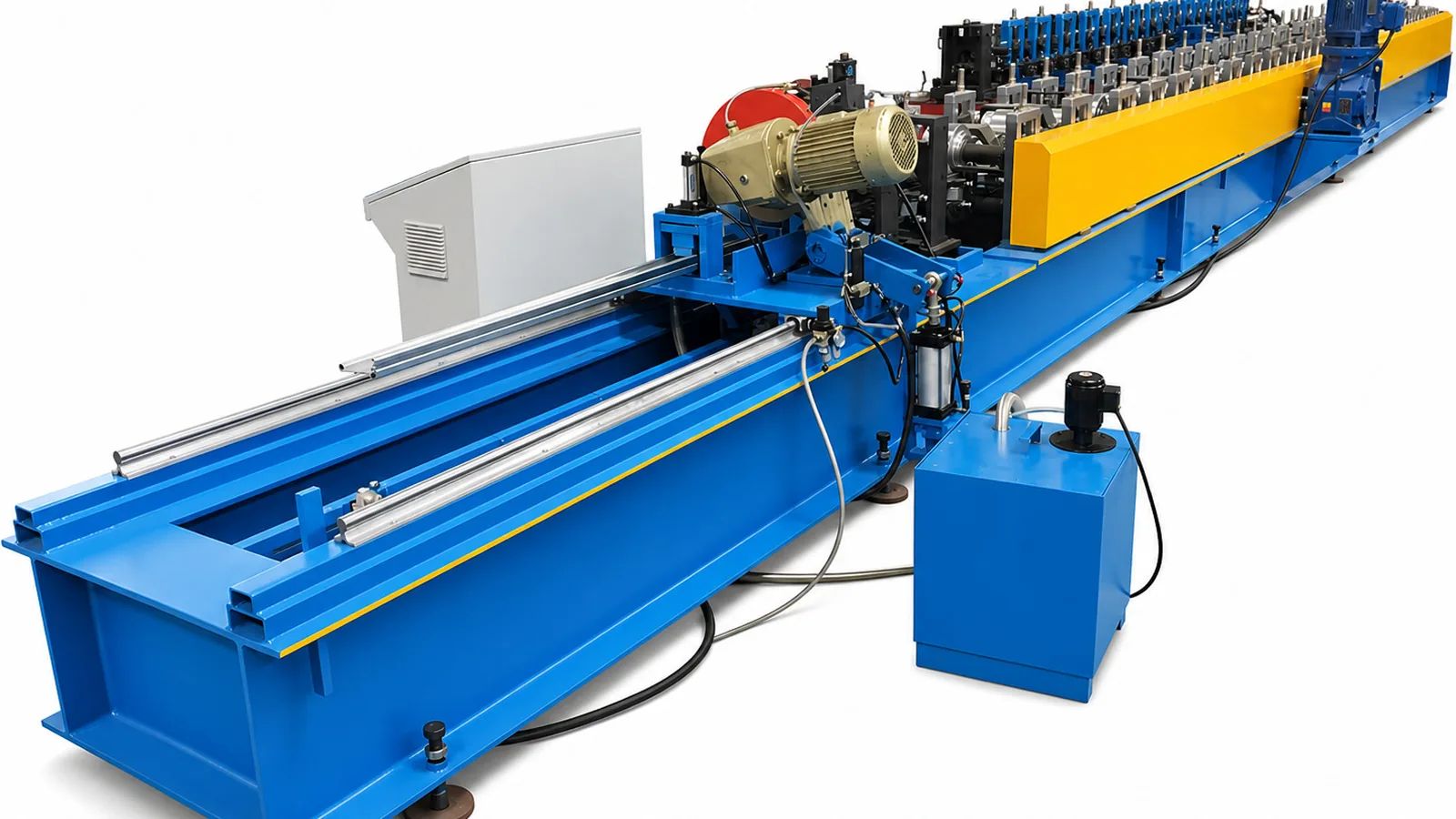
Roller Shutter Door Machine
C-slat, Z-slat, heavy 105 mm and perforated shutter slats, 15–30 m/min
How to choose a door line
- Am I making frames or slats?
- They are unrelated products. A frame is an open L, U or Z section folded from 0.8–2.0 mm steel, judged on straightness and on how it closes onto the wall opening. A slat is a small interlocking section formed from 0.6–1.2 mm steel, judged on how smoothly the finished curtain runs in its guides.
- What duty does the frame have to carry?
- Standard interior frames and light commercial doors run 0.8–1.2 mm. Fire-rated doors, external doors and heavy-duty commercial installations run 1.5–2.0 mm, because the frame has to resist impact. That thickness difference is the clearest single signal of what a frame is designed for.
- How many sizes will I make, and how often do I change?
- Door and shutter work is size-driven. Frames are cut to door height, slats to the shutter drop, and hinge positions change with door height and hand. A machine that changes size quickly — and a control that runs from a list rather than a fixed pattern — is worth more here than a faster machine.
- Mitred corners or butt-welded?
- This decides the cut. If your frames are assembled with mitred corners, you need a mitre cut unit; if they are butt-welded, the standard flying shear is correct. Specify it at order stage — it is a different cut arrangement, not a setting.
- Do I need ventilated or insulated slats?
- Perforated slats are used on car parks and plant rooms where ventilation is required. Insulated, foam-filled slats are used on climate-controlled buildings. Both are produced on the same line, but the perforating unit is inline and the foam filling is a separate step afterwards.
- What coating should the slat carry?
- A heavier coating weight than you would put on roofing sheet. A shutter slat is handled constantly and abraded every time the curtain rolls into the box, so the coating is a wear surface rather than a finish. This is one of the few places where the coating specification is driven by mechanical wear rather than by weather.
Door frames and slats compared
| Product | Typical use | Section / size | Thickness |
|---|---|---|---|
| L-frame | Frames fixed into a prepared opening | Depth 70 – 250 mm | 0.8 – 2.0 mm |
| U-channel frame | Wraps the wall on both faces — usual choice for blockwork and stud walls | Depth 70 – 250 mm | 0.8 – 2.0 mm |
| Z-frame and custom door sections | Project specific | Depth 70 – 250 mm | 0.8 – 2.0 mm |
| C-slat shutter | Standard commercial shutters — the most common profile | 77 mm and 105 mm depths | 0.6 – 1.2 mm |
| Z-slat shutter | Shutters needing a flatter face with less visible joint | 77 mm and 105 mm depths | 0.6 – 1.2 mm |
| Perforated / insulated slat | Car parks and plant rooms; climate-controlled buildings | 77 mm and 105 mm depths | 0.6 – 1.2 mm |
What to fix before you order
Setup time matters more than headline speed
A door set mixes frame lengths and a shutter order mixes drops. A machine that changes size in minutes and runs from a list is worth more in this product group than one that is 20% faster but slow to change.
Punching runs from a list, not a pattern
Hinge and strike positions change with door height and hand, so the inline punch should be programmed from a hinge-position list rather than a fixed pattern. A machine with a fixed punch pattern only suits one door type, and that is a limitation you will hit in the first month.
Check the coating against wear, not weather
Shutter slats abrade every time the curtain rolls into the box. Specify a heavier coating weight than for roofing, and treat the paint as a wear surface. This is the most common under-specification on shutter lines.
Mitre or butt joint — decide before the cut is specified
The cut arrangement follows the assembly method. A flying shear and a mitre cut unit are different purchases, and changing after the order is an upgrade rather than a setting.
Frame and stop are usually two machines, not one
The door stop is a small simple section and runs much faster than the frame. Producers who make both usually run them on separate machines rather than tandem stations, because the speed mismatch makes tandem operation awkward.
Assembly is not on the line
Shutter slats are interlocked and end-capped, and wound onto a barrel, in a separate operation. The machine produces slats, not finished shutters — budget for the assembly step separately.