CZ Purlin Roll Forming Machine Manufacturers
C and Z purlin lines in 1.5 – 3.0 mm steel — C 60 – 350 mm and Z 60 – 300 mm web, 16 – 20 stations, inline web punching, and a C-to-Z change under 10 minutes on a servo drive.
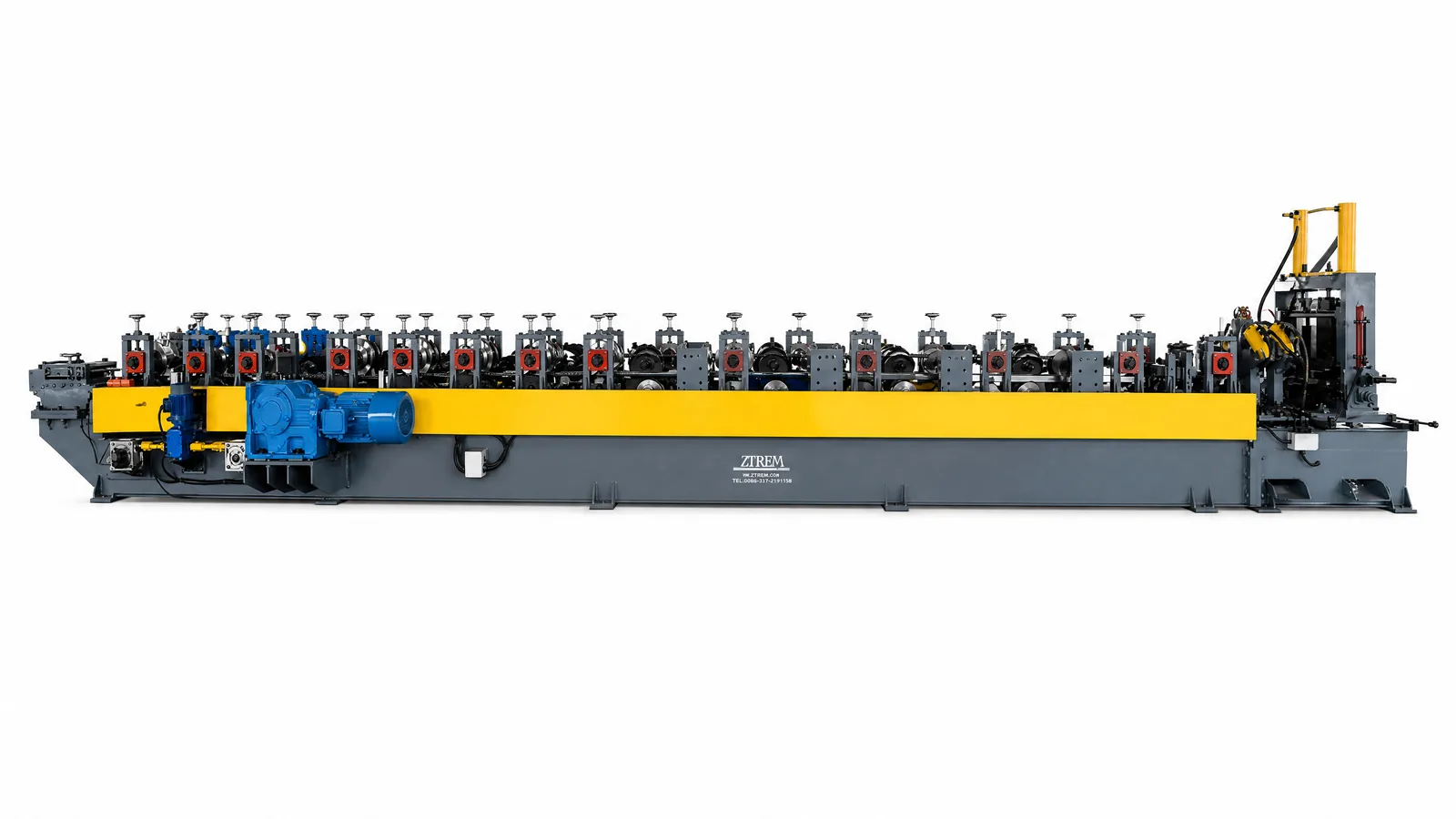
A CZ purlin line is bought for what it can be switched to as much as for what it forms. The section type, the web range and the changeover speed together decide which jobs you can quote — and all three are settled when the rolls are designed, not afterwards. This page is about buying that line: what a proposal should contain, which points to interrogate, and where two quotes for the same purlin quietly differ.
If you have not settled whether your roof needs a C, a Z, a Sigma or a truss section, start on our purlin hub, which covers the three purlin machines in the range and how the sections compare. Come back here once the section is decided and the question becomes which machine to buy and from whom.
The machine behind a CZ purlin line
Three things decide whether a purlin machine earns its keep, and all three are fixed by the tooling rather than by the operator. The specification table below gives the numbers; the sections after it are about how to buy against them.
| What decides it | Why it is a tooling decision |
|---|---|
| Which sections the line can make | C only, Z only, or both. A C-only roll set cannot produce the lapping Z section, so the answer sets your product range for years rather than for a job. |
| How fast it changes between them | Under 10 minutes on a servo drive against 30 – 45 minutes with a manual gearbox. That gap is the difference between mixing sections through a week and blocking them into campaigns. |
| How wide a section it covers | C 60 – 350 mm and Z 60 – 300 mm at standard, with tooling designed up to 400 mm web. The range is cut into the rolls, so the narrow option stays narrow permanently. |
Machine specifications
| Material | GI, galvanised, pre-painted steel |
|---|---|
| Thickness | 1.5 – 3.0 mm |
| Yield strength | ≤ 550 MPa (hardened rolls for higher) |
| Web height | C: 60 – 350 mm · Z: 60 – 300 mm |
| Flange | 45 – 90 mm, adjustable |
| Lip | 10 – 25 mm, adjustable |
| Forming speed | 8 – 25 m/min |
| Forming stations | 16 – 20 |
| Drive | Servo or gearbox, 15 – 22 kW |
| C → Z change | < 10 min (servo) · 30–45 min (manual) |
| Punching | Web holes 11 / 13 / 14 mm at auto pitch |
| Cutting | Hydraulic flying saw or post-cut |
| Control | PLC + 7″ touch-screen HMI |
| Certification | CE Declaration of Conformity |
| Lead time | 45 – 60 days |
Web height, flange and lip are given as ranges because they are adjustable on the line within the tooling that was cut; the section type and the drive are not ranges at all, which is why they belong in the original quote rather than in a follow-up conversation.
How to choose a CZ purlin machine manufacturer
Does the quote say whether it is C-only, Z-only, or C↔Z on one machine?
This single line in a proposal changes what you can sell. A C-only line cannot make the lapping Z section, and a supplier who quotes "a purlin machine" without stating which is asking you to assume. Because the section type is a tooling decision rather than a setting, discovering it after the order means buying a second machine rather than changing a parameter.
How fast is the C-to-Z change, and which drive gets you there?
On a servo-driven line the change is under 10 minutes, with the width and lip entered on the HMI. On a manual gearbox line it is 30 – 45 minutes, because every station is reset by hand. If your order book mixes sections through the month, that difference is your capacity — not a workshop convenience.
Is the web range wide enough for the spans you are asked to quote?
The standard range covers C at 60 – 350 mm web and Z at 60 – 300 mm, and custom tooling up to 400 mm web can be designed. A machine bought at the narrow end of the range quietly removes the heavier jobs from what you can bid for, and that is a commercial decision rather than a technical one.
Is the inline web punch in the quote, and can the pattern be preset per run?
The punch produces 11 mm, 13 mm or 14 mm bolt holes at an automatically programmed pitch, and the pattern can be preset per length run — which is what lets a full building set come off the line without stopping. A proposal that leaves punching to a separate press has added an operation, a handling step and a second setup that can drift against the profile.
Are the rolls specified for the grade of steel your market supplies?
The line runs 1.5 – 3.0 mm material up to 550 MPa yield, and higher grades need hardened rolls at HRC 60–62 with the associated increase in roll loads. The grade a machine was set up for is not a detail you can fix on site; running material the rolls were not intended for is a common route to profile distortion.
Is the straightening sized for the coil you will actually run?
A 3 T hydraulic decoiler and a 7-roller leveling unit are part of the line, and on heavier coil that equipment is doing more work than it looks: thick strip keeps a strong coil set, which appears as bow and camber in the finished purlin. Because the section is closed by the time it reaches the cut, none of that can be corrected later.
What has to be settled before the rolls are cut
- Section type
- C only, Z only, or both on one machine — the tooling decision that decides your product range.
- Web height
- C 60 – 350 mm · Z 60 – 300 mm; custom tooling up to 400 mm web can be designed.
- Flange and lip
- 45 – 90 mm and 10 – 25 mm, both adjustable.
- Punch pattern
- 11 / 13 / 14 mm holes at your pitch, preset per length run.
- Drive type
- Servo for quick width changes, or gearbox where the size range is fixed.
- Steel grade and thickness
- 1.5 – 3.0 mm, up to 550 MPa yield; hardened rolls at HRC 60–62 for higher grades.
- Power supply
- 380 V / 50 Hz / 3-phase standard; other voltages to your site.
These are the points buyers most often change, and every one of them is resolved while the rolls are being designed. The section type and the grade range in particular cannot be revisited after the order, because both are cut into the tooling.
Line configuration and options
| Hydraulic decoiler | 3 T, at the head of the line. |
|---|---|
| Strip straightener | 7-roller leveling unit — on heavy coil this is what keeps bow and camber out of the finished purlin. |
| CZ purlin roll forming machine | 16–20 stations on a servo or gearbox drive of 15 – 22 kW, forming at 8 – 25 m/min. |
| Inline web punch | 11 / 13 / 14 mm holes at auto pitch, with the pattern preset per length run. |
| Hydraulic flying saw or post-cut | A flying saw keeps the line moving on long runs; post-cut suits work where the length changes constantly. |
| PLC with 7-inch touch-screen HMI | Width, lip and punch pattern are entered rather than reset station by station. |
| Runout sized to your longest purlin | The table has to take the longest section you intend to make, not the average one. |
A working line quoted as one package. When you compare proposals, the two items most often missing from a low number on this machine are the inline web punch and a runout table long enough for the longest purlin you sell.
CZ purlin machine price — what drives it
- C-only, Z-only, or both on one machine
- A single-section machine carries one tooling set. A line that makes both carries the tooling and the changeover arrangement for both, which is the largest single step in the price — and the one that decides how many products you can sell.
- Web range and any custom tooling
- C 60 – 350 mm and Z 60 – 300 mm are the standard range; tooling for up to 400 mm web is designed to order. Broadening the range is design work on the rolls, so it belongs in the original specification.
- Servo or gearbox drive
- Servo brings the C-to-Z change under 10 minutes and is what you pay for if your orders mix sections. A gearbox at 30 – 45 minutes suits a shop that runs one section for long periods.
- Punching and cutting
- The inline web punch with preset pitch patterns, and the choice between a hydraulic flying saw and a post-cut — productivity items that decide whether a building set comes off the line in one pass.
- Steel grade and thickness the rolls are built for
- 1.5 – 3.0 mm up to 550 MPa is the standard build. Higher grades mean hardened rolls at HRC 60–62 and higher roll loads, so the grade range you actually buy is a tooling decision made at order stage.
- Control and discharge
- PLC with a 7-inch touch-screen HMI, and a runout table sized to your longest purlin rather than a nominal length.
We quote the configuration rather than publish a number, because a C-only line and a servo line carrying both sections with inline punching are not the same machine.
Factory, certification and lead time
ZTRFM builds cold roll forming lines for the framing, purlin, roofing, cladding, floor deck, cable containment and highway barrier markets, and every line is assembled, wired and run on our own shop floor before it is packed. The CZ purlin line carries a CE Declaration of Conformity, runs on 380 V / 50 Hz / 3-phase as standard with other voltages built to your site, and lead time is 45 – 60 days. Machines ship FOB Tianjin and enquiries are answered within 24 hours.