Solar Strut Channel Roll Forming Machine
Unistrut and P1000 strut channel with inline slotting — used for PV mounting frames, racking systems and cable support structures.
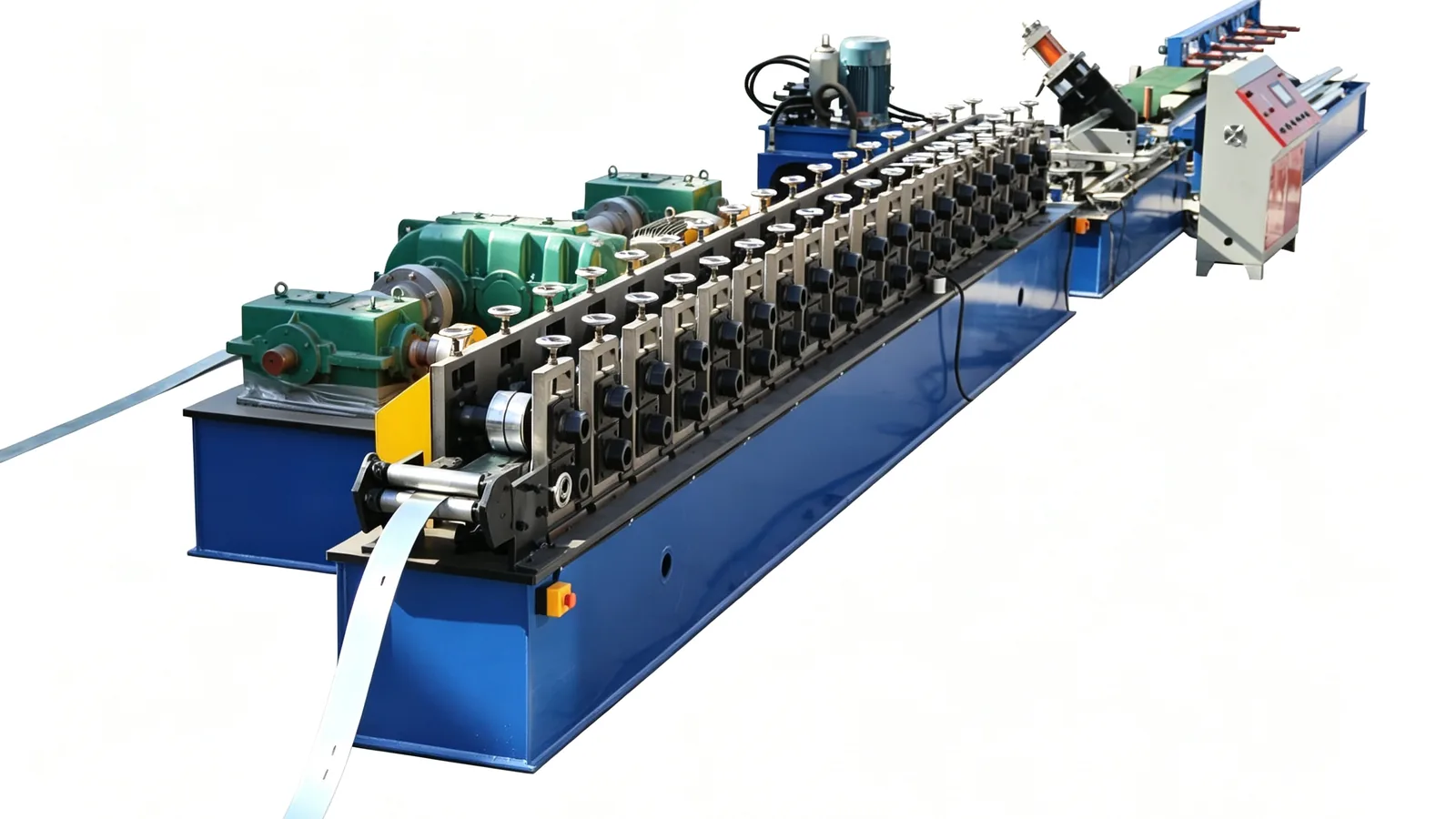
Technical Specifications
| Material | GI, galvanised, stainless 304, aluminium |
| Thickness | 1.5 – 3.0 mm |
| Channel depth | 21 – 82 mm |
| Channel width | 41 mm (P1000 standard) · custom 21–82 mm |
| Slot pattern | 9 × 18 mm at 25 or 50 mm pitch |
| Forming speed | 10 – 20 m/min |
| Forming stations | 14 – 18 |
| Drive | Gearbox chain drive, 7.5 – 15 kW |
| Punching | Inline slot punch, continuous |
| Cutting | Hydraulic flying cut |
| Control | PLC + HMI, slot pattern presets |
| Certification | CE Declaration of Conformity |
| Lead time | 40 – 55 days |
Need a quote or a custom specification?
Solar Strut Channel Roll Forming Machine in Our Workshop
 1:10
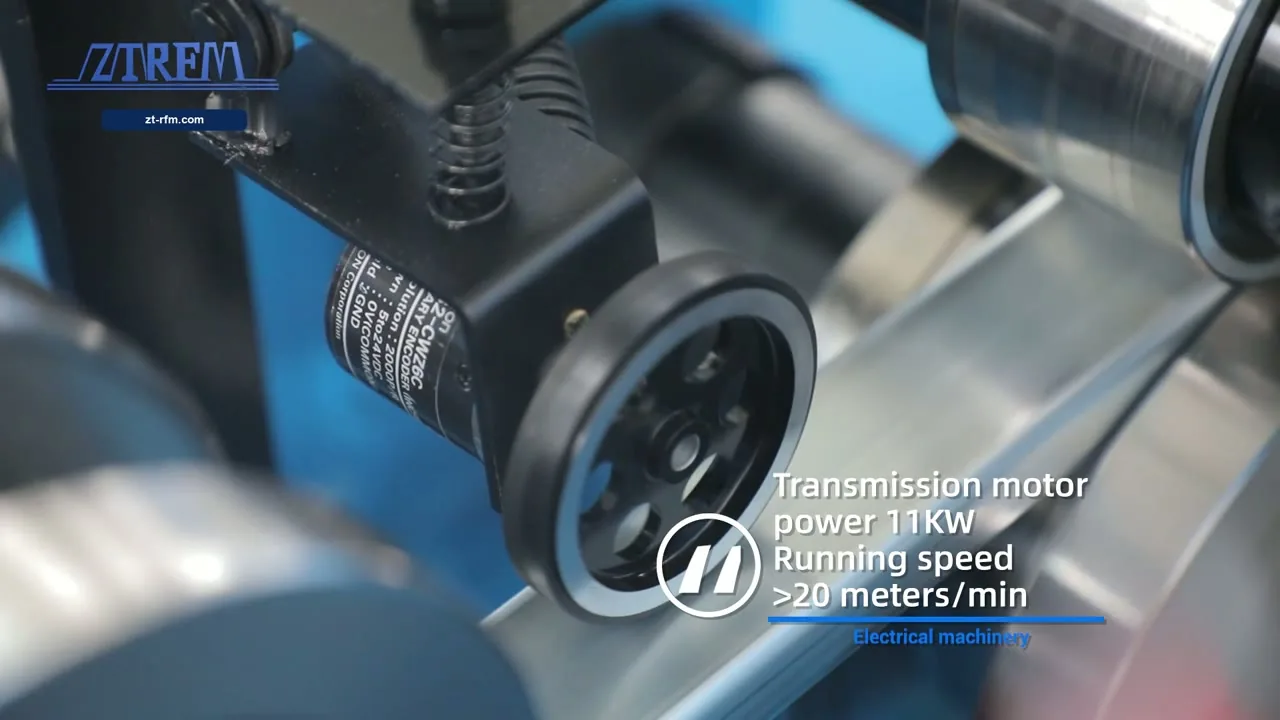
1:10 Solar Strut Channel Machine — Drive Motor, 5.5 kW / 20 m per min | ZTRFM
the transmission motor and drive of the solar strut channel machine. The specification shown on the machine is 5.5 kW with a forming speed of 20 m/min.
Machine specifications →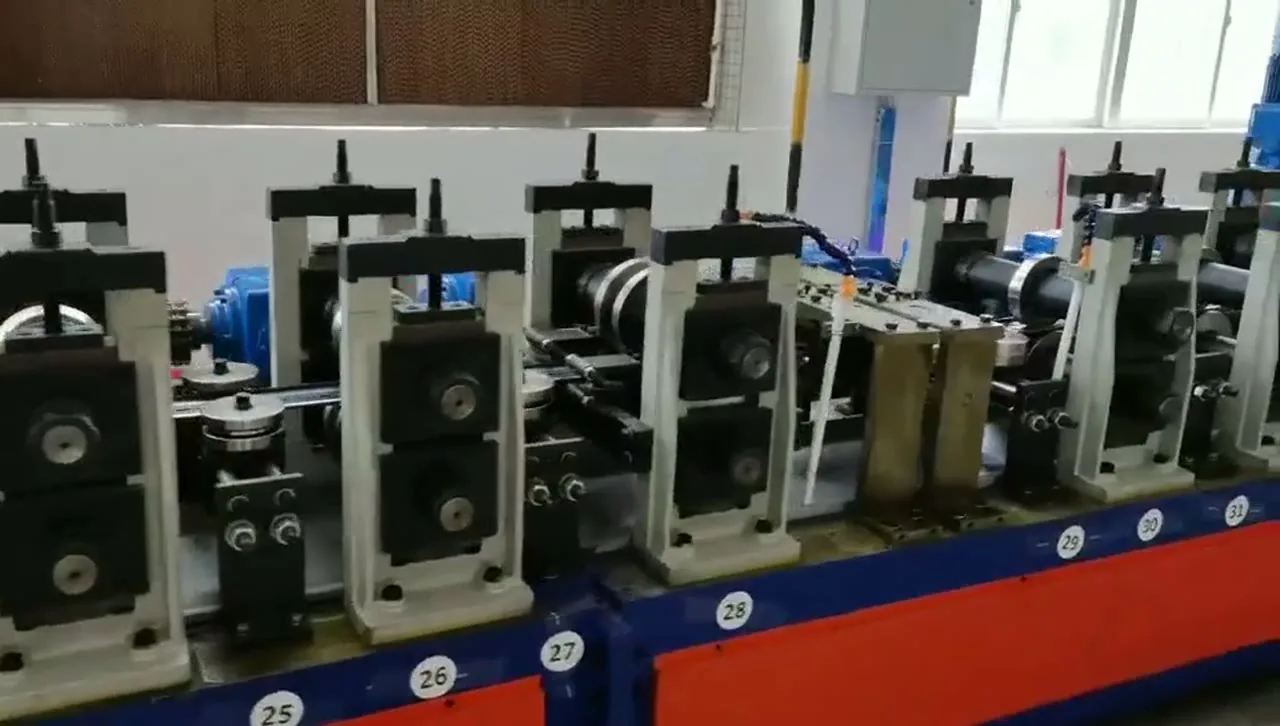 1:10
1:10 Solar Strut Channel Machine — Forming Roll Bank | ZTRFM
the forming roll bank of the strut channel machine.
Machine specifications →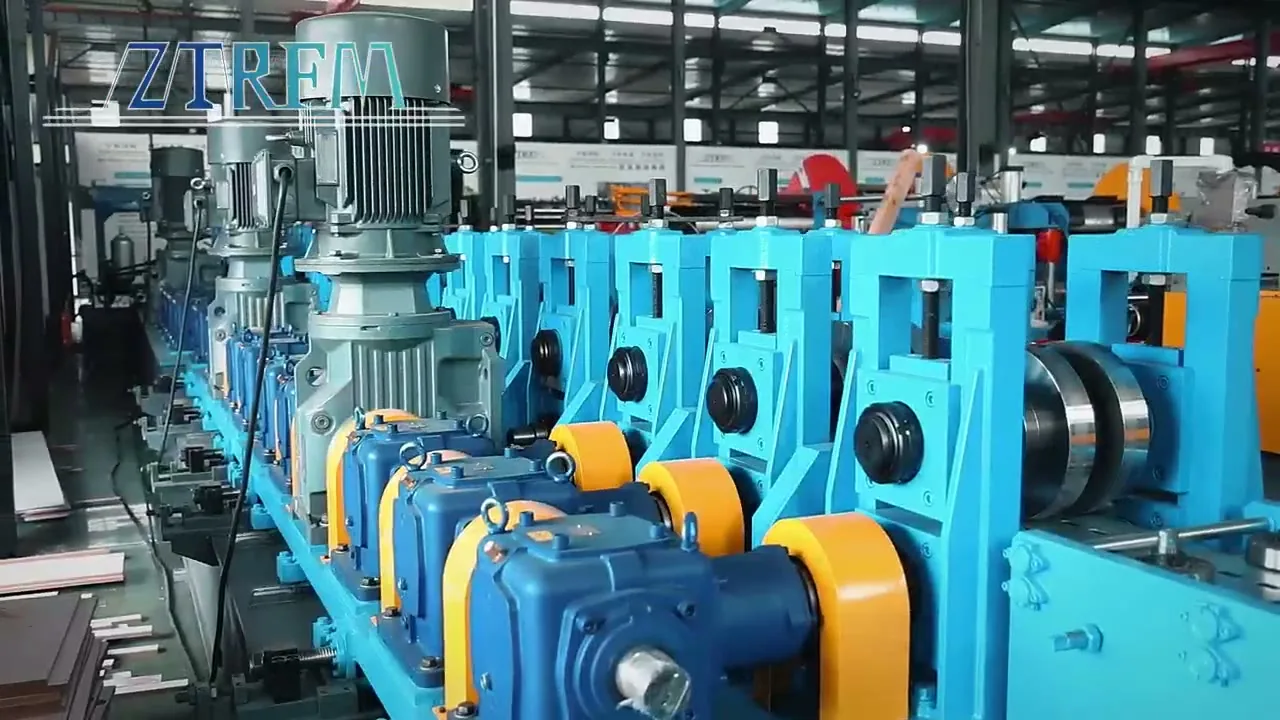 0:30
0:30 Solar Strut Channel Machine — Full Line Running | ZTRFM
the complete strut channel line running, showing all forming stations.
Machine specifications →What This Machine Produces
P1000 / 41 × 41 mm strut channel — the global standard section that accepts all standard strut nuts and fittings, which is what makes it usable without special hardware.
41 × 21 mm shallow channel — lower weight and cost where the load is small, such as light cable support and sign fixing.
41 × 82 mm deep channel — the highest section capacity in the strut family, used for heavy racking uprights and long spans.
Channel depths from 21 to 82 mm and a 41 mm standard width, with custom widths in the 21–82 mm range.
Slotted channel — 9 mm × 18 mm slots at 25 mm or 50 mm pitch, matching the pattern used with standard strut nuts and fittings, punched continuously as the strip runs.
Storage racking uprights and beams — perforated cold-formed sections in the same thickness class, produced on the same platform with different tooling.
Sections in galvanised steel, stainless 304 or aluminium at 10–20 m/min.
Recommended Configuration
A complete working line, not just the forming machine. Each item below is quoted as one package.
- 01
Hydraulic decoiler and straightener
strut channel is dimensionally critical because it must accept standard fittings, so strip straightness is not optional.
- 02
Inline slot punch
the key unit on this line. The 9 × 18 mm slots at 25 or 50 mm pitch are punched while the strip is flat, which is the only way to hold a pitch that standard strut nuts will actually slide through.
- 03
Strut channel roll forming machine
14–18 stations on a gearbox chain drive at 7.5–15 kW, running at 10–20 m/min.
- 04
Polyurethane guide rolls for aluminium
aluminium 6063-T5 and 6061-T6 can be roll formed, but steel guide rolls scratch the surface. Polyurethane rolls and lower forming pressure are what make an aluminium run saleable.
- 05
Hydraulic flying cut
cuts continuously at line speed rather than stopping the line for each length.
- 06
PLC with slot-pattern presets
the slot pitch and cut length are recalled from the HMI rather than re-set, which matters when a job mixes 25 mm and 50 mm pitch.
- 07
Runout table
channel is cut in production lengths and should be supported rather than dropped.
Production Workflow
- 01
Decoiler
Coil is loaded and uncoiled at controlled tension. On a section that has to accept standard fittings, consistent tension is what keeps the width in tolerance.
- 02
Straightening
The strip is levelled before forming. Because strut channel is a closed profile with inturned lips, any residual bow is locked in by the closing stations.
- 03
Slot punching
The 9 × 18 mm slots are punched at 25 mm or 50 mm pitch while the strip is flat. Punching a closed channel after forming is difficult and inaccurate because the punch has to reach inside the section, so this step comes first by design.
- 04
Roll forming
14–18 stations close the C profile with its inturned lips, forming the 21–82 mm depth range at 10–20 m/min. Aluminium runs slower and with lighter pressure than steel.
- 05
Cutting
A hydraulic flying cut runs continuously at line speed, so the line does not stop for each length.
- 06
Output
Finished channel leaves on the runout table. Slotted channel is normally bundled and packed straight from the line.
Key Components
- Forming stations
- 14–18
- Drive
- Gearbox chain drive, 7.5–15 kW
- Slot punch
- Inline, continuous; 9 × 18 mm at 25 or 50 mm pitch
- Cutting
- Hydraulic flying cut
- Control
- PLC + HMI with slot-pattern presets
- Working range
- 1.5–3.0 mm · channel depth 21–82 mm · width 41 mm standard
- Materials
- Galvanised steel, stainless 304, aluminium (with polyurethane guide rolls)
Customization Options
Every line is built to order. These are the points buyers most often change.
| Item | What can be changed |
|---|---|
| Section | P1000 / 41 × 41, 41 × 21 shallow, 41 × 82 deep, or a custom depth in the 21–82 mm range |
| Slot pattern | 9 × 18 mm at 25 or 50 mm pitch standard; custom slot sizes and pitches can be tooled |
| Material | Galvanised steel, stainless 304, aluminium 6063-T5 or 6061-T6 |
| Thickness | 1.5–3.0 mm |
| Racking sections | Racking uprights and beams run on the same platform with different tooling |
| Power supply | 380 V / 50 Hz / 3-phase standard; other voltages to your site |
Strut channel variants — Unistrut, P1000 and plain channel
| Variant | Section | Typical use | Notes |
|---|---|---|---|
| P1000 / 41×41 | 41 × 41 mm, 2.5 mm | General support framing, PV mounting | The global standard; accepts all standard strut nuts and fittings |
| 41×21 shallow | 41 × 21 mm, 1.5–2.0 mm | Light cable support, sign fixing | Lower cost and weight where load is small |
| 41×82 deep | 41 × 82 mm, 2.5–3.0 mm | Heavy racking uprights, long spans | Highest section capacity in the strut family |
| Racking upright | Custom perforated section | Storage racking columns and beams | Same machine, different tooling — racking and strut share the platform |
Applications
FAQ — Solar Strut Channel Roll Forming Machine
What slot pattern does the machine punch?
Can the machine run aluminium as well as steel?
Can it produce storage racking sections too?
Why is inline slotting done before forming?
What is the load capacity of a strut channel?
Can the machine be used for greenhouse framing?
Is Unistrut channel the same as P1000 strut channel?
Can I also produce plain channel without slots?
Can the machine be built for our own profile?
How do we get a price for this line?
What material thickness can this machine form?
What is the production speed?
You May Also Need
Send us your profile and output target
Tell us the profile and the numbers that matter to you. We confirm the configuration against the specification table above and quote FOB Tianjin within 24 hours.
- MaterialGI, galvanised, stainless 304, aluminium
- Thickness1.5 – 3.0 mm
- Channel depth21 – 82 mm
- Channel width41 mm (P1000 standard) · custom 21–82 mm