Solar Omega Rail Roll Forming Machine
Omega and hat-section rails for rooftop PV arrays — the horizontal member that panel clamps bolt onto.
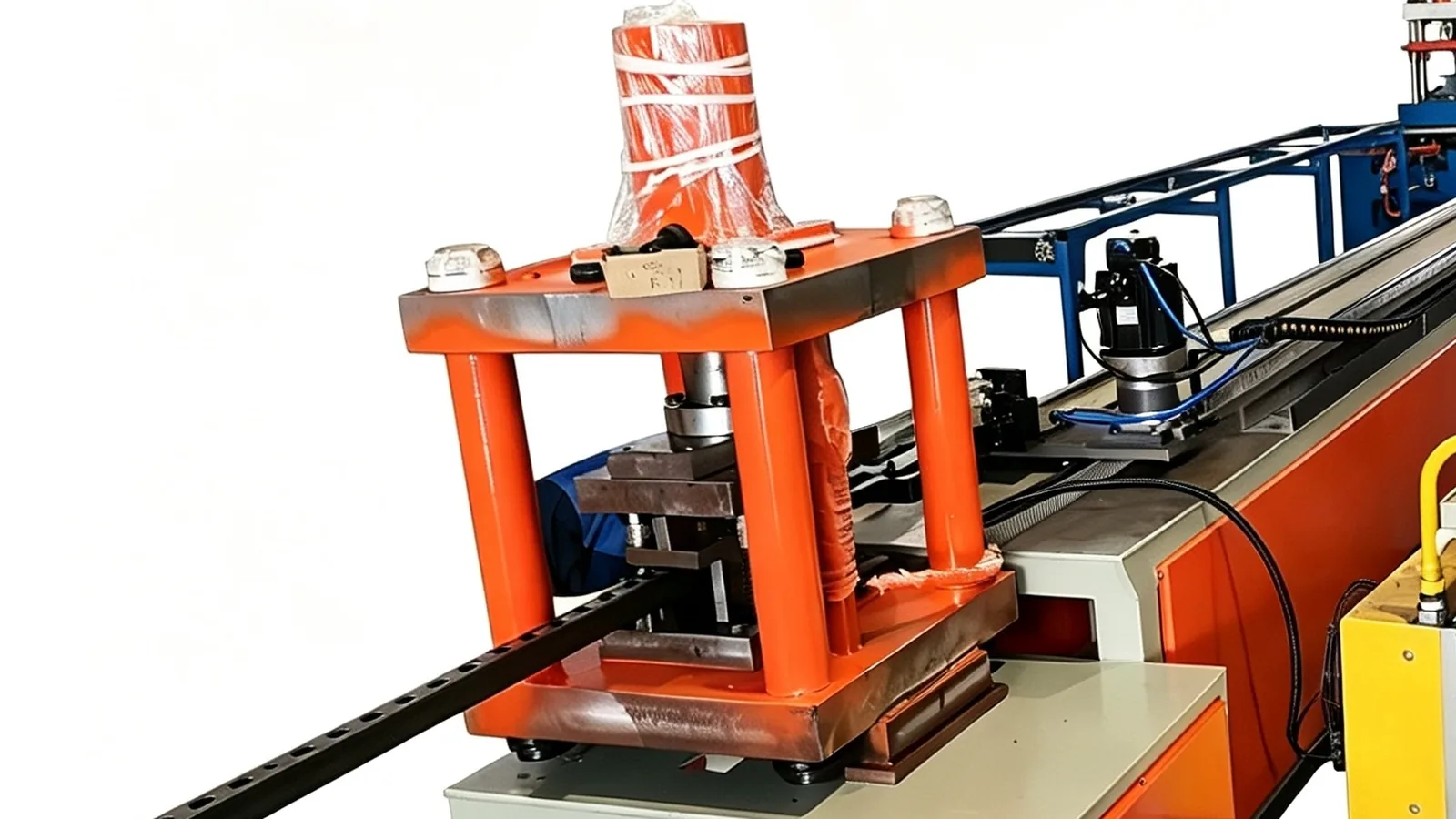
Technical Specifications
| Material | Aluminium 6063 / 6061 T5-T6, galvanised steel |
| Thickness | 1.5 – 2.5 mm |
| Top flange | 30 – 80 mm |
| Section height | 20 – 45 mm |
| Forming speed | 15 – 25 m/min |
| Forming stations | 12 – 16 |
| Drive | Servo or gearbox, 5.5 – 11 kW |
| Cutting | Hydraulic flying cut |
| Control | PLC + HMI, batch counter |
| Certification | CE Declaration of Conformity |
| Lead time | 40 – 55 days |
Need a quote or a custom specification?
What This Machine Produces
Omega (Ω) rails — the horizontal member that runs across the roof and carries the panel clamps, spanning between the roof hooks or mounting feet.
Hat-section rails — the same stiffening principle with a different fold pattern, giving stiffness in the direction of the roof load while presenting a flat top face for the clamps.
Aluminium rails in 6063 or 6061 T5–T6, mill finish or anodised.
Galvanised steel rails — cheaper and stiffer than aluminium, so used where spans are longer and weight is less critical. Many installers combine steel rails with aluminium clamps.
Rails with a top flange of 30–80 mm and a section height of 20–45 mm, in 1.5–2.5 mm material at 15–25 m/min.
Rails cut to the array row length, commonly 2.4 m to 6 m. Longer rails need more intermediate supports, so there is a trade-off between fewer joints and more mounting feet.
Recommended Configuration
A complete working line, not just the forming machine. Each item below is quoted as one package.
- 01
3 T hydraulic decoiler and leveling unit, included as standard
for aluminium we set a lighter decoiler tension, because the softer material stretches if it is pulled harder than it needs to be.
- 02
Solar omega rail machine
12–16 stations, with either a servo or gearbox drive at 5.5–11 kW, forming at 15–25 m/min. Aluminium generally runs faster than steel in this section class.
- 03
Polyurethane guide rolls
aluminium rails are usually mill finish or anodised, and anodised surfaces are the most easily marked. Polyurethane rolls, reduced forming pressure and smooth transfer tables are what keep a rail saleable.
- 04
Servo drive where the rail range is wide
changing between top flange and section height is a setup action, and the servo option makes that a control-panel job rather than a mechanical one.
- 05
Hydraulic flying cut to length with batch counter
rails are cut to the row length, and an array normally needs more than one length, so the batch counter holds the set together.
- 06
A note on roll forming versus extrusion: roll forming is far cheaper beyond small volumes and it lets you run steel as well as aluminium on the same machine. Extrusion only wins where you need a complex closed section or very high stiffness in a short run.
Production Workflow
- 01
Decoiler
Coil is loaded and uncoiled at controlled tension. On aluminium the tension setting is critical: a rail that has been stretched does not recover its section, and it shows up as a curve along the array.
- 02
Leveling
The strip is straightened before forming. Because the rail presents a flat top face for the clamps, cross-bow cannot be hidden in a rib the way it can on a roofing profile.
- 03
Roll forming
12–16 stations form the omega or hat section at 15–25 m/min, producing a top flange of 30–80 mm on a section 20–45 mm high.
- 04
Cutting
A hydraulic flying cut cuts to the row length, with a batch counter. Typical PV rail lengths run from 2.4 m to 6 m.
- 05
Output
Rails leave on the runout, bundled by length. On anodised aluminium the bundling arrangement matters as much as the forming, because rails abrading against each other is a common cause of rejects.
Key Components
- Forming stations
- 12–16
- Drive
- Servo or gearbox, 5.5–11 kW
- Decoiler
- 3 T hydraulic, included; lighter tension setting for aluminium
- Guide rolls
- Polyurethane, for mill-finish and anodised aluminium
- Cutting
- Hydraulic flying cut, batch counter
- Control
- PLC + HMI
- Section range
- top flange 30–80 mm · section height 20–45 mm · thickness 1.5–2.5 mm
Customization Options
Every line is built to order. These are the points buyers most often change.
| Item | What can be changed |
|---|---|
| Rail type | Omega (Ω) or hat-section |
| Material | Aluminium 6063 or 6061 T5–T6, or galvanised steel. Aluminium is lighter and does not corrode — useful where the roof structure has limited load capacity; steel is cheaper and stiffer |
| Surface | Mill finish or anodised — anodised needs the most care in handling and forming |
| Top flange | 30–80 mm |
| Section height | 20–45 mm |
| Rail length | 2.4–6 m typical, cut to the array row length |
| Drive | Servo for frequent section changes, gearbox where the range is fixed |
Applications
FAQ — Solar Omega Rail Roll Forming Machine
What is an omega rail used for in solar mounting?
Why roll form the rail instead of extruding aluminium?
Can the machine form 6063-T5 aluminium without scratching it?
What rail length is typical?
Should the rail be steel or aluminium?
Does the machine include a decoiler?
Can the machine be built for our own profile?
How do we get a price for this line?
What material thickness can this machine form?
What is the production speed?
How many forming stations does it use?
What is the drive and installed power?
You May Also Need
Send us your profile and output target
Tell us the profile and the numbers that matter to you. We confirm the configuration against the specification table above and quote FOB Tianjin within 24 hours.
- MaterialAluminium 6063 / 6061 T5-T6, galvanised steel
- Thickness1.5 – 2.5 mm
- Top flange30 – 80 mm
- Section height20 – 45 mm