Decoiling & Leveling Machine
Decoiler and leveler combined in one unit — less floor space and fewer handling steps than separate machines.
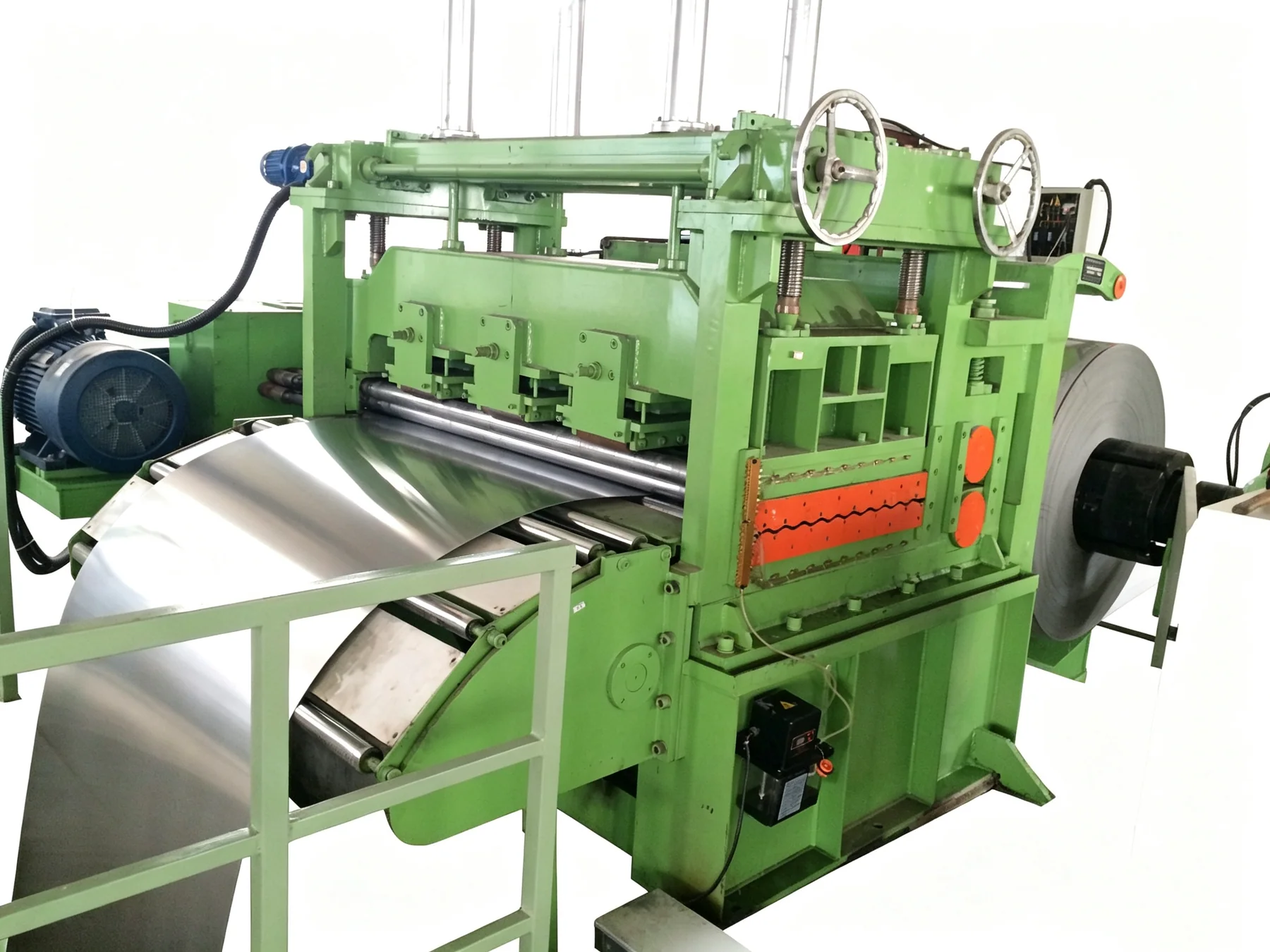
Technical Specifications
| Capacity | 3 T · 5 T · 10 T |
| Leveling rollers | 7 / 9 / 11 rollers |
| Roller diameter | Ø 60 – 120 mm, hardened and chrome plated |
| Material thickness | 0.3 – 4.0 mm |
| Coil width | Up to 1300 mm |
| Leveling speed | Up to 30 m/min |
| Adjustment | Motorised upper roll bank with digital position readout |
| Control | Integrated with line PLC |
| Certification | CE Declaration of Conformity |
| Lead time | 35 – 45 days |
Need a quote or a custom specification?
Decoiling & Leveling Machine in Our Workshop
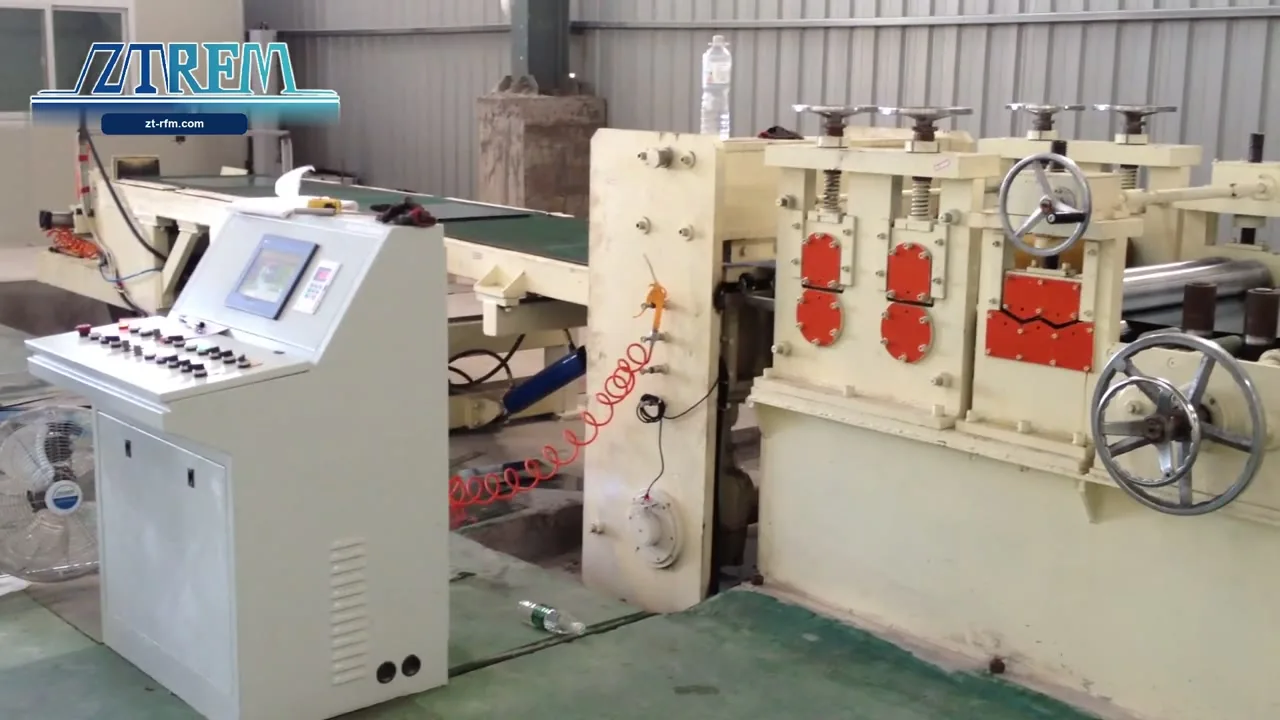 0:45
0:45 Decoiling & Leveling Machine — Control Panel and Hydraulics | ZTRFM
the control panel and hydraulic power unit of the decoiling and leveling line.
Machine specifications →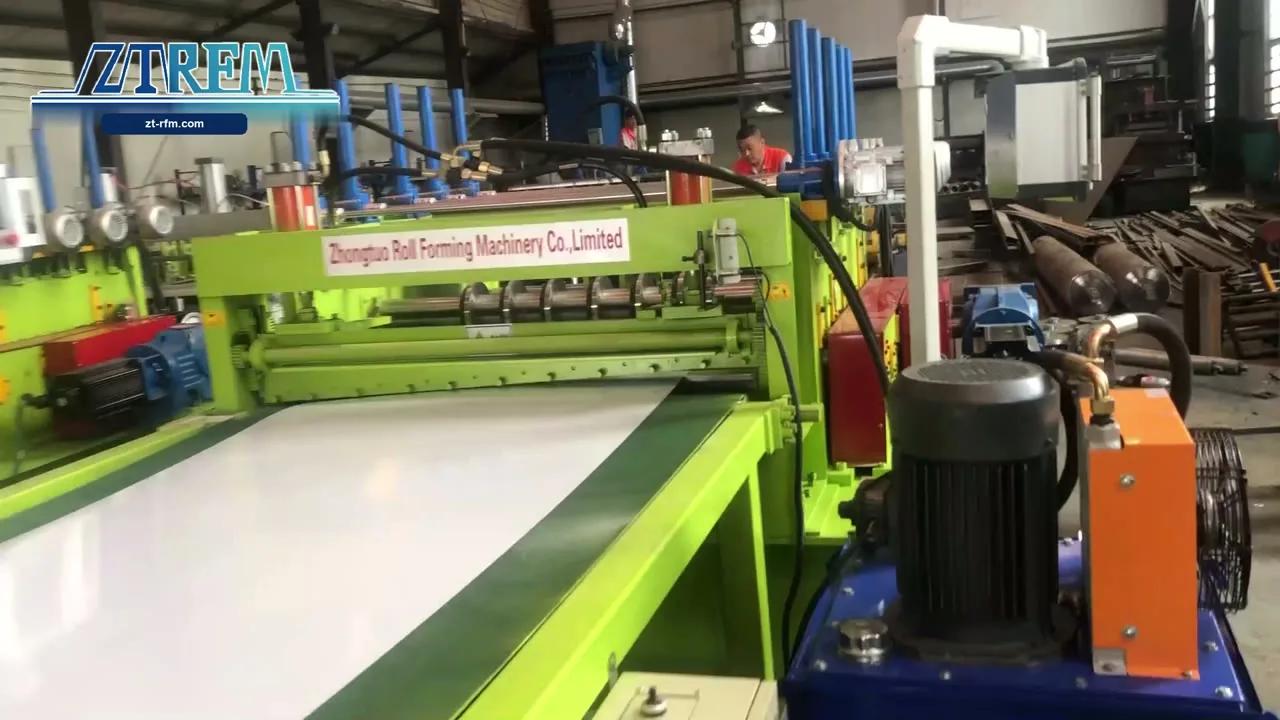 0:49
0:49 Decoiling & Leveling Machine — Strip Entering the Leveler | ZTRFM
strip running through the leveling section.
Machine specifications →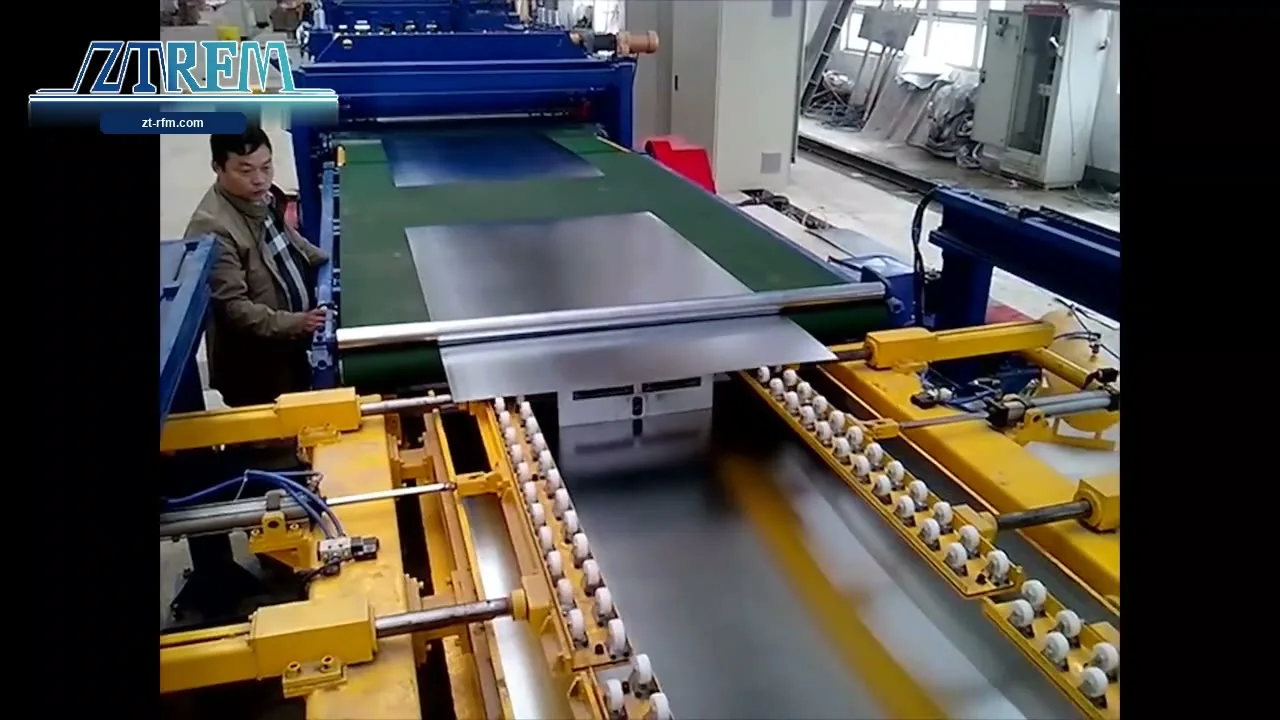 1:10
1:10 Decoiling & Leveling Machine — Operator Feeding the Line | ZTRFM
an operator feeding the strip through the machine at the entry end.
Machine specifications →What This Machine Produces
Levelled strip — the intermediate product this unit delivers to the forming line. Coil arrives wound under tension and holds two defects: coil set, a longitudinal curl along the strip, and cross-bow, a transverse curvature across its width.
Removal of coil set — without it the finished profile is bowed along its length, which on a roof sheet means the sheet will not sit flat.
Removal of cross-bow — without it the finished profile is twisted, which on a ribbed sheet shows as one edge running high and the other low.
A repeatable leveling setting — the upper roll bank is adjusted by motor with a digital position readout, so a known-good setting can be recorded and returned to rather than re-found by eye.
Strip ready for forming across 0.3 to 4.0 mm material and widths up to 1300 mm, at speeds up to 30 m/min.
One handling step instead of two — combining decoiler and leveler removes a transfer between machines, which is the main reason customers choose the combined unit.
Recommended Configuration
A complete working line, not just the forming machine. Each item below is quoted as one package.
- 01
Roll count matched to the material
seven rollers is the practical minimum for thin sheet and is what we supply on most roofing lines. Nine or eleven rollers are used above 2 mm and on lines running higher-tensile steel, because more reverse-bending cycles are needed to remove the set.
- 02
Hardened and chrome-plated rollers at Ø 60–120 mm
the rollers are the working surface on this unit, and chrome plating is what stops them marking the strip and wearing out of tolerance.
- 03
Motorised upper roll bank with digital position readout
leveling is a setting that has to be repeatable. With a readout, a known-good setting for a given coil is recorded and returned to; without it, every coil change becomes a re-trial.
- 04
Tension synchronisation with the decoiler
on a combined unit the decoiler and the leveler have to run at matched speed, or the strip is either pulled or back-fed between them. This is handled by the drive control, and it is the technical reason combined units are viable today.
- 05
Hardened rolls above about 450 MPa
leveling high-tensile steel needs more roll pressure and therefore more reversing passes, so we would normally specify nine or eleven rollers above 450 MPa rather than seven.
- 06
A note on the trade-off of combining: one combined machine saves floor space and a handling step. The trade-off is that if either half needs service, the whole unit is out of production, whereas separate decoiler and leveler let you keep running on one.
Production Workflow
- 01
Coil loading
The coil is loaded on the expanding mandrel as on a stand-alone decoiler. Capacity is 3 T, 5 T or 10 T depending on the line the unit is bought for.
- 02
Tension feed
The strip is unwound at controlled back-tension and fed straight into the leveling roll bank. On a combined machine there is no intermediate loop, so decoiler speed and leveler speed are electronically matched.
- 03
Leveling
The strip passes through 7, 9 or 11 rollers in alternate bending. Coil set and cross-bow are removed by repeated reverse bending rather than by flattening pressure alone, which is why the roller count matters more than the roller diameter.
- 04
Setting
The upper roll bank is set by motor against a digital readout. We commission the correct setting on your first coil during final testing at the factory, and that number is recorded so you can return to it.
- 05
Transfer to forming
Levelled strip passes to the first forming station. Because the setting is repeatable, a coil change does not normally require re-setting the leveler.
- 06
Routine checks
Roll condition, chrome plating wear and roll gap are the items to check on schedule. A worn or marked roller puts its own pattern into the finished profile.
Key Components
- Leveling rollers
- 7 / 9 / 11 rollers, Ø 60–120 mm, hardened and chrome plated
- Adjustment
- Motorised upper roll bank with digital position readout
- Capacity
- 3 T · 5 T · 10 T decoiler section
- Working range
- 0.3–4.0 mm thickness · coil width up to 1300 mm
- Speed
- up to 30 m/min
- Control
- Integrated with the line PLC
- Leveling versus straightening
- leveling works on the flat strip before forming; straightening corrects an already-formed section
Customization Options
Every line is built to order. These are the points buyers most often change.
| Item | What can be changed |
|---|---|
| Roller count | 7 rollers for thin sheet on most roofing lines; 9 or 11 rollers above 2 mm or for high-tensile steel above about 450 MPa |
| Capacity | 3 T / 5 T / 10 T, matched to the coil your line consumes |
| Roller surface | Hardened and chrome plated as standard; specify hardening for high-yield material |
| Adjustment | Motorised upper roll bank with digital readout — strongly recommended, because it makes a good setting repeatable |
| Combined or separate | A combined unit saves floor space and a handling step; separate units keep you running if one needs service. Tell us which risk matters more in your plant |
| Material capability | Up to about 550 MPa with standard rolls; higher with hardened rolls |
| Power supply | 380 V / 50 Hz / 3-phase standard; other voltages to your site |
Applications
FAQ — Decoiling & Leveling Machine
Why is a leveling unit necessary?
How many leveling rollers do I need?
Does combining decoiler and leveler cause problems?
What is the difference between leveling and straightening?
Can the leveler handle high-tensile steel?
How do I set the leveling rolls?
Can the machine be built for our own profile?
How do we get a price for this line?
What material thickness can this machine form?
What is the production speed?
How is the line controlled?
What working width does the line run?
You May Also Need
Send us your profile and output target
Tell us the profile and the numbers that matter to you. We confirm the configuration against the specification table above and quote FOB Tianjin within 24 hours.
- Capacity3 T · 5 T · 10 T
- Leveling rollers7 / 9 / 11 rollers
- Roller diameterØ 60 – 120 mm, hardened and chrome plated
- Material thickness0.3 – 4.0 mm