Fence Panel Roll Forming Machine
Palisade pales, rails and panel sections for perimeter security — the fencing counterpart to the guardrail line.
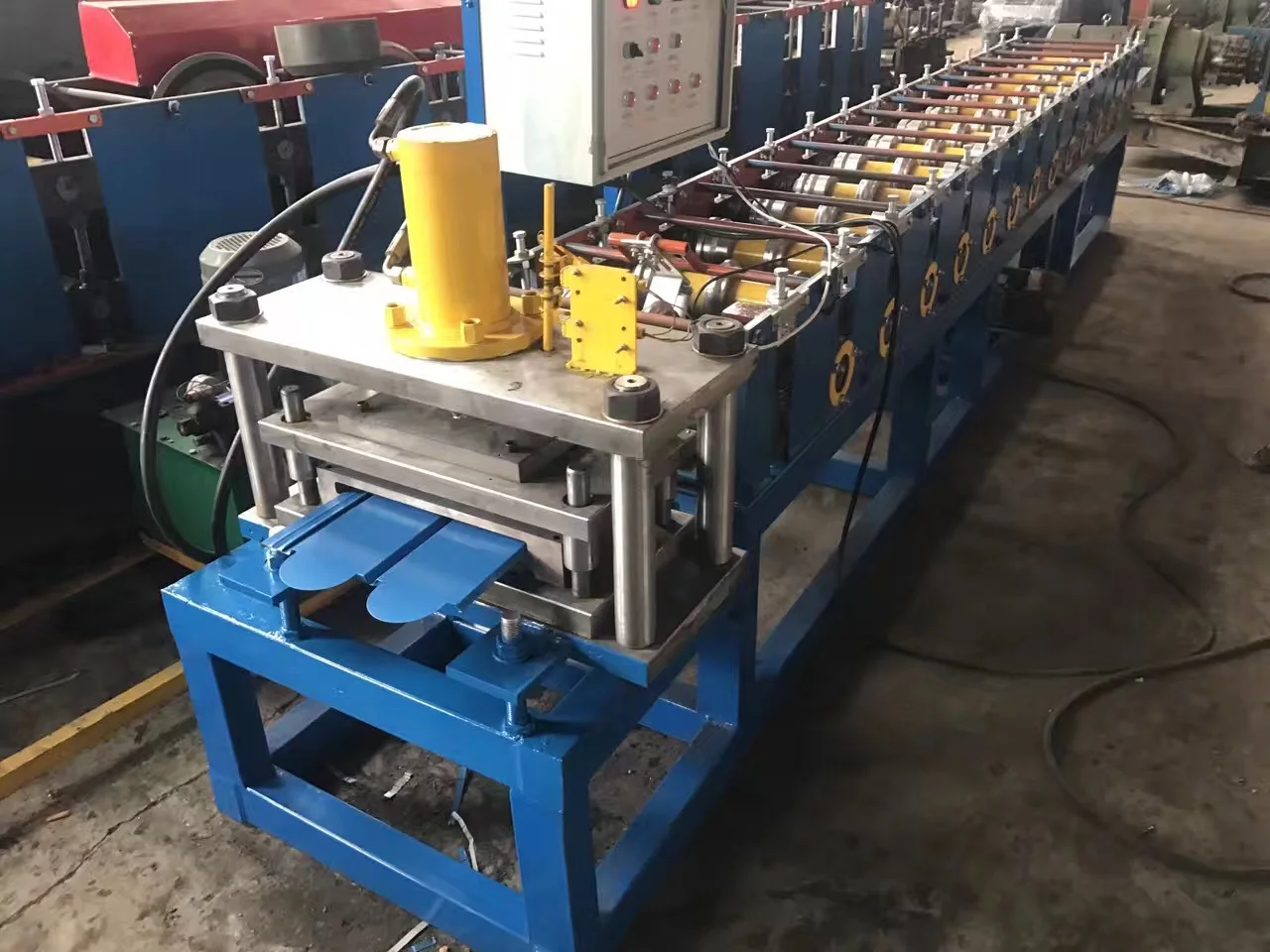
Technical Specifications
| Material | GI, pre-galvanised, hot-rolled steel |
| Thickness | 0.8 – 2.5 mm |
| Profiles | Palisade pale, W-profile pale, rail, panel frame |
| Pale width | 50 – 100 mm |
| Panel height | 1200 / 1800 / 2400 / 3000 mm |
| Forming speed | 10 – 20 m/min |
| Forming stations | 12 – 18 |
| Drive | Gearbox chain drive, 7.5 – 15 kW |
| Punching | Inline hole and slot punch, optional |
| Cutting | Flying cut or post-cut |
| Certification | CE Declaration of Conformity |
| Lead time | 45 – 60 days |
Need a quote or a custom specification?
What This Machine Produces
Palisade pales — the vertical steel member with a pointed or angled top that forms the visible face of a security fence, roll formed from a W or D section so it is stiff in bending.
W-profile pales in widths of 50–100 mm, formed in 0.8–2.5 mm steel through 12–18 stations.
Rails — the horizontal members that carry the pales, usually simple C or top-hat sections. These normally run on the same line with a different cassette, so one machine covers pales and rails.
Panel frames — the perimeter section of a welded or bolted panel fence system, where the pales are set inside a frame rather than driven between rails.
Pales cut to suit fence heights of 1,200 / 1,800 / 2,400 and 3,000 mm, at 10–20 m/min.
Punched pales — an optional inline hole and slot punch creates the fixing point through which the pale attaches to the rail. Punching inline keeps hole position consistent, which matters because pales are assembled in jigs at high speed.
A note on what is not on this line: posts are normally bought in rather than formed in-house. They are heavier and made in lower volume than is economic to tool, so the machine covers pales, rails and frames and the posts come from a supplier.
Recommended Configuration
A complete working line, not just the forming machine. Each item below is quoted as one package.
- 01
Decoiler and leveling unit
pales are narrow sections formed from coil in thicknesses up to 2.5 mm, so coil set is stiff enough to carry into the finished pale if it is not removed first.
- 02
Fence panel roll forming machine
12–18 stations on a gearbox chain drive at 7.5–15 kW, forming pales and rails at 10–20 m/min.
- 03
Interchangeable cassettes for pales and rails
these are different sections, so they cannot share tooling. Both run on the same base frame, which is what makes one machine sufficient for a fence system.
- 04
Inline hole and slot punch (optional)
creates the rail fixing, punched while the strip is flat. A formed pale gives the punch no clean access line.
- 05
Flying cut or post-cut
flying cut where a long run of the same pale is being produced; post-cut where lengths change often, which is the case when a single order mixes 1,200 mm and 2,400 mm fence heights.
- 06
Hot-dip galvanising is the standard finish for perimeter security, because the fence is expected to last 20–25 years outdoors with minimal maintenance. Powder coating over galvanising is used where a colour finish is specified.
- 07
A note on output: at 15 m/min average the line produces roughly 900–1,100 pales per shift at 2.4 m length, which is enough for about 100–150 m of fence depending on pale spacing.
Production Workflow
- 01
Decoiler
Coil is loaded and uncoiled at controlled tension. At 0.8–2.5 mm the material is stiff, so a slack loop shows in the finished pale as a curve rather than as a surface defect.
- 02
Leveling
The strip is straightened before forming. A palisade fence is judged on the line of its pale tops, so any residual bow is visible from a distance across the whole fence.
- 03
Punching (optional)
The slot or hole that fixes the pale to the rail is punched while the strip is flat, which keeps it in a consistent position along every pale.
- 04
Roll forming
12–18 stations form the W or D pale section at 10–20 m/min. Rails run on the same frame with a separate cassette.
- 05
Cutting
A flying cut or post-cut cuts pales to the length the fence height requires. Because one order often mixes heights, the batch counter is what keeps a run sorted.
- 06
Finishing
Pales and rails go for hot-dip galvanising, and optionally powder coating over it. Posts are added from a supplier at assembly.
Key Components
- Forming stations
- 12–18
- Drive
- Gearbox chain drive, 7.5–15 kW
- Cassettes
- Separate sets for pales and for rails, on a common base frame
- Punch
- Optional inline hole and slot punch
- Cutting
- Flying cut or post-cut
- Working range
- 0.8–2.5 mm · pale width 50–100 mm · panel height 1,200–3,000 mm
- Finish
- Hot-dip galvanised standard; powder coat over galvanising where a colour is specified
Customization Options
Every line is built to order. These are the points buyers most often change.
| Item | What can be changed |
|---|---|
| Profile | Palisade pale, W-profile pale, rail, or panel frame — each needs its own cassette |
| Pale width | 50–100 mm |
| Fence height | 1,200 / 1,800 / 2,400 / 3,000 mm, which sets the pale length |
| Punching | Optional inline hole and slot punch for the rail fixing |
| Cut type | Flying cut for long single-product runs, post-cut where heights vary within one order |
| Posts | Normally bought in rather than formed on this line — tell us if you intend to make them and we will quote the heavier tooling separately |
| Power supply | 380 V / 50 Hz / 3-phase standard; other voltages to your site |
Applications
FAQ — Fence Panel Roll Forming Machine
What is a palisade fence pale?
Can the machine also make the rails and posts?
What is the difference between palisade and the guardrail machine?
Does the machine punch the pale holes?
What coating is used for security fencing?
What output is typical?
Can the machine be built for our own profile?
How do we get a price for this line?
What material thickness can this machine form?
What is the production speed?
How many forming stations does it use?
What is the drive and installed power?
You May Also Need
Send us your profile and output target
Tell us the profile and the numbers that matter to you. We confirm the configuration against the specification table above and quote FOB Tianjin within 24 hours.
- MaterialGI, pre-galvanised, hot-rolled steel
- Thickness0.8 – 2.5 mm
- ProfilesPalisade pale, W-profile pale, rail, panel frame
- Pale width50 – 100 mm