Ridge Cap & Flashing Roll Forming Machine
The accessory line that completes a roofing package: ridge caps, barge caps, valley flashings and apron flashings formed from the same coil as the roof sheet.
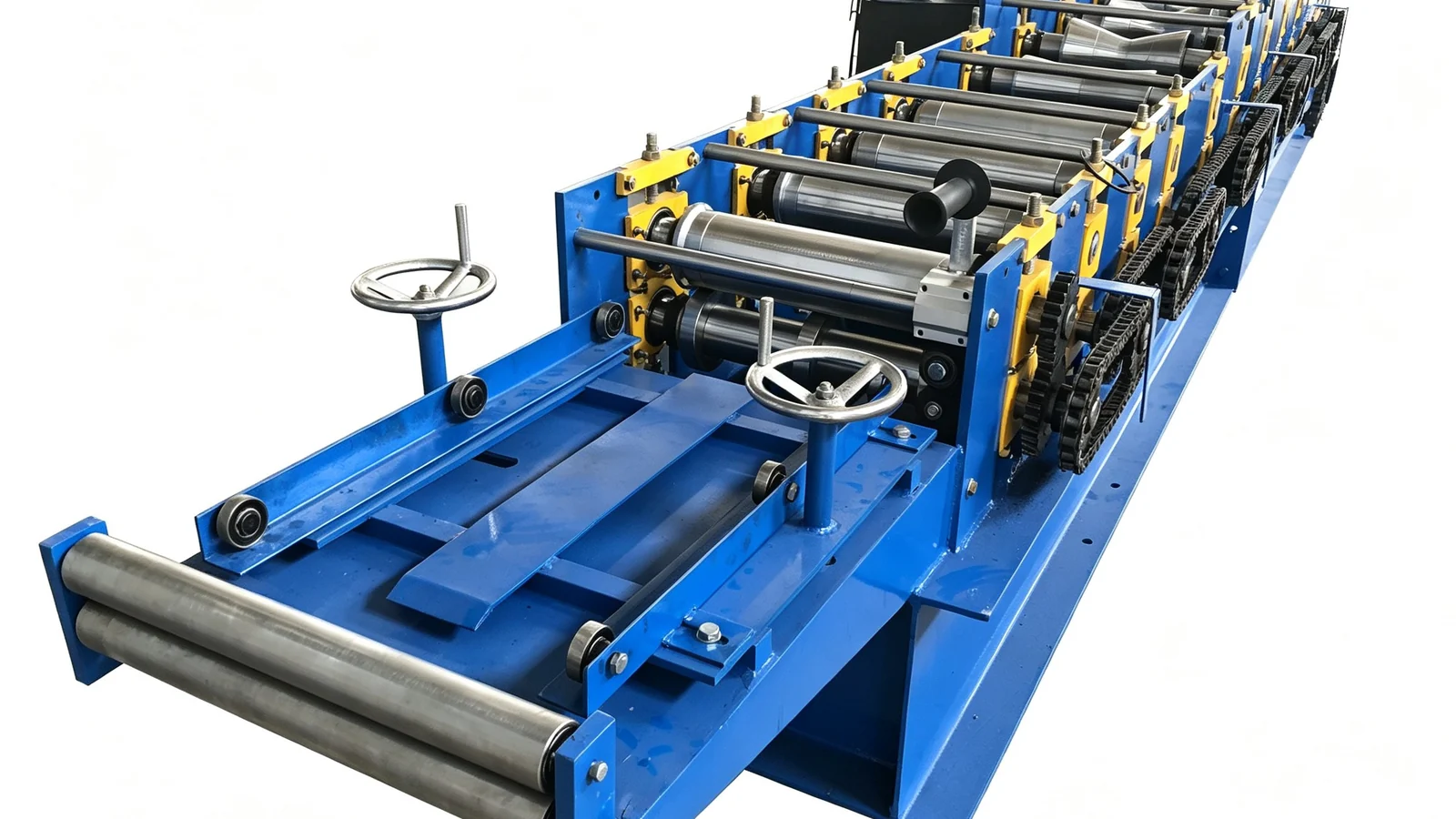
Technical Specifications
| Material | PPGI, GI, colour-coated steel |
| Thickness | 0.3 – 0.8 mm |
| Profile types | Ridge cap, barge cap, valley, apron flashing, Z-flashing |
| Section width | 200 – 600 mm blank width |
| Forming speed | 15 – 30 m/min |
| Forming stations | 8 – 14 |
| Drive | Gearbox chain drive, 3 – 7.5 kW |
| Cutting | Flying cut or post-cut |
| Control | PLC + HMI, batch counter |
| Certification | CE Declaration of Conformity |
| Lead time | 30 – 45 days |
Need a quote or a custom specification?
What This Machine Produces
Ridge caps — the top closure where two roof slopes meet, in blank widths of 300–400 mm.
Barge caps — the gable-end trim that closes the roof edge against the wind.
Valley flashings — the internal gutter where two slopes meet, using blank widths up to 600 mm.
Apron flashings — the sheet that ties a roof into an abutment wall or a raised structure, also up to 600 mm blank.
Z-flashing and general trim sections — the small folded profiles that make up the remainder of a roofing accessories schedule.
Accessory sections in 0.3–0.8 mm PPGI, galvanised or colour-coated steel at 15–30 m/min — the least demanding profile in the roofing range, and the fastest payback.
Recommended Configuration
A complete working line, not just the forming machine. Each item below is quoted as one package.
- 01
Shared decoiler
many customers mount this small line next to the main roofing line and feed both from one decoiler, because ridge caps are made from the same coil as the roof sheet.
- 02
Ridge cap roll forming machine
8–14 stations on a gearbox chain drive at 3–7.5 kW, running at 15–30 m/min. Simple V-section ridge caps need about 8 stations; profiles with a stepped or curved cross-section need up to 14.
- 03
Two or three cassette sets
ridge, barge, valley and flashing profiles are all formed from flat coil in a small number of stations, so the same frame normally carries several cassette sets. Changeover takes 2–3 hours.
- 04
Flying cut or post-cut
15–30 m/min is fast enough that a flying cut is worth having if you run the same accessory continuously.
- 05
PLC with batch counter
accessory runs are short and mixed, so counting the batch correctly matters more here than on a main roofing line.
- 06
Blank width sized to your widest profile
tell us the finished section dimensions and we calculate the required blank width rather than assuming one.
Production Workflow
- 01
Decoiler
Coil is loaded and uncoiled. Because accessories are produced from the same coil as the roof sheet, this line is often fed from a decoiler shared with the main roofing line — which also guarantees the colour matches the roof.
- 02
Leveling
The strip is straightened before forming. Accessories are narrow and visible at the ridge line, so a twisted cap is immediately obvious from the ground.
- 03
Roll forming
8–14 stations fold the accessory section. Ridge caps run at 15–30 m/min, which is fast because these are the simplest sections in the roofing range.
- 04
Cassette change
Ridge, barge, valley and flashing profiles are exchanged on the same frame. Changeover takes 2–3 hours.
- 05
Cutting
A flying cut or post-cut cuts to length with a batch counter.
- 06
Output
Accessories leave on the runout, normally bundled straight into roofing packages with the matching sheet.
Key Components
- Forming stations
- 8–14 — about 8 for a simple V-section, up to 14 for a stepped or curved cap
- Drive
- Gearbox chain drive, 3–7.5 kW
- Cutting
- Flying cut or post-cut
- Control
- PLC + HMI with batch counter
- Blank width
- 200–600 mm depending on profile
- Cassette sets
- Typically two or three on one frame (ridge, barge, valley, apron)
- Changeover
- 2–3 hours between accessory profiles
Customization Options
Every line is built to order. These are the points buyers most often change.
| Item | What can be changed |
|---|---|
| Profile types | Ridge cap, barge cap, valley, apron flashing, Z-flashing |
| Blank width | 200–600 mm; ridge caps typically 300–400 mm blank and valley or apron up to 600 mm |
| Colour matching | Produced from the same coil batch as the roof sheet, which is the reason most producers make accessories in-house rather than buying them in |
| Decoiler arrangement | Standalone, or fed from the main roofing line decoiler |
| Cut type | Flying cut for continuous runs, post-cut where lengths change constantly |
| Power supply | 380 V / 50 Hz / 3-phase standard; other voltages to your site |
Applications
FAQ — Ridge Cap & Flashing Roll Forming Machine
Why buy a dedicated ridge cap machine?
Can one machine make several accessory profiles?
What blank width is needed?
Should the ridge cap be the same colour and material as the roof?
How many stations does a ridge cap need?
Can it run coil already used on the main roofing line?
Can the machine be built for our own profile?
How do we get a price for this line?
What material thickness can this machine form?
What is the production speed?
What is the drive and installed power?
How is the finished profile cut to length?
You May Also Need
Send us your profile and output target
Tell us the profile and the numbers that matter to you. We confirm the configuration against the specification table above and quote FOB Tianjin within 24 hours.
- MaterialPPGI, GI, colour-coated steel
- Thickness0.3 – 0.8 mm
- Profile typesRidge cap, barge cap, valley, apron flashing, Z-flashing
- Section width200 – 600 mm blank width