Stud & Track Roll Forming Machine
Drywall stud and runner profiles at 20–40 m/min — the highest-speed machine in the framing range because the sections are thin and simple.
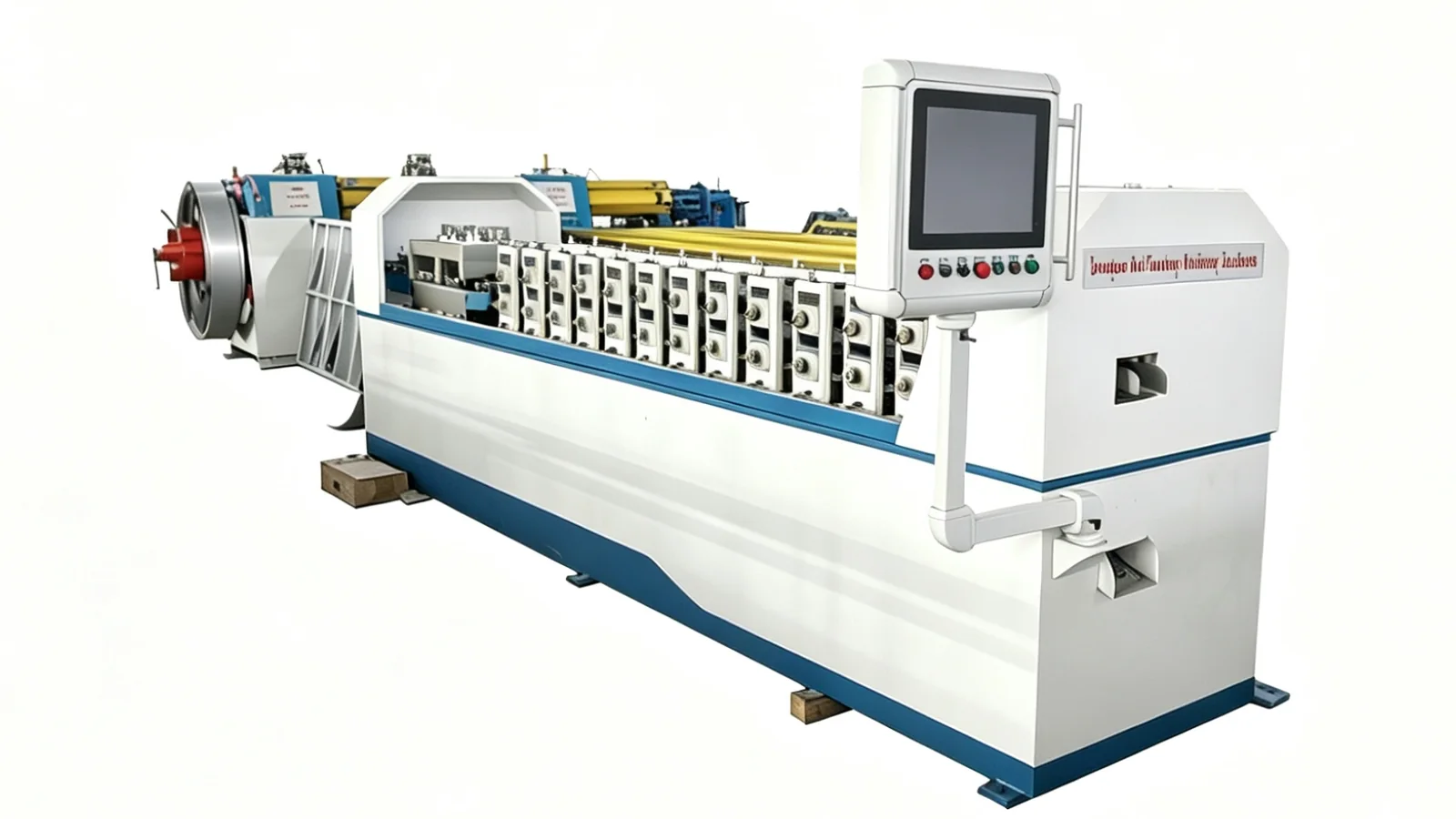
Technical Specifications
| Material | GI, pre-painted steel |
| Thickness | 0.5 – 1.2 mm |
| Profiles | C-stud, U-track / runner |
| Web width | 41 / 52 / 64 / 76 / 92 / 102 / 152 mm |
| Forming speed | 20 – 40 m/min |
| Forming stations | 10 – 14 |
| Drive | Gearbox chain drive, 7.5 – 11 kW |
| Punching | Inline service hole punch, optional |
| Cutting | Hydraulic flying cut to length |
| Control | PLC + HMI, batch counter |
| Certification | CE Declaration of Conformity |
| Lead time | 35 – 50 days |
Need a quote or a custom specification?
Stud & Track Roll Forming Machine in Our Workshop
 1:10
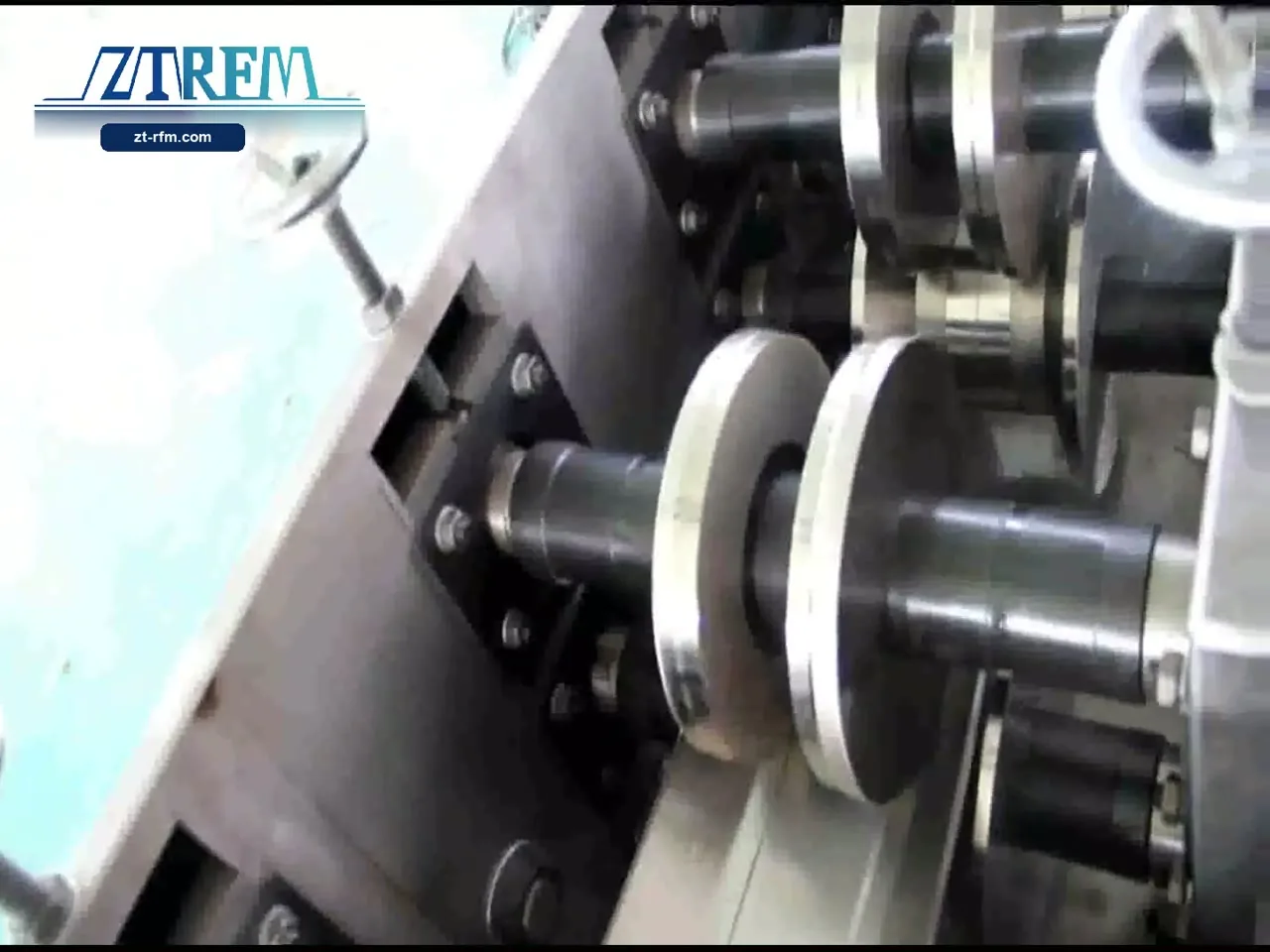
1:10 Stud & Track Roll Forming Machine — Forming Roll Detail | ZTRFM
a close-up of the forming roll set used for stud and track profiles.
Machine specifications →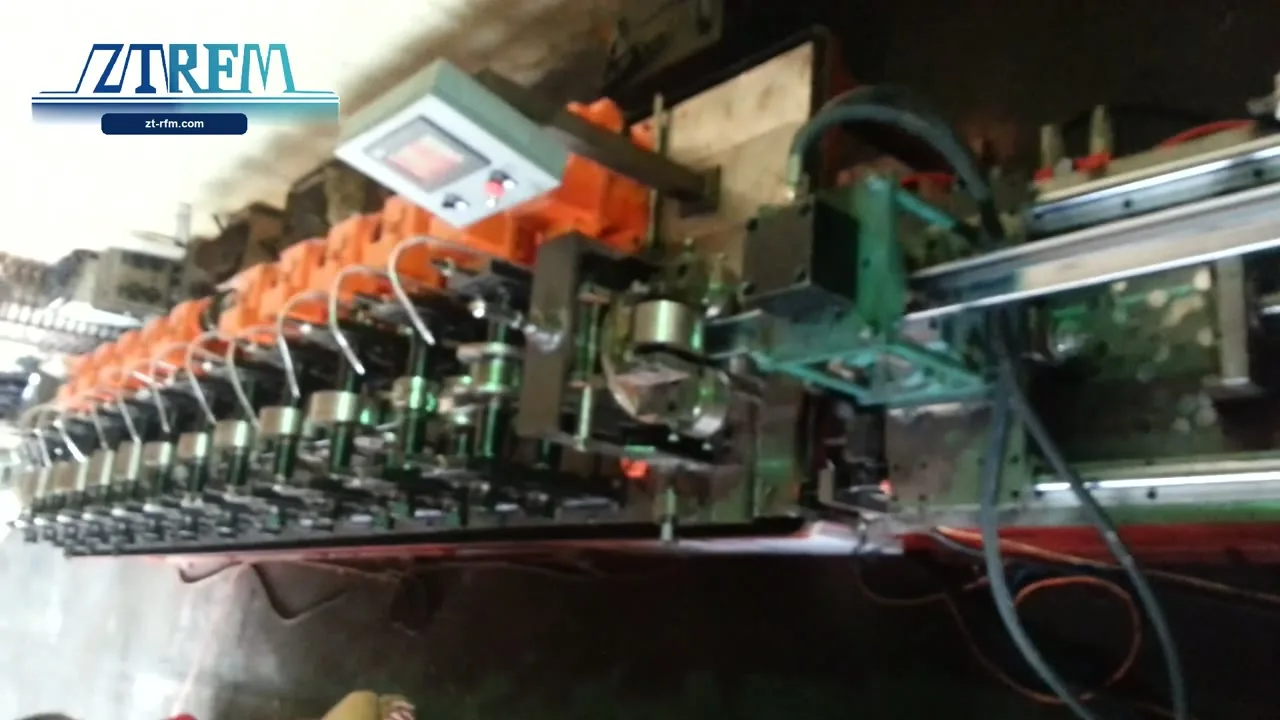 1:06
1:06 Stud & Track Roll Forming Machine — Line Running with HMI | ZTRFM
the stud and track line running, with the touch-screen control panel visible.
Machine specifications →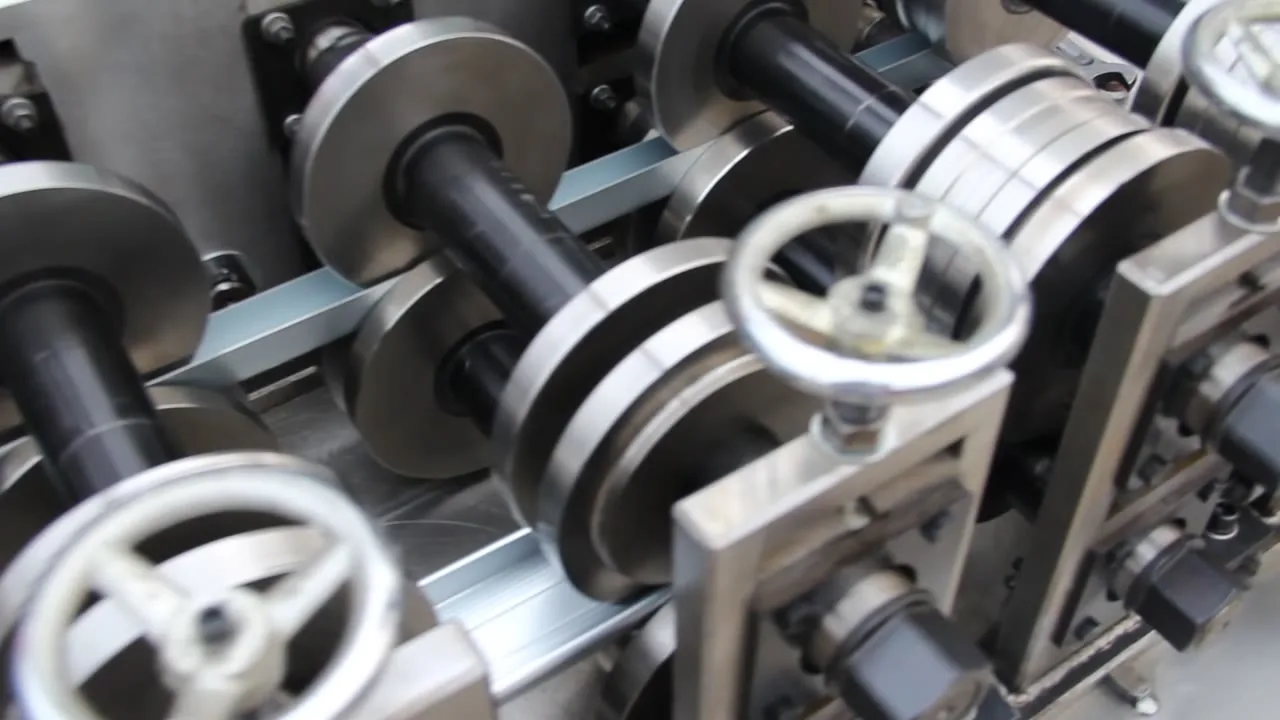 1:03
1:03 Stud & Track Machine — Roll Tooling Set | ZTRFM
the roll tooling set for stud and track profiles.
Machine specifications →What This Machine Produces
C-stud — the vertical load-bearing member of a drywall partition, in web widths of 41, 52, 64, 76, 92, 102 and 152 mm.
U-track (runner) — the horizontal member fixed to floor and ceiling that the studs slot into, produced to the same web widths so the two always pair correctly.
Service-hole punched studs — an inline punch (optional) cuts the web holes while the strip is flat, so the stud arrives on site ready for pipe and cable.
Members cut to a batch list — the flying cut runs to a preset length and counts the batch, so a complete partition set comes off the line in one run.
Profiles in 0.5–1.2 mm galvanised or pre-painted steel at 20–40 m/min — the highest forming speed in the framing range, because these are the thinnest, simplest sections we build tooling for.
Matching wall angle and corner bead can be run on the same platform with an additional cassette, so one line covers a whole partition system.
Recommended Configuration
A complete working line, not just the forming machine. Each item below is quoted as one package.
- 01
3 T hydraulic decoiler
thin coil is light and easy to handle, so a small decoiler is sufficient and keeps the line footprint compact.
- 02
7-roller straightener
0.5 mm coil holds coil set badly. Unstraightened strip shows up as twist along the length of the stud, and no amount of roll adjustment removes it later. This is the single most important unit on the line.
- 03
Stud & track roll forming machine
10–14 stations on a gearbox chain drive at 7.5–11 kW, running at 20–40 m/min.
- 04
Inline service-hole punch (optional)
punching the web while the strip is flat is far more accurate than trying to punch a formed C section, and it removes a secondary operation.
- 05
Hydraulic flying cut with batch counter
cuts to preset length and counts the batch, which is what a partition schedule actually requires.
- 06
Runout table
0.5 mm sections mark easily. A long enough runout is what stops members being dragged over one another and arriving with handling dents.
Production Workflow
- 01
Decoiler
The coil is loaded on the 3 T hydraulic mandrel and uncoiled at controlled tension. Thin coil needs less tension than structural work, and over-tensioning is a common cause of edge wave.
- 02
Straightening
Seven rollers remove coil set and cross-bow from the 0.5–1.2 mm strip. On this machine the straightener setting matters more than on any other line we build, because the material is too thin to correct anything downstream.
- 03
Service-hole punching
When the inline punch is fitted, holes are cut in the web while the strip is still flat and perfectly located. This is the step that lets the finished stud arrive ready for services.
- 04
Roll forming
10–14 stations form the C-stud or the U-track progressively. Thin sections form quickly and cleanly: the line runs at 20–40 m/min, and speed is limited by handling rather than by forming.
- 05
Flying cut
The hydraulic flying cut is set to the length and batch count entered on the HMI. Because stud sizes change constantly on a real job, the batch counter is what keeps the output sorted.
- 06
Output
Finished members leave on the runout table. Because the sections are thin, they should be bundled straight off the runout rather than stacked and re-handled.
Key Components
- Hydraulic decoiler
- 3 T capacity — matched to the light coil this line runs
- Straightener
- 7 rollers; essential for consistent geometry in 0.5–1.2 mm strip
- Forming stations
- 10–14, forming both the C-stud and the U-track
- Drive
- Gearbox chain drive, 7.5–11 kW
- Service-hole punch
- Inline, optional; punches the web while the strip is flat
- Cutting
- Hydraulic flying cut to preset length with batch counter
- Control system
- PLC + HMI with batch counter
Customization Options
Every line is built to order. These are the points buyers most often change.
| Item | What can be changed |
|---|---|
| Web width | 41, 52, 64, 76, 92, 102 and 152 mm are standard; custom widths in the 41–150 mm range need new roll design |
| Profile set | C-stud, U-track, or both on one frame with separate cassettes |
| Material and coating | Galvanised, or pre-painted where the profiles will be visible |
| Thickness | 0.5–1.2 mm — confirm the range at order stage, because roll pressure is set to it |
| Service-hole pattern | Hole size and pitch to your own partition system |
| Forming speed | 20–40 m/min depending on section and thickness |
| Power supply | 380 V / 50 Hz / 3-phase standard; other voltages to your site |
Applications
FAQ — Stud & Track Roll Forming Machine
What standard stud sizes can it produce?
Does it include a decoiler and straightener?
Why does a stud machine run so much faster than a purlin machine?
Can one machine make both 41 mm and 152 mm stud?
What is the difference between a stud and a track?
What coating is used for drywall profiles?
Can the machine be built for our own profile?
How do we get a price for this line?
What material thickness can this machine form?
What is the production speed?
How many forming stations does it use?
What is the drive and installed power?
You May Also Need
Send us your profile and output target
Tell us the profile and the numbers that matter to you. We confirm the configuration against the specification table above and quote FOB Tianjin within 24 hours.
- MaterialGI, pre-painted steel
- Thickness0.5 – 1.2 mm
- ProfilesC-stud, U-track / runner
- Web width41 / 52 / 64 / 76 / 92 / 102 / 152 mm