Double Layer Roofing Roll Forming Machine
Two complete profile sets on one base frame — two different roof or wall profiles from a single line, with roughly 40% less floor space than two machines.
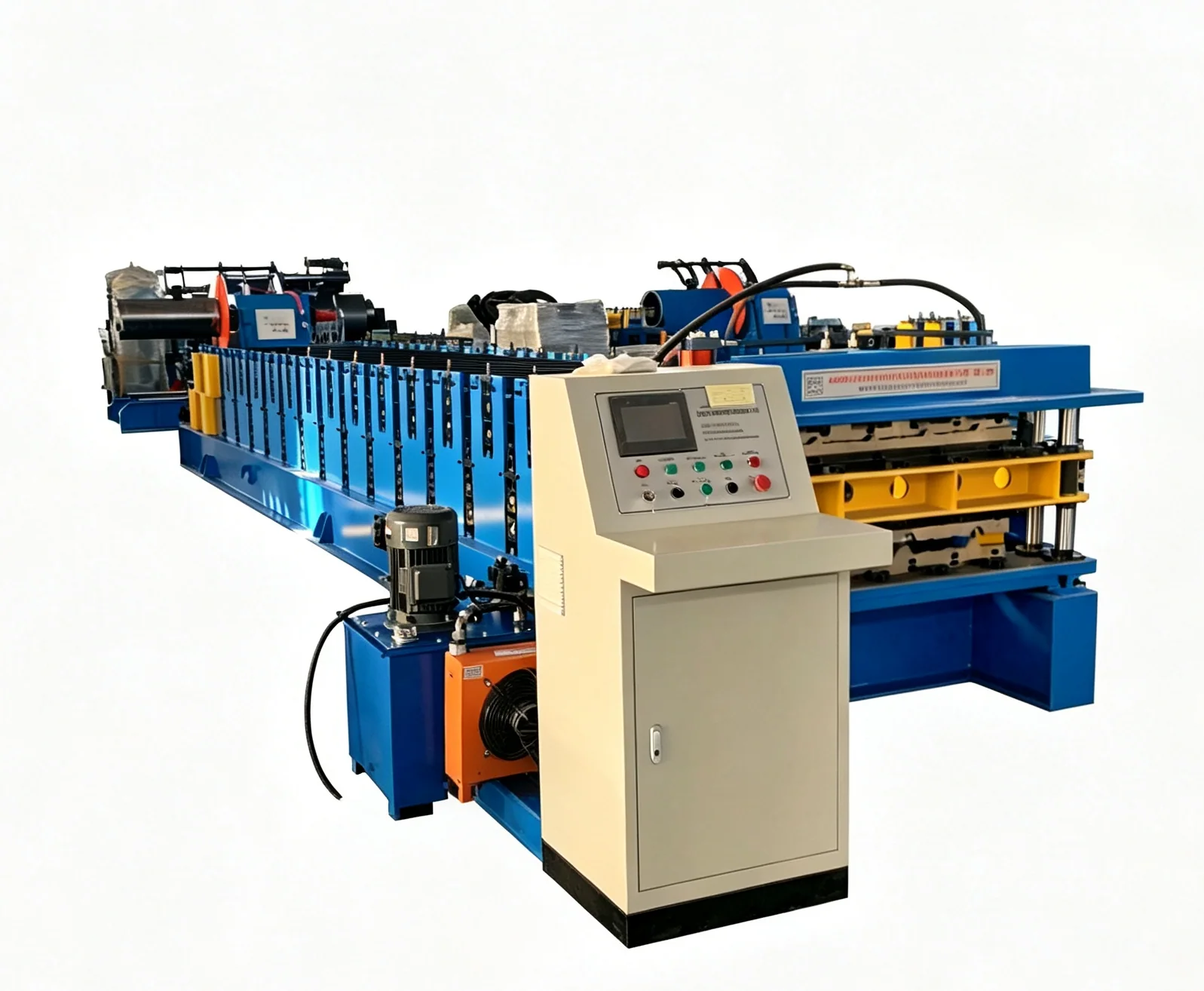
Technical Specifications
| Material | PPGI, GI, colour-coated steel |
| Thickness | 0.3 – 0.8 mm per layer |
| Configuration | Upper + lower layer on one base frame |
| Typical combos | IBR + corrugated, TR4 + TR5, roof + wall panel |
| Forming speed | 15 – 25 m/min per profile |
| Stations | 12 – 20 per layer |
| Drive | Gearbox drive per layer, 7.5 – 22 kW total |
| Cutting | Shared hydraulic shear, flying cut |
| Control | Single PLC, layer selector on HMI |
| Footprint saving | ≈ 40% versus two single-layer machines |
| Certification | CE Declaration of Conformity |
| Lead time | 55 – 70 days |
Need a quote or a custom specification?
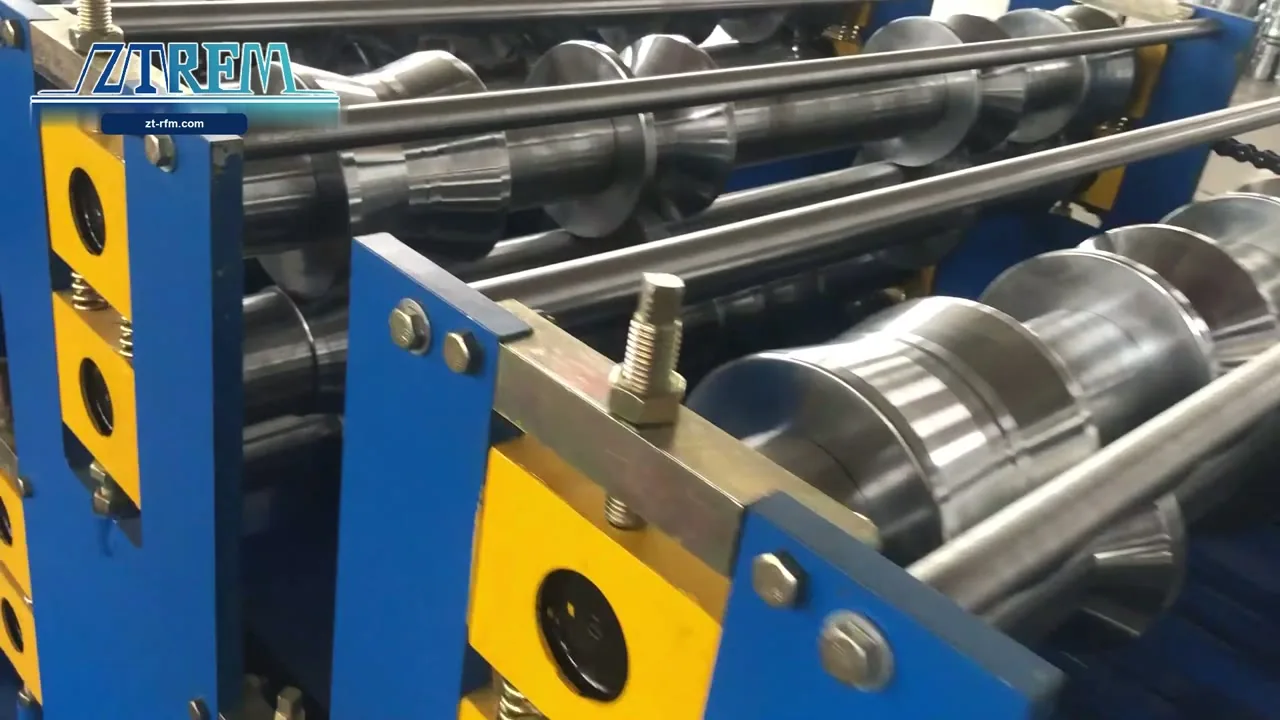
Double Layer Roofing Roll Forming Machine in Our Workshop
 1:10
1:10 Double Layer Roll Forming Machine — Forming Rolls Close-Up | ZTRFM
the upper forming bank of the double layer machine.
Machine specifications →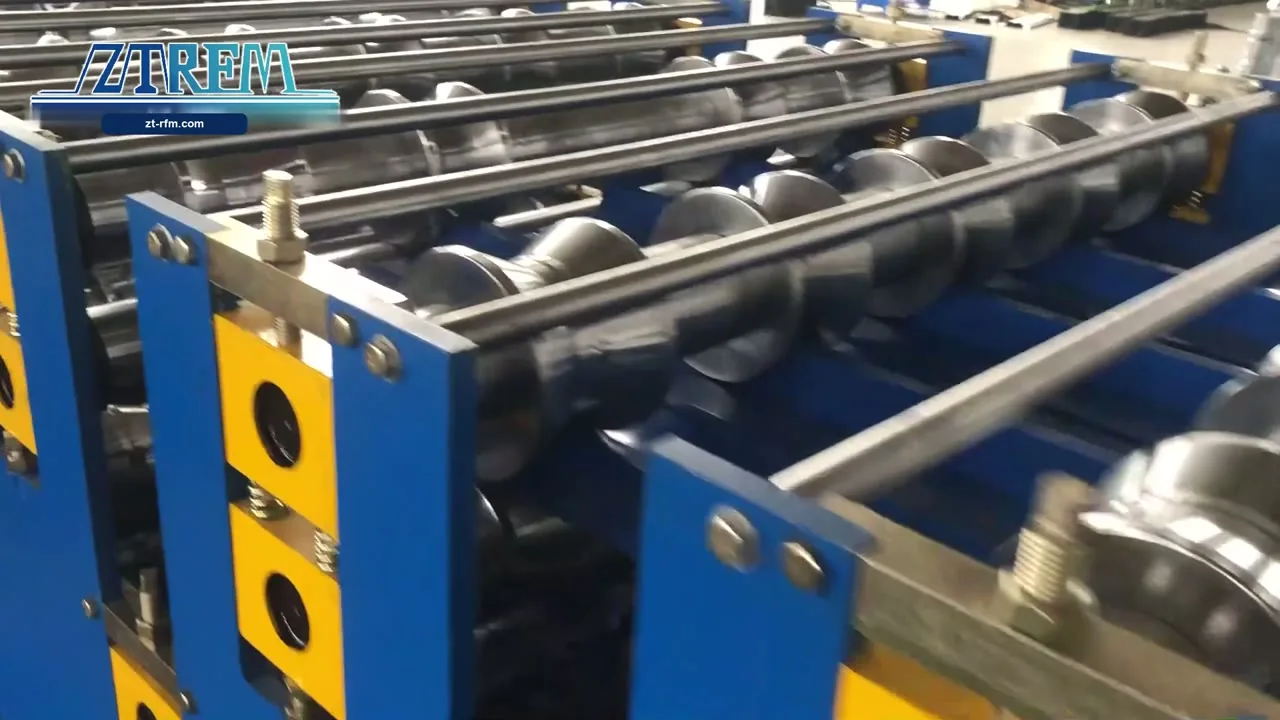 1:10
1:10 Double Layer Roll Forming Machine — Forming Stations | ZTRFM
the forming stations of the double layer roofing machine.
Machine specifications →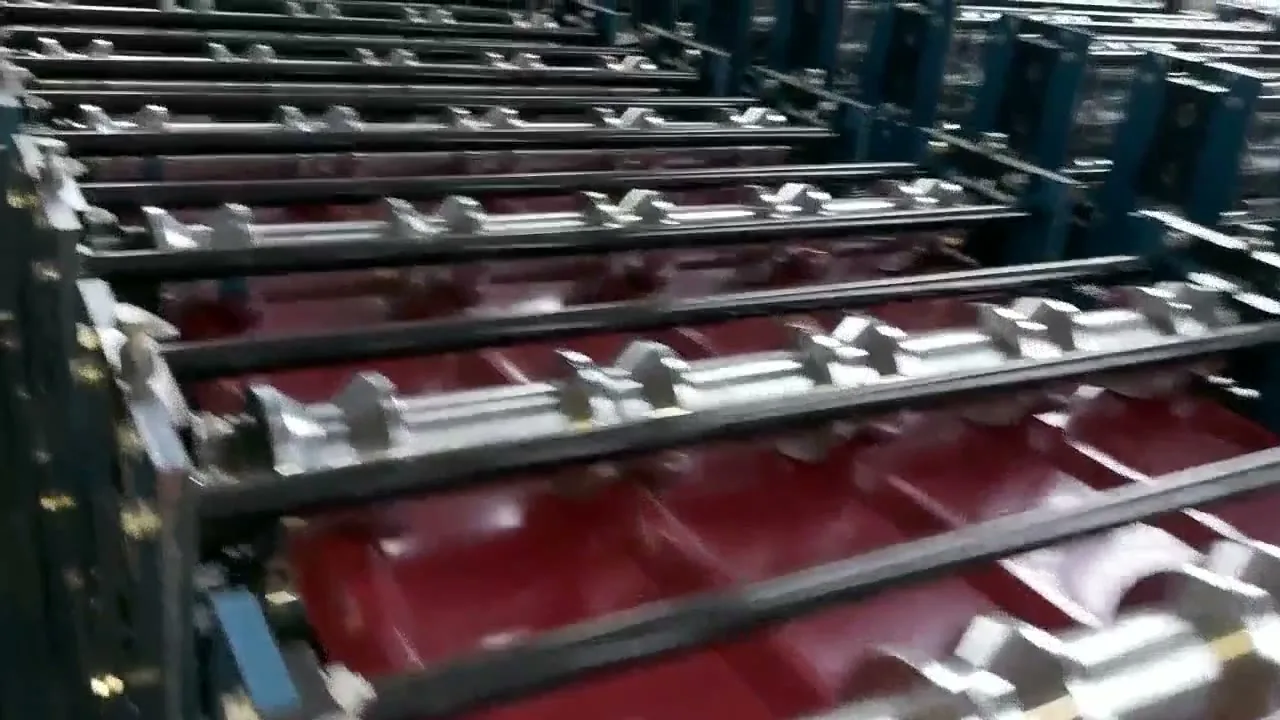 1:10
1:10 Double Layer Roofing Machine — Finished Profiled Panels | ZTRFM
the finished profiled panels coming off the line.
Machine specifications →What This Machine Produces
Two complete roofing or cladding profiles from one base frame — the line carries an upper and a lower roll set, each with 12–20 stations.
The combinations customers most often specify: IBR plus corrugated, TR4 plus TR5, and roof sheet plus wall cladding.
One profile at a time, selected on the HMI. The line does not form both layers simultaneously — the trade for the floor space saving is that you run one profile per production run.
Profiles in 0.3–0.8 mm per layer, formed at 15–25 m/min per profile.
Roughly 40% less floor area than two separate single-layer machines, because the decoiler, cutting unit, hydraulic station and control panel are shared.
A production pattern that suits most roofing businesses: switch between two profiles in batches — run IBR in the morning, corrugated in the afternoon, from one machine and one operator.
Recommended Configuration
A complete working line, not just the forming machine. Each item below is quoted as one package.
- 01
One decoiler and one leveling unit, shared
this is where most of the floor space and cost saving comes from. Both profiles must therefore use a similar coil width and thickness range for the shared feeding system to stay in tolerance.
- 02
Upper and lower roll sets
12–20 stations each, on a common base frame with a gearbox drive per layer. Total installed drive is 7.5–22 kW.
- 03
Shared hydraulic shear with flying cut
one cutting unit serves both layers, so you are not buying two shears or two hydraulic stations.
- 04
Single PLC with a layer selector on the HMI
switching layers is a control-panel action and takes about 5 minutes, because you are selecting a different roll set rather than re-tooling the machine. Changing the physical cassettes, where needed, still takes 4–6 hours.
- 05
Full lubrication schedule and two-side access
the machine has more bearing points and two drive trains than a single-layer line, so the maintenance interval is shorter. All stations are accessible from both sides to keep that practical.
Production Workflow
- 01
Decoiler
One decoiler feeds both layers. Because it is shared, the two profiles must sit in a similar coil width and thickness band — if one profile needs 1000 mm coil and the other 800 mm, the shared feeding arrangement stops being an advantage and we would quote two machines instead.
- 02
Leveling
The shared leveling unit straightens the strip before it enters whichever layer is selected.
- 03
Layer selection
The operator selects upper or lower on the HMI. This takes about 5 minutes and does not involve re-tooling — the non-selected roll set simply stays disengaged.
- 04
Roll forming
The selected layer forms its profile through 12–20 stations at 15–25 m/min. Total installed drive across both layers is 7.5–22 kW.
- 05
Cutting
A single shared hydraulic shear with flying cut cuts to the length and batch entered on the HMI.
- 06
Output
Finished sheets leave on one runout table. The line produces one profile per run, so the sheet stack on the runout is a single product.
Key Components
- Roll sets
- Two complete sets, upper and lower, 12–20 stations each
- Drive
- Gearbox drive per layer; 7.5–22 kW installed in total
- Cutting
- One shared hydraulic shear, flying cut
- Control
- Single PLC with layer selector on the HMI
- Shared units
- Decoiler, leveling unit, hydraulic station, control panel
- Footprint
- About 40% less floor area than two single-layer machines
- Maintenance
- More bearing points and two drive trains — shorter interval than a single-layer line; all stations accessible from both sides
Customization Options
Every line is built to order. These are the points buyers most often change.
| Item | What can be changed |
|---|---|
| Profile combination | IBR + corrugated, TR4 + TR5, roof + wall panel, or two profiles of your choice |
| Constraint on the pair | Both profiles should use a similar coil width and thickness range, so tell us both profiles at enquiry stage rather than after ordering |
| Thickness | 0.3–0.8 mm per layer |
| Layer switching | About 5 minutes at the control panel; physical cassette change 4–6 hours |
| Drive configuration | Gearbox drive per layer, sized to the heavier of the two profiles |
| Power supply | 380 V / 50 Hz / 3-phase standard; other voltages to your site |
Applications
FAQ — Double Layer Roofing Roll Forming Machine
Why buy a double layer machine instead of two single machines?
Can both profiles run at the same time?
Which profile combinations work best?
How long does it take to switch layers?
Is the double layer machine harder to maintain?
What is the lead time?
Can the machine be built for our own profile?
How do we get a price for this line?
What material thickness can this machine form?
What is the production speed?
How many forming stations does it use?
What is the drive and installed power?
You May Also Need
Send us your profile and output target
Tell us the profile and the numbers that matter to you. We confirm the configuration against the specification table above and quote FOB Tianjin within 24 hours.
- MaterialPPGI, GI, colour-coated steel
- Thickness0.3 – 0.8 mm per layer
- ConfigurationUpper + lower layer on one base frame
- Typical combosIBR + corrugated, TR4 + TR5, roof + wall panel