Standing Seam Roll Forming Machine
Concealed-fastener standing seam profiles — Klip-Lok, snap-lock and T-bar — for long roof runs where weather tightness and low maintenance matter.
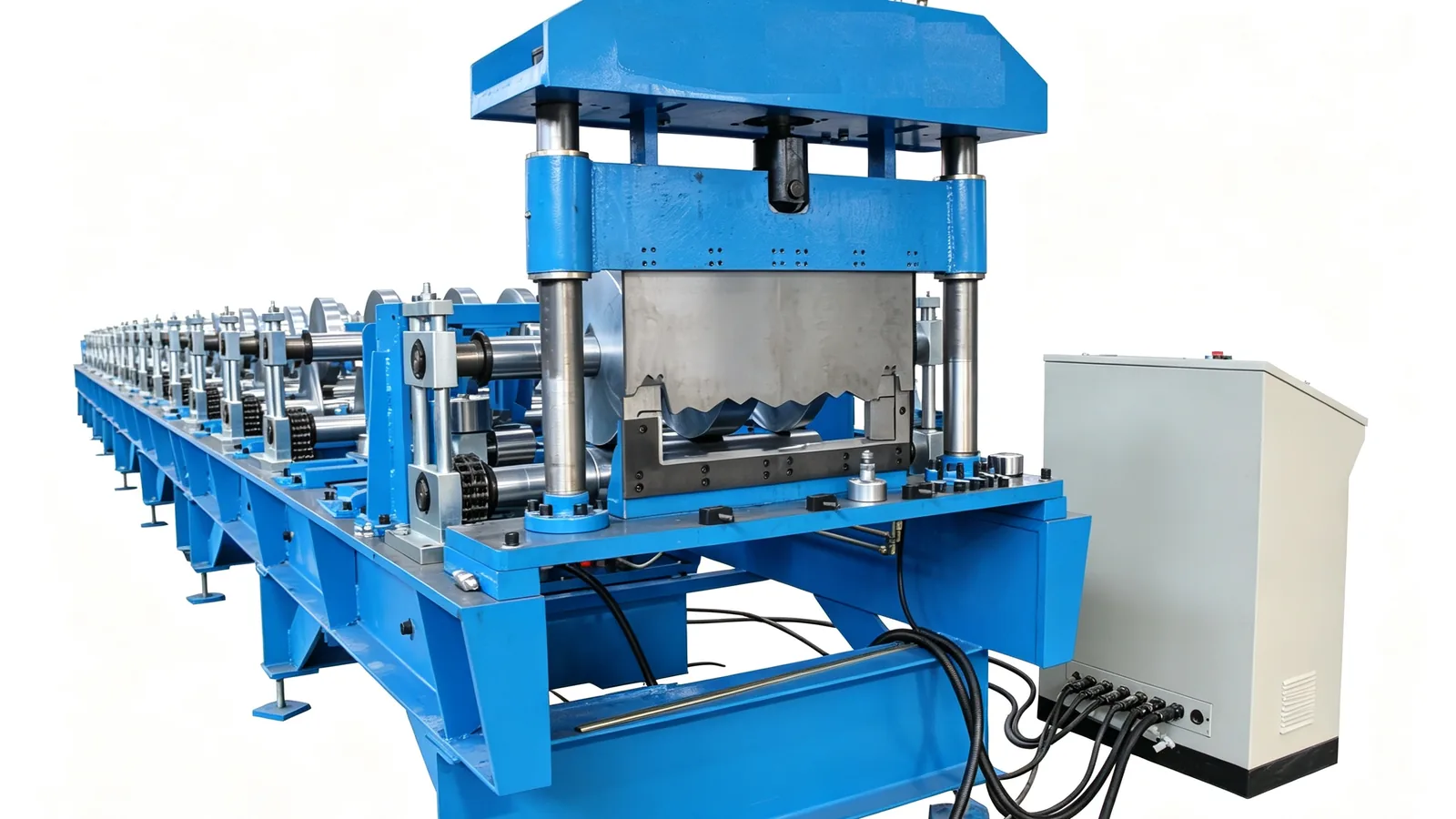
Technical Specifications
| Material | Aluminium, PPGI, GI, Zincalume, Corten |
| Thickness | 0.4 – 0.7 mm |
| Effective width | 333 / 400 / 430 / 500 mm |
| Seam height | 25 – 38 mm |
| Forming speed | 8 – 15 m/min |
| Forming stations | 20 – 26 |
| Drive | Servo drive, 5.5 – 11 kW |
| Seam types | Klip-Lok, snap-lock, T-bar, double-lock |
| Cutting | Hydraulic flying cut to length |
| Control | PLC + HMI, batch counter |
| Certification | CE Declaration of Conformity |
| Lead time | 50 – 65 days |
| Roof pitch | down to 1–3° (seam system dependent) |
Need a quote or a custom specification?
Standing Seam Roll Forming Machine in Our Workshop
 1:10
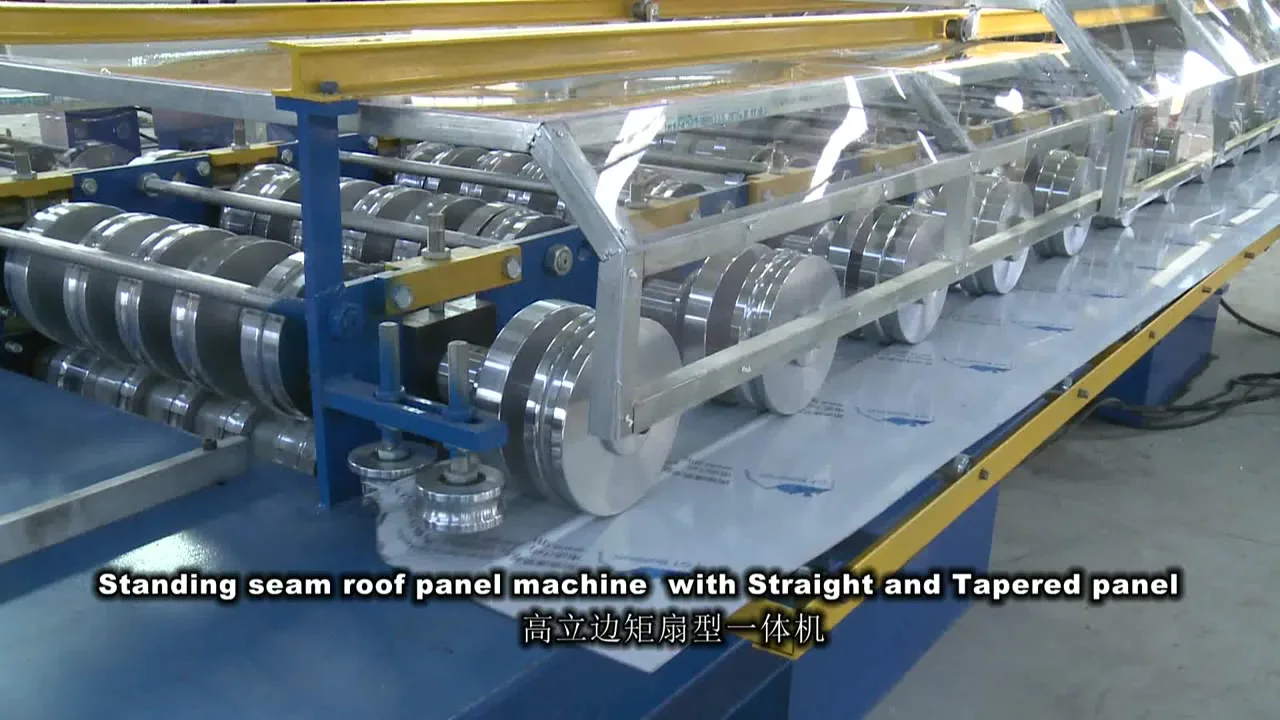
1:10 Standing Seam Roof Panel Machine — Straight and Tapered Panels | ZTRFM
the standing seam line configured for both straight and tapered roof panels.
Machine specifications →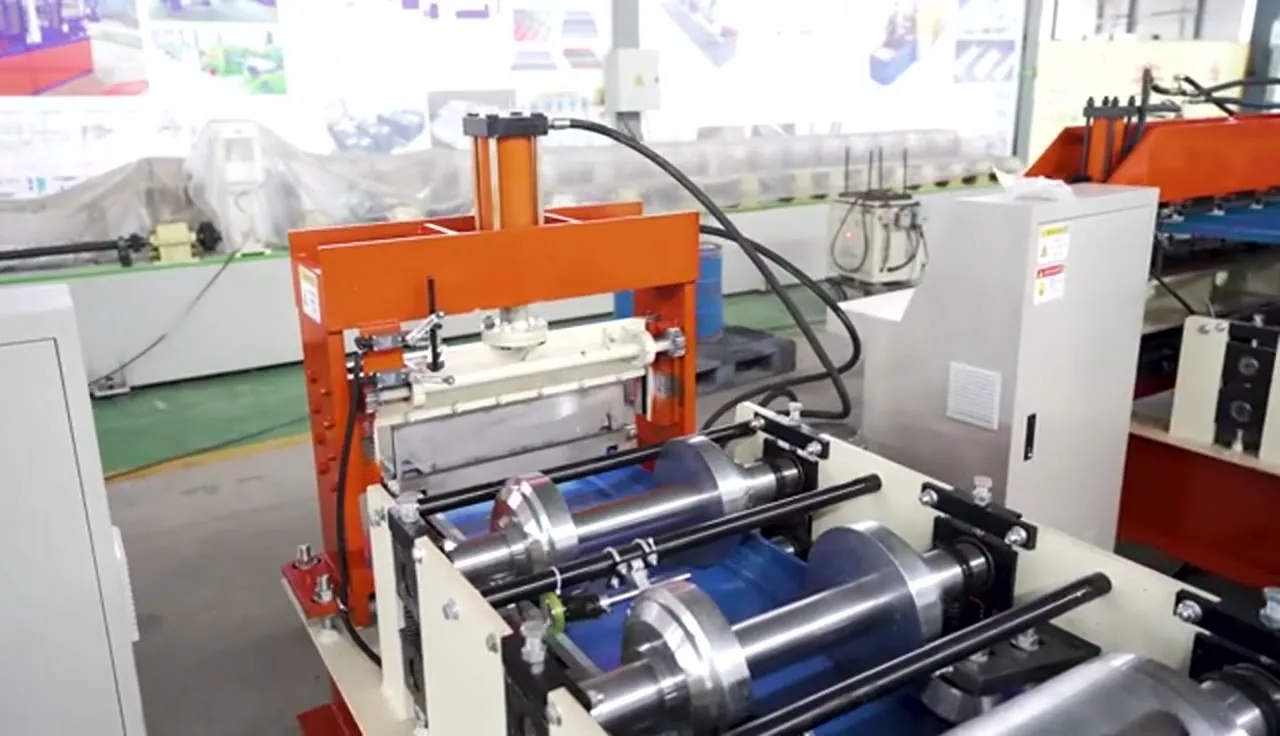 0:43
0:43 Standing Seam Roll Forming Machine — Line and Control Cabinet | ZTRFM
the standing seam machine with its control cabinet at the operator side.
Machine specifications →What This Machine Produces
Klip-Lok panels — a concealed mechanical clip grips the seam from above and is fixed through to the purlin, giving the highest wind-uplift resistance of the four seam systems we build.
Snap-lock panels — the profile snaps onto a fixed clip. Faster and usually cheaper to install, with a correspondingly lower uplift rating, which is why it dominates general commercial roofing.
T-bar panels — mechanically seamed over a T-shaped batten, for architectural roofs where a pronounced rib is wanted.
Double-lock panels — roll-seamed on both sides with no through-fixing, the specification for low-pitch roofs and extreme weather.
Effective widths of 333, 400, 430 and 500 mm with seam heights of 25–38 mm.
Panels in aluminium, PPGI, galvanised, Zincalume or Corten at 0.4–0.7 mm, formed through 20–26 stations at 8–15 m/min.
Aluminium panels at 0.5–0.9 mm with hardened tooling and polyurethane guide rolls, for coastal projects where salt corrosion drives the material choice.
Recommended Configuration
A complete working line, not just the forming machine. Each item below is quoted as one package.
- 01
3-tonne hydraulic decoiler
included as standard. Because standing seam roof runs are long, most customers specify the 5 T decoiler instead to cut the number of coil changes on a roof.
- 02
Leveling unit
the profile is closed at the seam, so any bow is locked in by the closing stations and cannot be corrected afterwards.
- 03
Standing seam roll forming machine
20–26 stations on a servo drive at 5.5–11 kW. The station count is high because the seam geometry has to be folded progressively: forcing it in fewer passes cracks the coating at the seam.
- 04
Servo drive
standing seam runs at 8–15 m/min, well below the roofing lines, so drive control matters more than raw power. The servo also holds consistent seam geometry through a long run.
- 05
Hydraulic flying cut to length with batch counter
long panels are normally cut to the roof’s actual run length rather than to a standard size.
- 06
Trailer or container-mounted configuration
where the roof run is long enough, forming on site avoids transport joints entirely. Tell us if that interests you and we will quote the mounted version.
Production Workflow
- 01
Decoiler
Coil is loaded and uncoiled at controlled tension. On a long roof run the decoiler capacity sets how often the line stops, which is why 5 T is the common choice on this machine.
- 02
Leveling
The strip is straightened before forming. Standing seam profiles are closed at the seam, so any residual bow becomes a permanent twist in the finished panel.
- 03
Roll forming
20–26 stations fold the seam geometry progressively in 0.4–0.7 mm material at 8–15 m/min. Fewer stations would crack the coating at the seam, which is the single most common failure mode on this profile.
- 04
Seam formation
The finished seam is either clipped (Klip-Lok), snapped (snap-lock), seamed over a T-batten, or roll-seamed on both sides (double-lock). Which one is built into the tooling, so the seam system is fixed at order stage.
- 05
Cutting
A hydraulic flying cut cuts panels to the roof run length, with a batch counter.
- 06
Output
Panels leave on the runout. Because standing seam panels are long and thin, the runout has to support them along their length rather than at the cut only.
Key Components
- Forming stations
- 20–26 — high count is required to fold the seam without cracking the coating
- Drive
- Servo, 5.5–11 kW
- Decoiler
- 3 T included; 5 T / 10 T optional, and 5 T is the common choice on this line
- Cutting
- Hydraulic flying cut to length
- Control
- PLC + HMI with batch counter
- Materials
- Aluminium, PPGI, galvanised, Zincalume, Corten
- Seam systems
- Klip-Lok, snap-lock, T-bar, double-lock
Customization Options
Every line is built to order. These are the points buyers most often change.
| Item | What can be changed |
|---|---|
| Seam system | Klip-Lok, snap-lock, T-bar or double-lock — this is fixed by the tooling, so decide it at order stage |
| Effective width | 333 / 400 / 430 / 500 mm |
| Seam height | 25–38 mm |
| Material and thickness | Aluminium 0.5–0.9 mm with hardened tooling and polyurethane guide rolls; steel 0.4–0.7 mm |
| Mounting | Trailer-mounted or container-mounted for on-site forming on long roof runs |
| Roof pitch | Most systems are rated down to 1–3° pitch, because the seams are mechanically locked rather than lapped |
| Power supply | 380 V / 50 Hz / 3-phase standard; other voltages to your site |
Standing seam systems compared
| Seam type | Fixing method | Wind uplift | Best for |
|---|---|---|---|
| Klip-Lok | Concealed clip over the seam, fixed to purlin | Highest | Exposed sites, long spans, cyclonic regions |
| Snap-lock | Profile snaps onto a fixed clip | High | General commercial roofing; fastest to install |
| T-bar | Mechanically seamed over T-shaped batten | High | Architectural roofs requiring a pronounced rib |
| Double-lock | Roll-seamed both sides, no penetration | Very high | Low-pitch roofs, extreme weather |
Applications
FAQ — Standing Seam Roll Forming Machine
What is the difference between Klip-Lok and snap-lock?
Can the machine form aluminium?
Does it include a decoiler?
Why are there so many forming stations?
What roof pitch does standing seam require?
Is on-site roll forming available for long runs?
Can the machine be built for our own profile?
How do we get a price for this line?
What material thickness can this machine form?
What is the production speed?
What is the drive and installed power?
How is the finished profile cut to length?
You May Also Need
Send us your profile and output target
Tell us the profile and the numbers that matter to you. We confirm the configuration against the specification table above and quote FOB Tianjin within 24 hours.
- MaterialAluminium, PPGI, GI, Zincalume, Corten
- Thickness0.4 – 0.7 mm
- Effective width333 / 400 / 430 / 500 mm
- Seam height25 – 38 mm